Has Memory Peaked? Prices Are Cooling, but the Shortage Looks Set to Run to 2028
Price growth has slowed and consumer demand is already breaking. Server and HBM supply remains short, and Micron says more than 75% of its 2027 volume is already committed to customers.
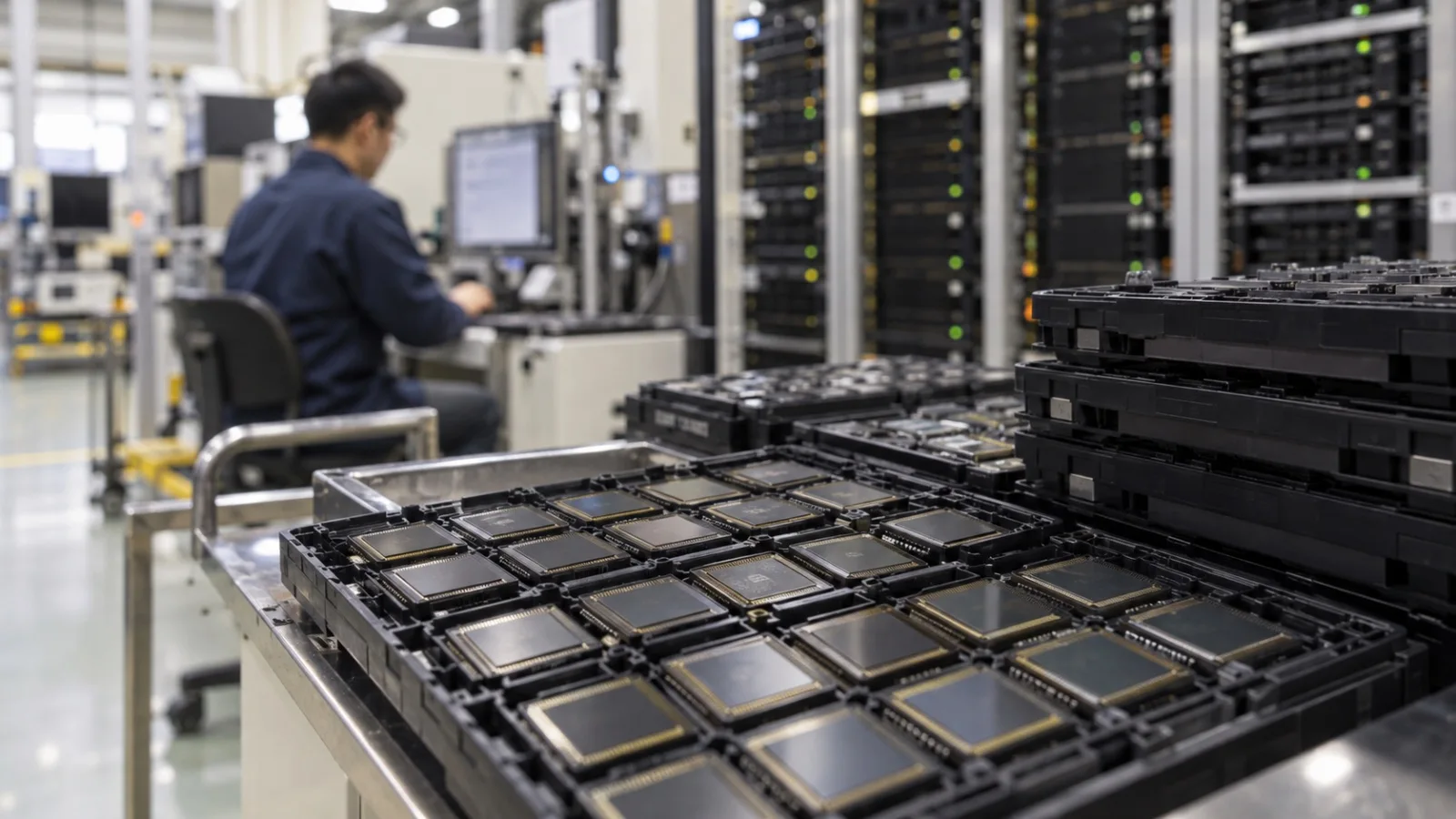
The market may be in a phase where the peak in price momentum and the peak in earnings are separating, rather than at the end of the cycle. Price growth has slowed, and consumer markets already show demand destruction. But servers and HBM are still short of supply. Micron says more than 75% of its fiscal 2027 volume is already committed to customers.
Bottom line: Memory prices are rising more slowly. The numbers so far fit a view that supply actually overshoots demand around 2028.
Six checkpoints
| Checkpoint | Current signal | Peak reading |
|---|---|---|
| Price growth | Slowing | Early warning. Prices have not yet turned down |
| CapEx | Accelerating | Late-cycle signal. Major new supply ramps around 2028 |
| Inventory and orders | Consumer weakness | Only smartphones and consumer NAND show partial order slowdowns |
| AI vs. non-AI demand | Gap widening | Demand destruction in end devices caps the upside in commodity memory |
| China share | Rising | Medium-term supply risk. Limited impact so far on high-value server and HBM |
| Wall Street valuation | Low-P/E argument prevails | Most still raising earnings estimates. Some warn of a 2028 peak |
1. Prices have started to cool, but the shortage is not over
What changed first was the pace of price increases, not their direction. According to reports citing DRAMeXchange, the average DDR4 8Gb contract price stayed at a record high in September. But monthly gains slowed from 14.3% in July to 4.2% in August and 4.0% in September. NAND 128Gb MLC rose just 0.44% in September.
Quarterly supply is still short, though. TrendForce forecasts fourth-quarter conventional DRAM contract prices up 10% to 15% from the prior quarter, and NAND up 15% to 20%. It expects enterprise SSD price gains to accelerate because of AI server demand.
So the price signal reads less as "decline has begun" and more as "price growth may have passed its peak rate."
- +10% to 15%: TrendForce's fourth-quarter 2026 forecast for conventional DRAM contract prices
- +15% to 20%: Its forecast for overall NAND contract prices in the fourth quarter of 2026
- 75%+: Share of fiscal 2027 shipment plans already committed by customers
2. CapEx is rising, but spending money is not the same as bits flooding the market
Micron's fiscal 2026 CapEx was $27.37 billion. For the first quarter of fiscal 2027 it pointed to about $11.5 billion, and about $25 billion for the first half, with higher spending expected in the second half. Much of the increase goes to construction rather than equipment. The company said the additional cleanroom space is needed mainly for supply after the end of 2028.
One distinction matters. The figure that fiscal 2027 CapEx could top $50 billion was back-calculated by an analyst on the earnings call. Micron has not set it as formal annual guidance.
SK hynix has also pulled forward the first cleanroom start at its Yongin site to February 2027. It has committed to additional fab investment aimed at 2028 to 2029 and beyond. Accelerating CapEx is a classic late-cycle signal. For now, it points to more supply in two to three years, not immediate oversupply.
3. Demand destruction has started, but it begins with consumers
Smartphones and low-end PCs struggle to absorb high memory prices. Gartner forecasts 2026 PC shipments down 10.4% and smartphones down 8.4%. It expects memory costs to lift PC prices 17% and smartphone prices 13%. Counterpoint counted first-quarter smartphone shipments down 6% from a year earlier.
Servers are the opposite. Micron said more than 75% of fiscal 2027 shipments are already committed through strategic customer agreements and regular customer orders. Negotiations are moving on to 2028 volume. The company sees supply and demand in 2027 and 2028 potentially tighter than in 2026.
Within the same memory market, smartphones are cutting orders while AI servers lock in future volume. That dual structure makes this cycle harder to call than past ones.
4. China is growing fast, but it is not yet the cause of a global price collapse
CXMT's share of global DRAM revenue in the second quarter of 2026 rose to roughly 9.5% to 10%, depending on the research firm. YMTC ranks third in the world by NAND bit shipments, at 14%. The growth of Chinese suppliers is no longer easy to dismiss.
The mix differs, however. YMTC is third by bits but ranks lower by revenue, because high-priced data center SSDs make up a small share of its sales. TrendForce also sees much of China's capacity expansion being absorbed by domestic AI and cloud demand for now.
The line for investors to watch is when Chinese suppliers move from commodity mobile and PC memory into server DDR5 and enterprise SSDs in a meaningful way.
5. Wall Street still leans toward "more earnings ahead" over "too expensive"
After Micron's results, many analysts raised price targets. The stock reacted only modestly to strong results. The reason is straightforward. Current earnings are so strong that the forward P/E is low, but the market has already started to discount supply growth after 2028.
The best-known counterargument comes from Morningstar. It cut its fair value estimate from $850 to $700. Citing slowing price growth and large new supply, it expects a peak in early 2028 and falling prices from 2029. Most sell-side analysts take the opposite view. They assume shortages last through 2027 and 2028, and read the current low P/E as undervaluation.
The disagreement is not about whether AI demand exists. It is whether supply catches up with demand in 2028 or later.
Insight Times Editorial Desk