Nvidia and AMD Back Common Design to Build AI Data Centers Like Lego Blocks
A new Open Compute Project spec aims to let one building host rival chip systems. Whether it speeds up construction is not yet confirmed.
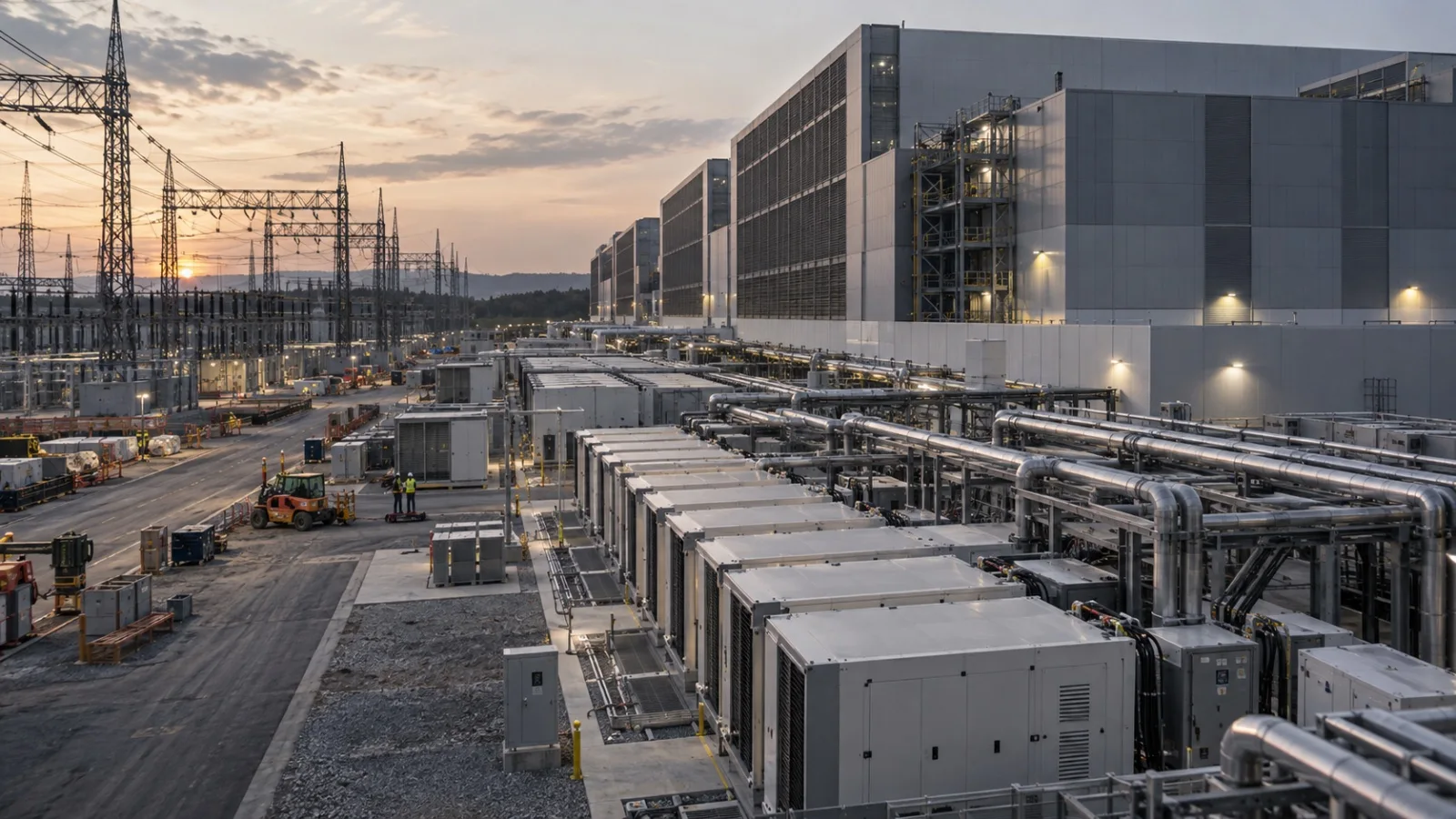
Building an AI data center is not like putting up an ordinary building.
1. The GPUs are ready. The data centers are not.
A facility built around Nvidia GPUs can have different power and cooling needs from one built around Google TPUs. If every new chip generation forces changes to existing equipment, that adds cost and time.
So what if a building were designed from the start to host next-generation systems from several companies?
That is the core of Open Data Center: Next-Generation ML Infrastructure Design Principles v0.7.0, published by the Open Compute Project (OCP). The spec lists targets such as these:
- 12 MW: 24 MW preferred
- 125 kW/ft: per foot of equipment row
- 350 kW/ft: about 1,148 kW/m
- 3.63 tons: about 6.8 tons with sidecar
Source: OCP data center design spec v0.7.0. kW/ft is power density per length of equipment row, not the consumption of a single rack. The figures are design targets and projections, not operating results.
The numbers show how much data centers are changing. AI facilities must deliver more power in less space, carry much heavier equipment and remove the heat reliably.
A unified spec could reduce repeated design and procurement work. But the spec does not show that construction time would be cut in half. Grid interconnection, permitting and transformer supply remain independent bottlenecks.
2. What Big Tech really fears is a grid event
The standardization push has another important piece.
Google, Meta, Microsoft and Nvidia also helped prepare a separate OCP spec, v1.0.0, covering the link between data centers and the external power grid.
The problem showed up in August 2024, when about 1,500 MW of load dropped off at once in North America.
When large data centers all stop drawing power at the same moment during a grid disturbance, the balance between supply and demand can break. That can destabilize system frequency and voltage.
The new spec addresses a data center's ability to stay connected through brief voltage dips and to restore power use in a controlled way after a fault. See the OCP grid interface spec v1.0.0.
This matters for the AI industry. Data center operators now have to show not only how much electricity they have secured, but how safely they can connect to the local grid.
Standardization does not guarantee permits. But if utilities and developers can negotiate against the same technical criteria, it may help reduce uncertainty in project reviews.
3. Who makes money? Beneficiaries beyond the GPU
| Company | Potential opportunity | What to watch |
|---|---|---|
| Nvidia (NVDA) | Fewer build delays could favor wider GPU system supply | GPU shipments, systems revenue, durability of customer spending |
| AMD (AMD) | A common facility spec could lower barriers to adopting its AI systems | Instinct adoption, rack-level competitiveness |
| Vertiv (VRT) | Demand for dense liquid cooling and power management could grow | Backlog, profitability, cooling revenue |
| Eaton (ETN) | Market for power distribution, protection and control gear could expand | Electrical orders, capacity, margins |
| Equinix (EQIX) / Digital Realty (DLR) | Less custom design per customer, better facility utilization | Leases, development costs, power access |
Not every company benefits equally from standardization.
Nvidia gains when more AI-ready capacity can be installed. But a common spec can also lower the cost of entry for rivals such as AMD.
Vertiv and Eaton have a chance to turn rising equipment demand into revenue. Commoditized standard parts could also intensify price competition.
Data center REITs will not necessarily see lower renovation costs either. Upfront investment and depreciation to host high-density AI facilities could rise.
Investors should therefore look past participation in the standard and check actual new orders, installed capacity, gross margin and return on invested capital.
Bottom line
The OCP spec is an attempt to change how quickly AI data centers can actually be built. It is too early to say construction has become twice as fast.
Still, it matters that competitors agreed on a common design. AI competitiveness no longer ends with chip performance. It extends to the economics of the whole system, including power, cooling, construction and operations.
AI investors now need to watch not just GPU shipments but how long it takes those GPUs to start running.
Insight Times Editorial Desk