AI Stocks Have Already Run. Is It Too Late to Buy Copper, Nuclear, Robots and Chips?
A growing industry and a stock worth buying today are different things. Each AI theme earns money on a different timeline, and the price paid matters as much as the story.
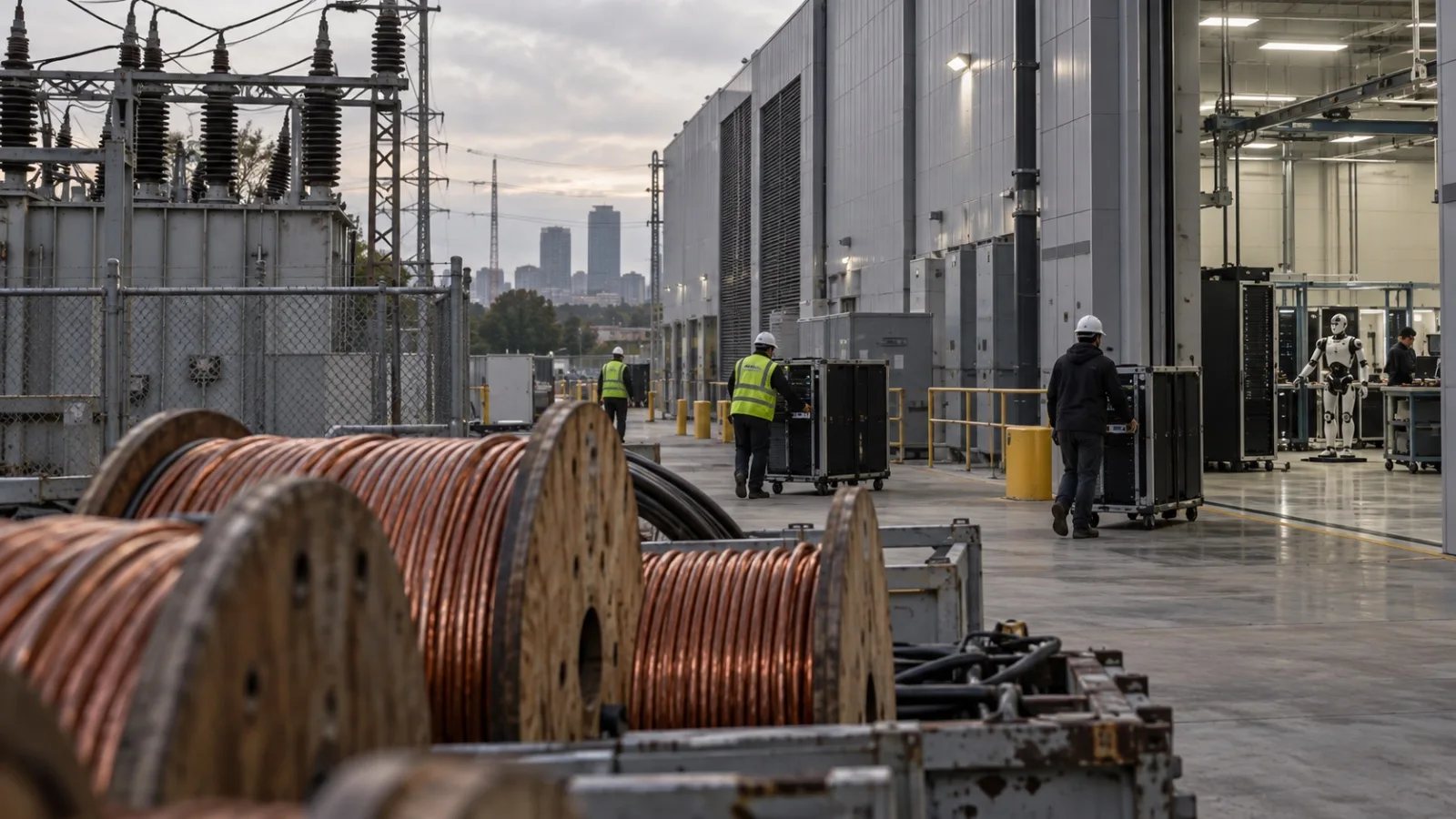
1. The direction was right. The prices ran first.
One piece of advice has come up again and again in the US market over the past two years: buy scarce assets, buy AI robotics companies, buy AI infrastructure companies.
Much of that logic has played out. AI data centers are consuming more electricity, and Big Tech is pouring huge sums into chips and power supply.
According to the International Energy Agency's 2026 report, global data center electricity use is projected to rise from 485 TWh in 2025 to about 950 TWh in 2030. That is nearly double in five years. Power use by AI-focused data centers is expected to roughly triple over the same period. (IEA)
| 2025 actual | 485 TWh |
| 2030 projection | 950 TWh |
Projected 2030 consumption is about 1.96 times the 2025 level. Forecasts do not guarantee earnings.
The problem is that investors already know this growth outlook. Spotting a good industry is not enough. Even a good company can deliver poor returns for a long time if it is bought at too high a price.
2. Three investment themes that now need to be viewed separately
Copper and uranium: assets whose supply is hard to expand quickly
Copper is used widely in power grids, transformers, data centers and electric vehicles. Even when demand rises, developing a mine takes considerable time. In its 2026 outlook, the IEA said that based on announced mine projects, copper supply in 2035 could fall about 25% short of expected need. That is a conditional projection, not a confirmed shortfall. (IEA)
Uranium also has an opening as nuclear power is reassessed. But rising data center power demand does not translate directly into new reactors coming online. Long construction times and regulatory issues remain.
Freeport-McMoRan (FCX), Cameco (CCJ) and MP Materials (MP) are examples of related companies. Even when commodity prices rise, a miner's profit can fall short of expectations if production costs rise faster.
AI robots: a large future, but commercialization is still being tested
In its second-quarter 2026 materials, Tesla said it is installing the first Optimus production line. That is meaningful progress, but it does not mean large-scale external sales or sustained profit have been proven. (Tesla)
A humanoid robot has to work reliably, be manufacturable at scale, and let buyers recover its cost. Tesla investors need to watch not only the robot's potential but also how far the auto and energy businesses can fund development.
AI workloads: already profitable, but price matters
Nvidia's fiscal 2027 second-quarter revenue was $96.2 billion, up 106% from a year earlier. Data center revenue was $89.0 billion, up 117%, and non-GAAP gross margin was 75%. This is growth confirmed in actual earnings. (Nvidia)
But if a company's profit doubles and the stock had already priced in more than that, upside can be limited. Broadcom supplies custom chips and networking, TSMC advanced manufacturing, and Micron memory. Eaton and Vertiv provide power delivery and cooling equipment. They share an AI theme, but their business structures and risks differ.
3. Separate when the profits arrive
| Area | Strength | Key risk |
|---|---|---|
| Copper and critical minerals | Long-term supply constraints | Economic slowdown and commodity swings |
| Uranium and nuclear | Demand for secure power | Construction delays and policy changes |
| Humanoid robots | New-market potential | Unproven mass production, sales and costs |
| AI semiconductors | Confirmed growth and profit | Rich valuations, competition, investment slowdown |
| Power equipment | Real construction demand | Order delays and rising costs |
The biggest future market is not necessarily the best investment today. Early-stage commercial companies often see their stocks run ahead. Companies already making money get judged on slowing growth. And less glamorous suppliers sometimes earn steadier profits.
4. How might a portfolio be built?
Even if all three themes look promising, there is no reason to put money in all at once. One way to think about it is to split a separate pool of 100 set aside for AI-related industries as follows.
- AI semiconductors and networking: 35%
- Power and cooling infrastructure: 20%
- Critical minerals: 20%
- Robotics and automation: 10%
- Cash and equivalents: 15%
This is an educational example, not an optimal allocation for any individual or a return forecast. It is based on money set aside for themes, not total financial assets.
Investors who already hold a lot of Tesla and Nvidia do not need to concentrate new money there. Even different stocks may offer little diversification if they are all sensitive to the same AI investment cycle.
For ETFs, options include SMH and SOXX for semiconductors and SETM for critical minerals. Note that SETM invests in related company stocks, not in physical commodities. (Sprott) With any ETF, check the actual holdings, fees and, for futures-based funds, roll costs.
5. Wait a year or two? Conditions matter more than the calendar
A correction or sideways market over the next one to two years is possible. But that period should not be treated as a settled forecast. If earnings grow fast, high prices can be justified. If Big Tech cuts spending, a pullback could last longer than expected.
- Earnings: Are operating profit, cash flow and customer demand rising along with revenue?
- Price: How much of the next several years of growth is already in the stock?
- Sustainability: Is data center spending turning into customers' actual AI revenue and productivity gains?
Power grids and nuclear also serve demand from outside AI. That is why each company's business mix should be examined separately.
In the end, the question is not "Will AI really grow?"
It is this: now that everyone knows AI is growing, which companies can earn more than expected, and how much of that can they return to shareholders? Companies that can answer that are more likely to be the winners of the next leg up.
Investment decisions should reflect each person's asset mix and risk tolerance.
Insight Times Editorial Desk