The AI Supercycle Now Favors Companies That Earn Money, Not Just Spend It
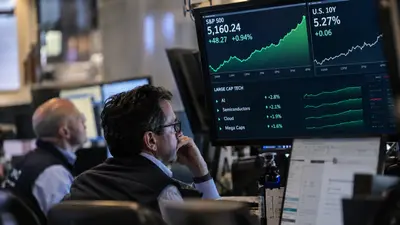
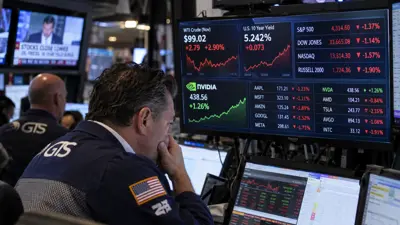
The S&P 500 is up 14.1% this year even with the 10-year Treasury yield near 5.24%. What happens next may depend on how much of the AI spending comes back as profit and cash.
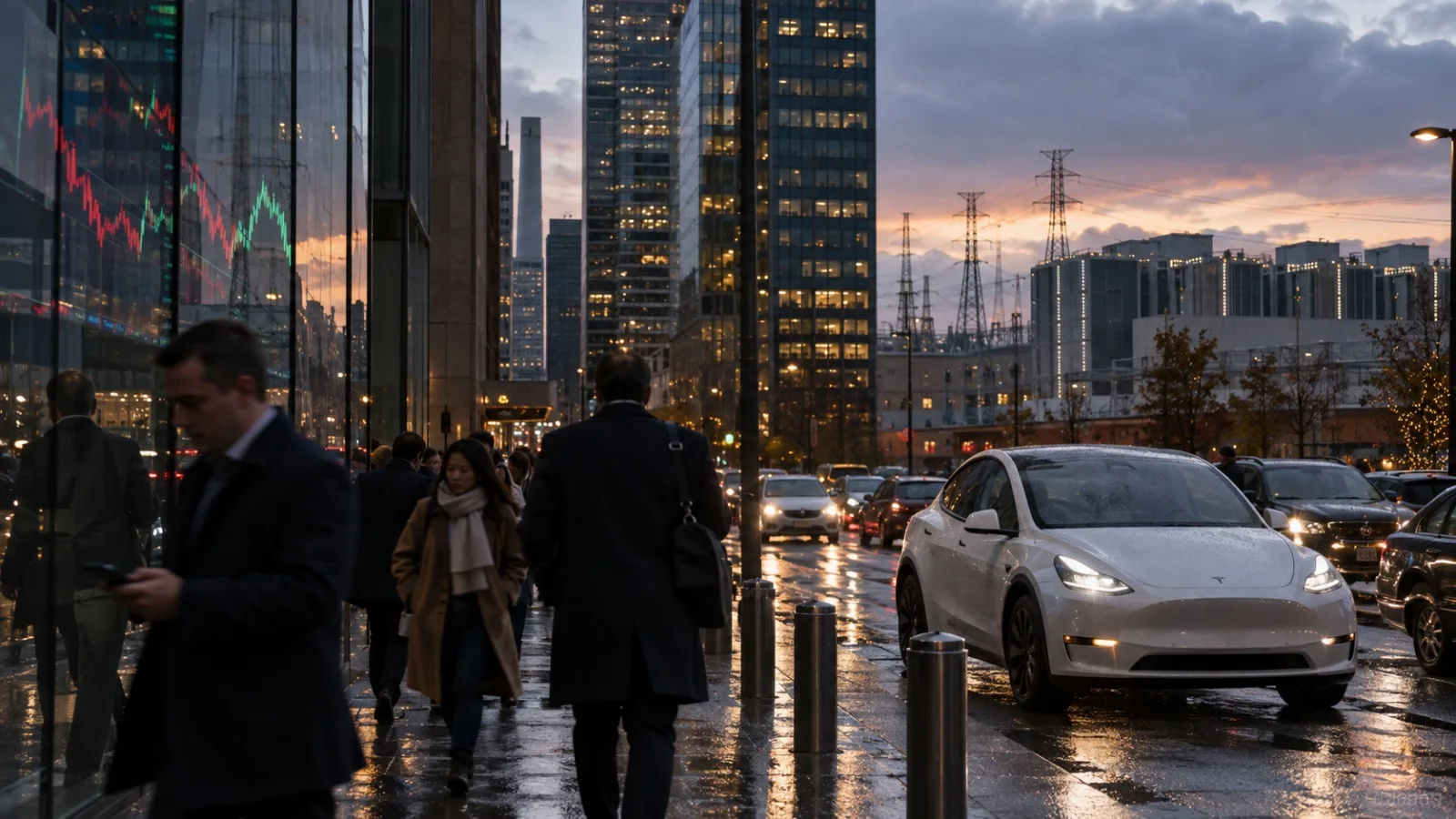
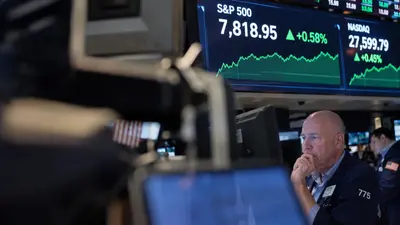
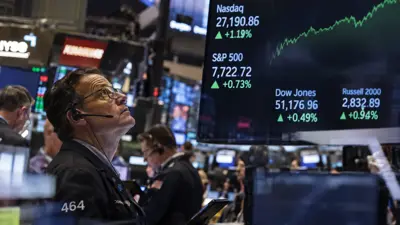
The S&P 500 closed at 7,811.54 on Oct. 9, up 14.1% for the year. The 10-year Treasury yield stood at about 5.24% the same day. Stocks held up despite high rates largely because of expectations for corporate earnings.
1. Why US stocks are strong, and why they are fragile
When rates are high, growth stocks see the present value of future earnings discounted. If earnings grow faster than expected, shares can rise. If growth falls short, corrections can be larger.
The Fed raised its benchmark rate to 3.75% to 4.00% in September. A hold looks more likely at the October FOMC meeting, but inflation risks have not gone away.
The key question is less whether stocks are expensive. It is whether corporate earnings can keep rising enough to justify current prices.
2. Falling AI financing: the first test of the supercycle
According to Morgan Stanley data reported by the Financial Times, new global AI-related borrowing fell from $113 billion in June to $23 billion in September. That is a drop of about 79.6%.
It is too early to call this an AI investment crisis. Companies may have secured the funds they needed earlier, and lower borrowing does not necessarily mean less investment.
| New global borrowing | |
|---|---|
| June 2026 | $113 billion |
| September 2026 | $23 billion |
A decline of about 79.6% from June to September. The figures cover new borrowing only, not total AI investment or outstanding loans.
Still, the question for investors is clear. After building large data centers and AI infrastructure, can a company sustain operations and its next round of investment without relying on outside borrowing?
The gap may matter more going forward between big tech companies with abundant internal cash flow and AI infrastructure companies that depend heavily on external financing.
3. In semiconductors, peak earnings and peak share prices are different things
Samsung Electronics reported preliminary third-quarter revenue of 195 trillion won and operating profit of 107.4 trillion won on Oct. 8. It is a strong signal of memory demand and profitability. Preliminary results should be distinguished from final figures, however.
The main risk for chipmakers is not that demand vanishes right away. It is that share prices price in today's high memory prices and margins as if they will last.
Even while HBM (high-bandwidth memory) supply stays tight, the slope of the cycle can change with expanded commodity DRAM supply, capacity additions by Chinese makers and shifts in customers' purchasing pace.
Nvidia's GPUs and Broadcom's custom AI chips (ASICs) may also grow together. If the overall AI computing market expands, the two technologies are not necessarily a zero-sum contest. But the more customers adopt their own chips, the more Nvidia's GPU pricing power will be tested.
In semiconductor investing, then, gross margin, supply contracts, customers' capex outlooks and inventory levels deserve as much attention as revenue growth.
4. Power and software: the next beneficiaries of AI spending
Google and Constellation Energy announced two power agreements on Oct. 6 totaling 3.59 GW.
Of that, 890 MW is new capacity gained by boosting output at existing nuclear plants. The other 2,700 MW is a separate long-term power supply contract. The two figures should not both be read as new generating capacity.
The deal shows that data center competitiveness does not end with GPU purchases. The timing of power access and long-term contract prices could determine the profitability of AI businesses.
Companies that supply generation equipment, power distribution and cooling, such as GE Vernova, Eaton and Vertiv, also have opportunities. But rising power demand does not automatically guarantee high returns on related stocks.
Enterprise software makers such as Microsoft, ServiceNow and Salesforce face new opportunities as well. AI may replace existing software, and it may also raise its productivity. Both can be true at once.
Going forward, paid usage rates, revenue per customer and operating margin gains are likely to matter more as yardsticks than the mere rollout of AI features.
5. Tesla and space: the biggest opportunities need long timelines
Tesla delivered 486,532 vehicles in the third quarter and deployed 13.7 GWh of energy storage. Its official earnings report is due Oct. 21.
Tesla's auto business is the core source of cash for its AI and robotics investment. Beyond the long-term value of Robotaxi and Optimus, investors should watch automotive gross margin, operating cash flow and the cash left after capital spending.
SpaceX's satellite communications and AI infrastructure expansion could also open huge markets. But between securing spectrum and growing actual telecom revenue lie regulatory approval, network investment and commercial launch.
Technological possibility can be given some value. The timing of realization and the capital required should not be ignored.
The question for the next 12 months
In the end, one question matters most over the next 12 months:
Not how much money goes into AI, but how much profit and cash comes back from it.
Companies that answer it well are likely to be valued relatively highly in the US market in 2027.
Insight Times Editorial Desk