Nvidia Held Up, But the Market Feared 5.2% Yields, Not AI
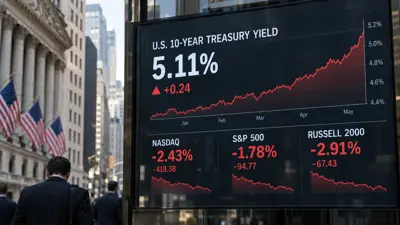
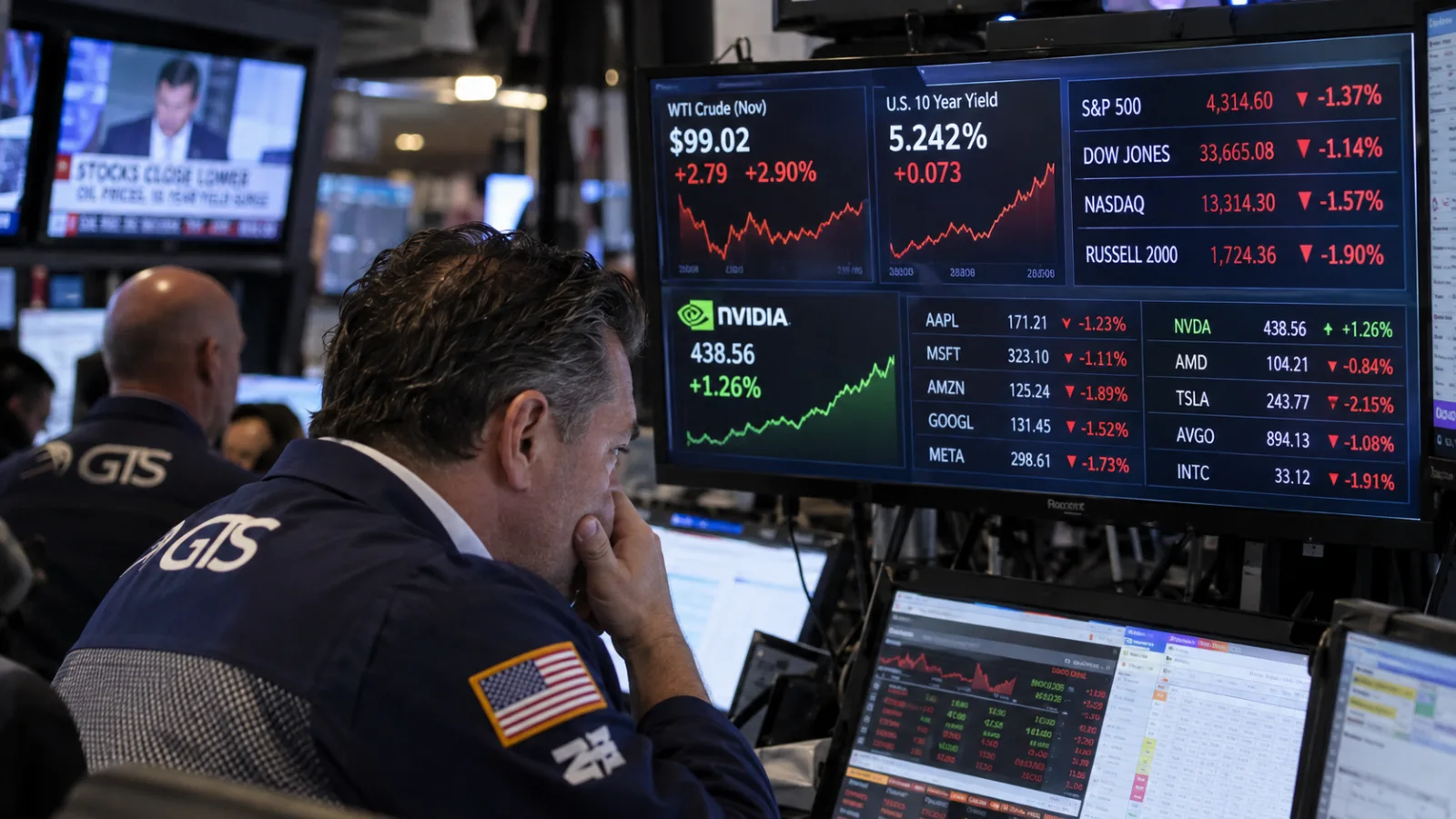
The September 28 selloff looked like a discount-rate shock, not an earnings collapse. As oil held near $99 and the 10-year yield climbed above 5.2%, investors recalculated what rate to use for discounting future profits.
The Selloff Started With Oil, Not AI
The path of the day's decline was fairly clear. Rising tension in the Middle East and uncertainty over an Iran peace deal pushed up oil and diesel prices. That fed inflation worries, which raised the odds of another Fed rate hike, which pushed long-term yields higher, which compressed multiples on high-valuation growth stocks.
- Middle East risk — As hopes for a US-Iran deal faded, a fresh risk premium came back into oil supply.
- Inflation repricing — Higher oil and diesel prices hit not just consumer prices but also shipping costs and corporate margins.
- Fed path reassessed — Markets priced the odds of a hike of 25 basis points or more at October's FOMC meeting at roughly 70%.
- Discount-rate shock — As the 10-year yield climbed to around 5.2%, AI, semiconductor, and EV stocks, whose valuations lean heavily on the present value of distant future profits, were the first to get hit.
| Metric | Level | Note |
|---|---|---|
| S&P 500 | 7,683.69 | -0.77% |
| Nasdaq | 26,820.38 | -0.92% |
| 10-Year Treasury | ~5.24% | Intraday high near 5.28% |
| Brent crude | ~$99 | Holding at elevated levels |
What Nvidia's +1.68% Is Telling Investors
The semiconductor ETF SOXX fell about 2%, but Nvidia rose 1.68% to $228.86. The company's newly approved $150 billion buyback created expectations of support for share value and demand. AMD, Micron, Qualcomm, and Arm all fell by much wider margins.
| Stock | Sept 28 move | What it signals |
|---|---|---|
| Nvidia | +1.68% | $150 billion buyback, cash flow and demand support |
| Tesla | -3.94% | Price-target cut and delivery worries compounded by rate pressure |
| Meta | -4.79% | Discount-rate pressure on long AI payback timelines and high growth expectations |
| Qualcomm | -7.17% | Heavy selling in high-multiple chip design names |
| Arm | -8.70% | Greater rate sensitivity for stocks priced on long-term growth |
| SK hynix ADR | -5.03% | High-beta AI supply-chain pullback, separate from memory-price strength |
Why Tesla Got Hit Harder
Tesla's 3.94% drop isn't fully explained by the market-wide rate shock alone. JPMorgan had already cut its price target citing weak third-quarter deliveries, adding company-specific demand concerns on top of the broader jump in long-term yields.
Higher auto-loan rates hit the car business directly. At the same time, businesses like self-driving and robotaxis, where future cash flow makes up a large share of the valuation, are more sensitive to a rising discount rate. On the same day, both "current car demand" and "future growth value" came under pressure at once.
No Panic, But the Market's Internals Were Weaker Than They Looked
According to Reuters, decliners outnumbered advancers by 3.55 to 1 on the NYSE and 2.56 to 1 on the Nasdaq. The Nasdaq logged 40 new highs against 249 new lows. The index itself fell less than 1%, but market breadth was far worse.
That's why a VIX around 16 alone isn't enough to call the market stable. The absolute level isn't panic, but investors need to weigh how many stocks broke down underneath a relatively small index decline.
Insight Times Editorial Desk