S&P 500 Hits a Record, Russell 2000 Falls 0.59%: Falling Yields Did Not Lift Everything
The October 6 rally was broad among large caps, but small caps lagged and semiconductors split. Money moved toward AI accelerators, networking and power, and away from memory and equipment.
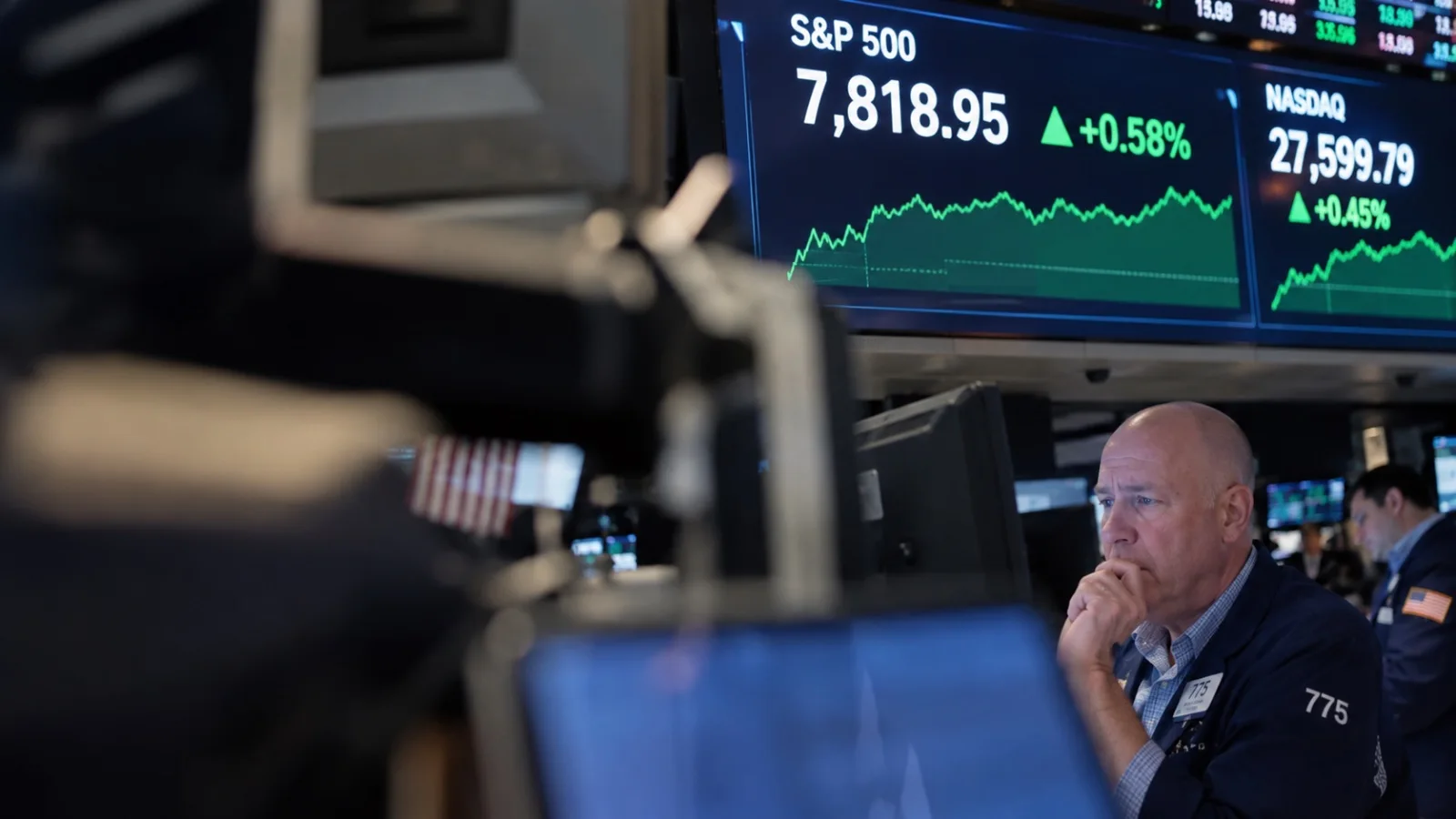
US stocks set records on Oct. 6. The more important signal was the structure of the advance. Long-term yields fell and worries about further tightening eased. But small caps slipped, and inside semiconductors, networking and accelerators diverged from memory and equipment.
The records were strong, but the market felt different
| Index | Close | Change |
|---|---|---|
| S&P 500 | 7,818.95 | +0.58%, record close |
| Nasdaq | 27,599.79 | +0.45%, record close |
| Dow | 51,521.04 | +0.49% |
| Russell 2000 | 2,830.30 | -0.59% |
Calling this a very narrow, large-cap-only market is only half right. On the NYSE, advancers outnumbered decliners by 1.93 to 1. Ten of the 11 S&P 500 sectors rose, with health care the exception. Breadth inside large caps was healthy.
The Russell 2000 fell, though. The takeaway is not a lack of risk appetite across the market. The rally did not fully reach rate-sensitive small caps or parts of the semiconductor group.
Yields fell, but 5.28% is still a high number
The 10-year Treasury yield fell 2.7 basis points to 5.28%. The dollar index weakened about 0.3%. After the weaker September jobs data, expectations for another Fed hike in October retreated quickly. That eased some of the discount-rate pressure on growth stocks.
The structural burden of a 5%-plus long-term yield remains. A modest decline in yields is not enough to trigger a broad re-rating of small caps, highly indebted companies and long-duration assets.
Semiconductors were not one industry
The SOXX ETF closed at $589.45, down 0.01%, essentially flat. The Philadelphia Semiconductor Index, as tracked by Reuters, rose. Differences in constituents and weights can make the gauges diverge, but both showed the same thing: a split inside the group.
| Group | Representative moves | Reading |
|---|---|---|
| AI accelerators and networking | AMD +2.8%, Broadcom +3.67%, Marvell +5.8% | Expectations for AI data-center demand and supply expansion held |
| AI bellwether | Nvidia +0.14% | Trend intact, but not the sole driver of the index gain |
| Memory | SK hynix ADR -6.39%, Micron -1.73% | Possible sector-wide profit-taking and supply-demand pressure. One day's move does not prove slowing demand |
| Chip equipment | ASML -1.39%, Lam Research -3.44%, Applied Materials -2.21% | Front-end equipment names fell together. Whether AI capex is shrinking needs to be confirmed by follow-on orders and guidance |
SKHY is the Nasdaq ticker for the SK hynix ADR. It closed at $182.56 on Oct. 6, down 6.39%.
AI money is not leaving. It is moving.
The most interesting scene came from power, not chips. Alphabet signed a 3,590 MW power agreement with Constellation Energy, and Constellation shares jumped 12.3%.
Cloud and servers held up too. Amazon, Microsoft, Oracle and Dell all rose. That does not fit a story of investors leaving AI broadly. The more natural reading is that the market has started pricing the monetization speed of accelerators, networking, servers, power, memory and equipment separately, even within the AI theme.
In judging the quality of the AI rally, the better question is likely to be which bottleneck the money attached to, not whether AI stocks rose.
Tesla and Nvidia: position matters more than direction
Nvidia rose 0.14% to $239.24. Tesla gained 0.51% to $380.68. Neither damaged its uptrend, but neither confirmed a strong breakout.
Tesla reached $383.33 intraday. The next technical checkpoint is near $386.80. For Nvidia, whether it can retake its short-term high matters. Unlike the record-setting indexes, the leading individual names still have to show they can push through resistance.
Market data are regular-session closes.
Insight Times Editorial Desk