As AI Agents Rise, the CPU Matters Again, and Nvidia Is Joining the Race
GPUs remain the stars of AI chips. But as AI agents plan, run software and connect to outside services, a second kind of chip is moving into view.
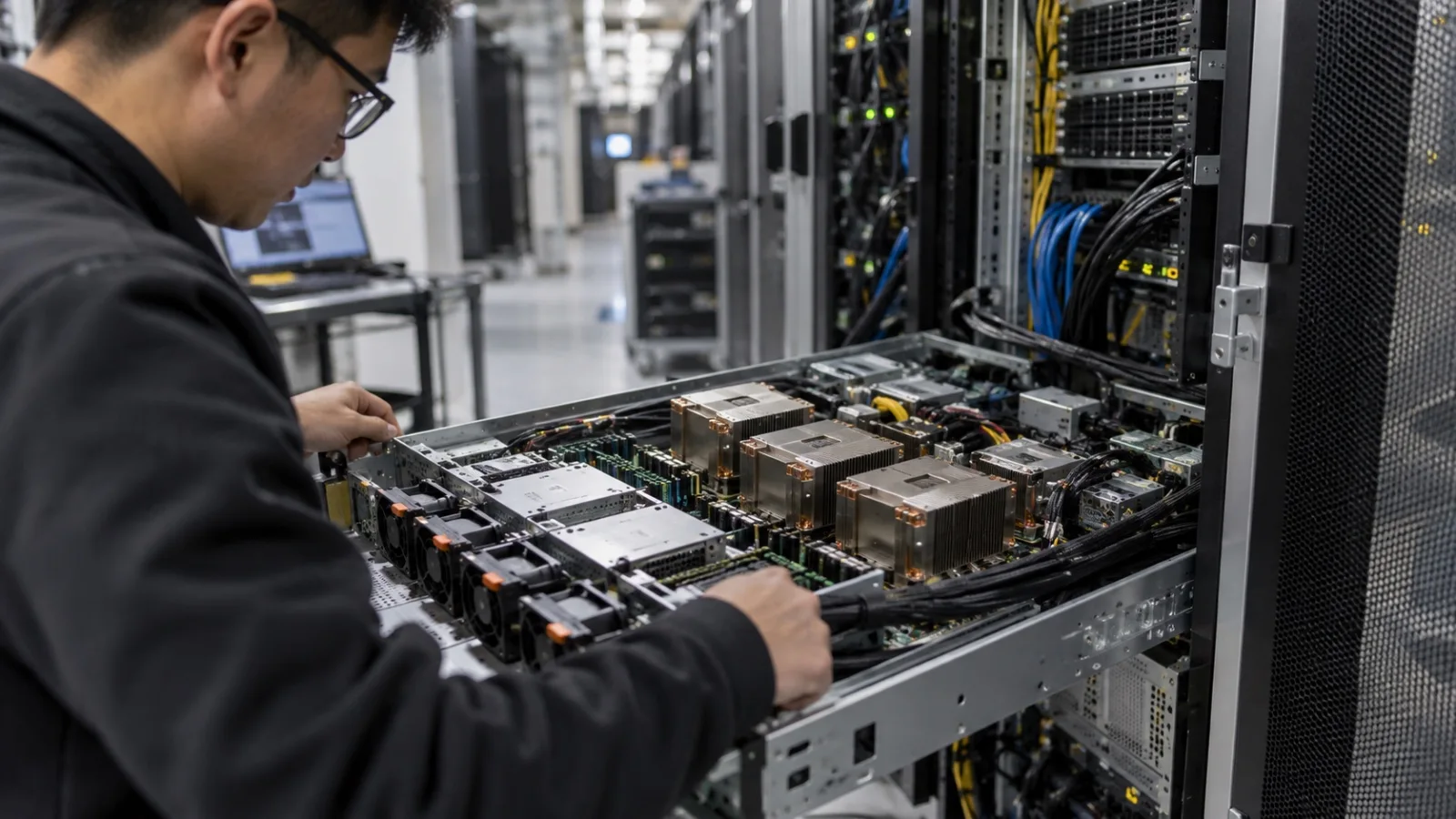
GPUs are still the stars of the AI chip market. That has not changed. But AI is moving into an "agent" stage, in which it makes its own plans, runs software and connects to outside services. Another chip is gaining weight as a result: the CPU.
One company is betting on that shift. Nuvacore, a U.S. startup, is six months old and has no commercial product. It is seeking a valuation of about $2.5 billion.
Nvidia has also entered the market with a new CPU called Vera. Competition in AI chips is widening from the raw compute of GPUs to the processing efficiency of the entire data center.
No product, $2.5 billion: what are investors seeing?
Nuvacore, backed by Sequoia Capital, is seeking several hundred million dollars in new funding, Reuters reported on Oct. 9. The target valuation is about $2.5 billion. The round has not closed, and terms could change.
Investors are focused on the founding team. Gerard Williams, John Bruno and Ram Srinivasan built their CPU design experience at Apple, Qualcomm, Nuvia and elsewhere. Nuvia, which Williams co-founded, was acquired by Qualcomm in 2021 for about $1.4 billion.
Nuvacore's strategy is also notable. Rather than choosing an x86 or Arm instruction set first, it takes a "Core First" approach: design the CPU core for performance and power efficiency, then deal with the instruction set.
That is not a declaration that it will abandon x86 and Arm. The idea is to reduce the constraints an instruction set imposes in the early design stage. Real performance and compatibility will have to be proven by future products.
Why would more AI agents keep CPUs busier?
GPUs process huge numbers of calculations in parallel, which suits training and inference for large AI models. CPUs are strong at running complex programs, operating systems, data management and system control.
Consider an AI agent booking a trip.
User request: "Book me a flight for my business trip to New York next week."
- GPU-centered work: understanding the language, analyzing the schedule, building the travel plan, generating the response.
- CPU-centered work: calling airline APIs, retrieving and verifying data, running the booking program, handling payment and status.
Result: service completed, through repeated cooperation between GPU inference and CPU tasks.
Conceptual diagram. The actual split of computing depends on the service architecture and the accelerators used.
If an agent calls several services and carries a task through, instead of giving a single answer, the CPU workload could rise.
More agents do not mean CPU revenue rises at the same rate, though. Better CPU utilization, software optimization and spare capacity in existing servers also have to be considered.
Why Nvidia is building the Vera CPU
Nvidia announced the Vera CPU for AI agents in May 2026. The company stressed up to 1.8 times the performance of x86 CPUs in some workloads it selected. That is not a proven advantage across all tasks.
CEO Jensen Huang projected server CPU revenue of about $20 billion for the fiscal year. That is a company projection, not realized revenue, and it should not be read as Vera revenue alone.
Nvidia is investing in CPUs because designing the GPU and CPU together as one system offers a chance to improve performance and power efficiency, compared with selling them separately.
| Company | CPU strategy |
|---|---|
| NVIDIA | AI systems integrating Vera CPUs, GPUs and networking |
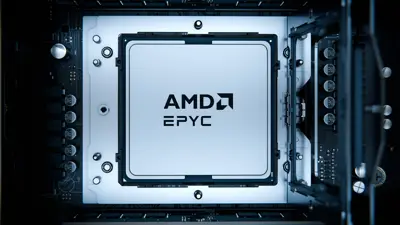
| AMD | EPYC server CPUs paired with Instinct GPUs |
| Intel | Supplying Xeon-based server CPUs and keeping platform competitiveness |
| Amazon | In-house Graviton CPUs to improve AWS cost and power efficiency |
| Microsoft | In-house Cobalt CPUs to optimize Azure infrastructure |
| Nuvacore | Developing a new CPU core optimized for AI data centers |
This is not a simple fight over CPU market share. The question is whose combination of chips and software customers choose when they build servers.
Understanding the future of AI chips means looking not only at GPU performance but at how well the surrounding environment lets GPUs do their work.
The next phase of AI competition may not be a race to build the single fastest chip. It may be a race to make many chips work together to do more at lower cost.
Insight Times Editorial Desk