AMD Crossed $1 Trillion, and the Market Started Looking at CPUs Again
AMD's stock topped a $1 trillion market cap for the first time. The rally isn't just about being an Nvidia alternative. It reflects a reassessment of AMD as a full-stack AI infrastructure vendor, one that bundles CPUs, GPUs and networking, as AI shifts from chatbots to agents and reignites data center demand for CPUs.</deck> <parameter name="oneline">As AI moves from chatbots to agents, the market has started counting the CPU sitting next to the GPU again.
- $1T+ — AMD's intraday market cap first crossed this level on September 21
- $237B — Citi's 2030 forecast for the CPU market
- +107% — Year-over-year growth in AMD's data center revenue, Q2 2026
Inside a GPU rally, the CPU suddenly came back into view
The first three years of the AI investment boom were effectively the GPU era. Training and running large models meant crunching enormous volumes of matrix math in parallel, and Nvidia's GPUs did that job overwhelmingly well.
But how AI gets used is changing. AI is moving from a chatbot that answers a single question to an "agent" that searches, queries databases, runs code, calls APIs, checks the results, and then acts again.
That shift matters because much of this work happens outside the GPU. If GPUs handle the model math, CPUs handle the operating system, memory management, data processing, web requests, databases, security, task scheduling and API execution. The longer an agent works through a multi-step task, the more work lands on the CPU.
AMD describes it this way: in a typical chatbot-style AI server, one CPU might manage four to eight GPUs. In agent-style AI, that ratio can move toward one-to-one, and in some cases the CPU side can end up doing more. This isn't a formula that applies to every data center. It points to a broader direction: as AI workloads change, infrastructure mix changes with them.
| AI stage | Main task | Infrastructure shift |
|---|---|---|
| Training | Large-scale parallel computation | GPU-centric |
| Inference | Model responses, serving | GPU + CPU request handling |
| Agents | Search, databases, APIs, execution, verification | CPU, GPU and networking all grow together |
$237 billion: the numbers behind the "CPU renaissance"
The market has started recalculating this shift in dollar terms. Citi raised its 2030 forecast for the CPU market to $237 billion, up roughly 8.2 times from about $29 billion in 2025, implying an annual growth rate near 52%.
Notably, AMD itself has sharply revised its own server CPU market forecast. As of 2025 the company projected the 2030 server CPU market at around $60 billion. By September 2026, that estimate had jumped to more than $220 billion. AMD attributes the increase to demand from agentic AI for data retrieval, execution and orchestration.
Of course, a 2030 forecast is an assumption, not a fact. If agent-based services spread more slowly than expected, or if CPU workloads migrate to software optimization and dedicated accelerators, the market could end up smaller. Still, the fact that industry estimates for CPU demand have jumped several-fold in barely a year is itself a meaningful signal.
Why AMD looks different now
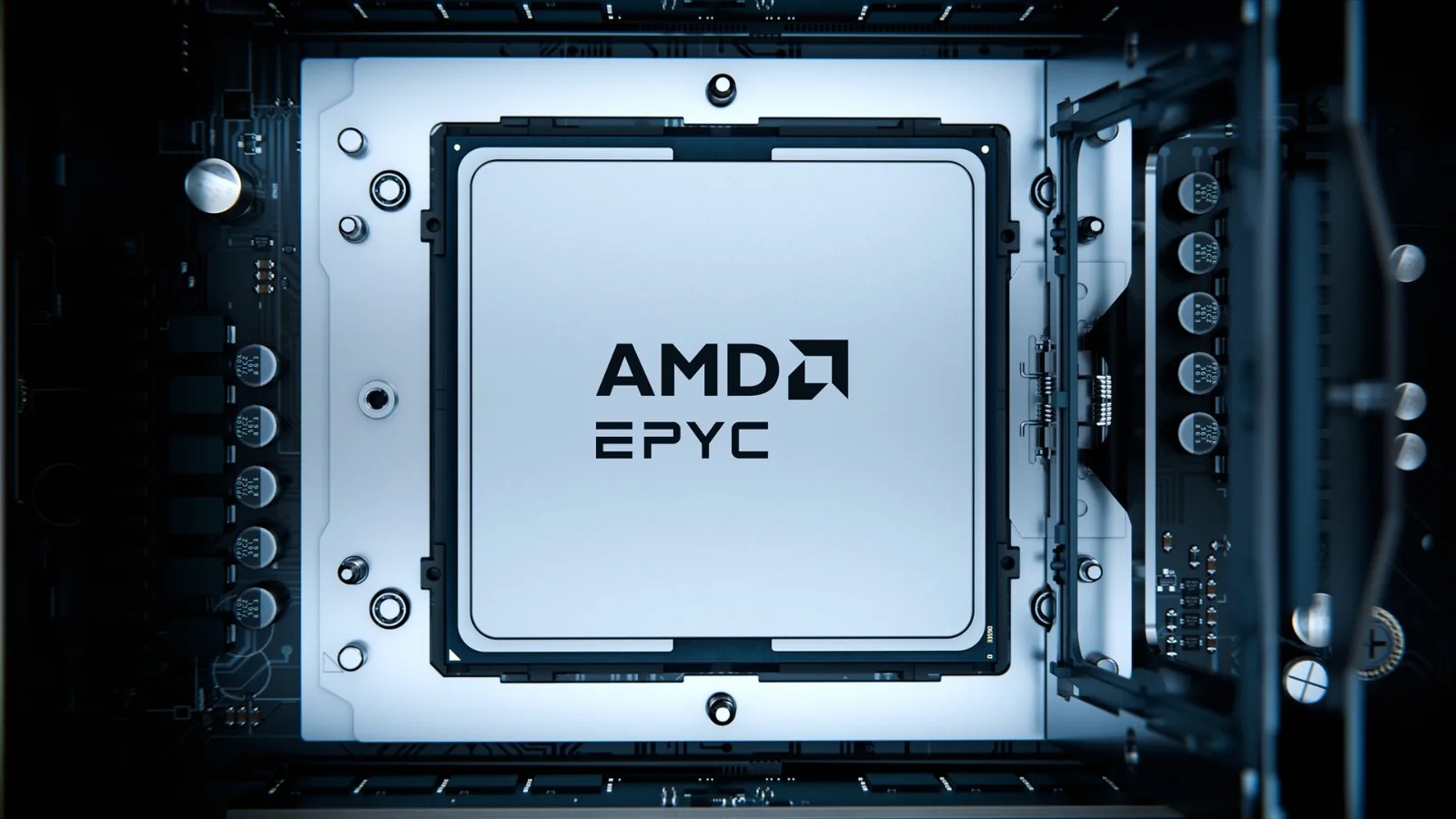
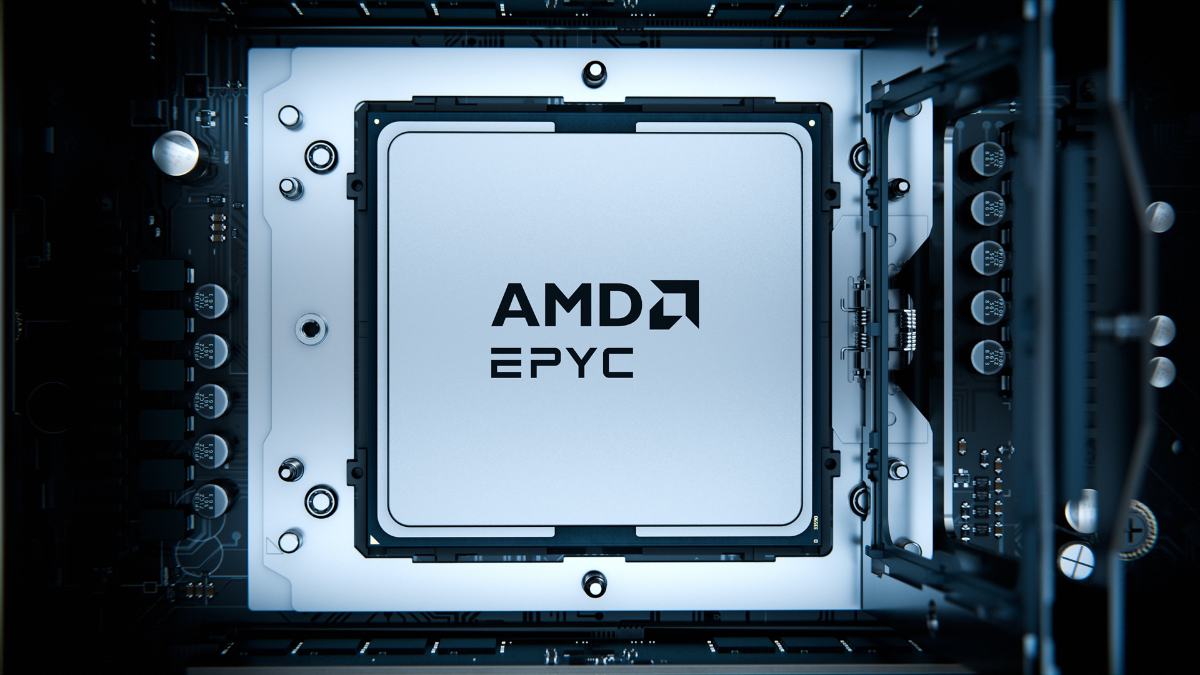
AMD is no longer a company selling one product into the AI buildout. It now offers EPYC server CPUs, Instinct AI accelerators, Pensando DPUs and networking, and Helios rack-scale systems, all under one roof.
The logic behind that combination is simple. As AI data centers move from bulk-buying a single type of GPU toward optimizing the CPU, GPU, network and full rack together, AMD's potential share of that spending can grow.
Its results already point in that direction. In the second quarter of 2026, AMD's data center revenue reached $6.7 billion, up 107% year over year, and accounted for 58% of total revenue. Data center operating income was $2.1 billion. That's not yet proof of a long-term "CPU renaissance," but it does make clear that AMD can no longer be described simply as a PC CPU company.
Venice isn't about topping a benchmark chart
AMD's next-generation, sixth-generation EPYC processor, code-named "Venice," is one of the first products to test this thesis. AMD says its 256-core EPYC 9996 delivered 1.2 times the per-core performance and 2.24 times the platform-level performance of Nvidia's Vera platform on the SPECrate 2026 Integer benchmark, and cited a 2.4x to 3.7x advantage on select enterprise and cloud workloads.
Those numbers shouldn't be read simply as "AMD is twice as fast as Nvidia." The CPU and system configurations differ, and the benchmarked workloads are CPU-centric tasks, not GPU computation. Some figures are based on AMD's own testing and modeling.
The more practical question is different: how many agents can run in the same power and rack footprint? Can fewer servers lower software licensing and cooling costs? And, above all, are customers actually buying Venice at scale? Data centers are run on total cost of ownership, not benchmark tables.
A trillion-dollar valuation creates its own new risk
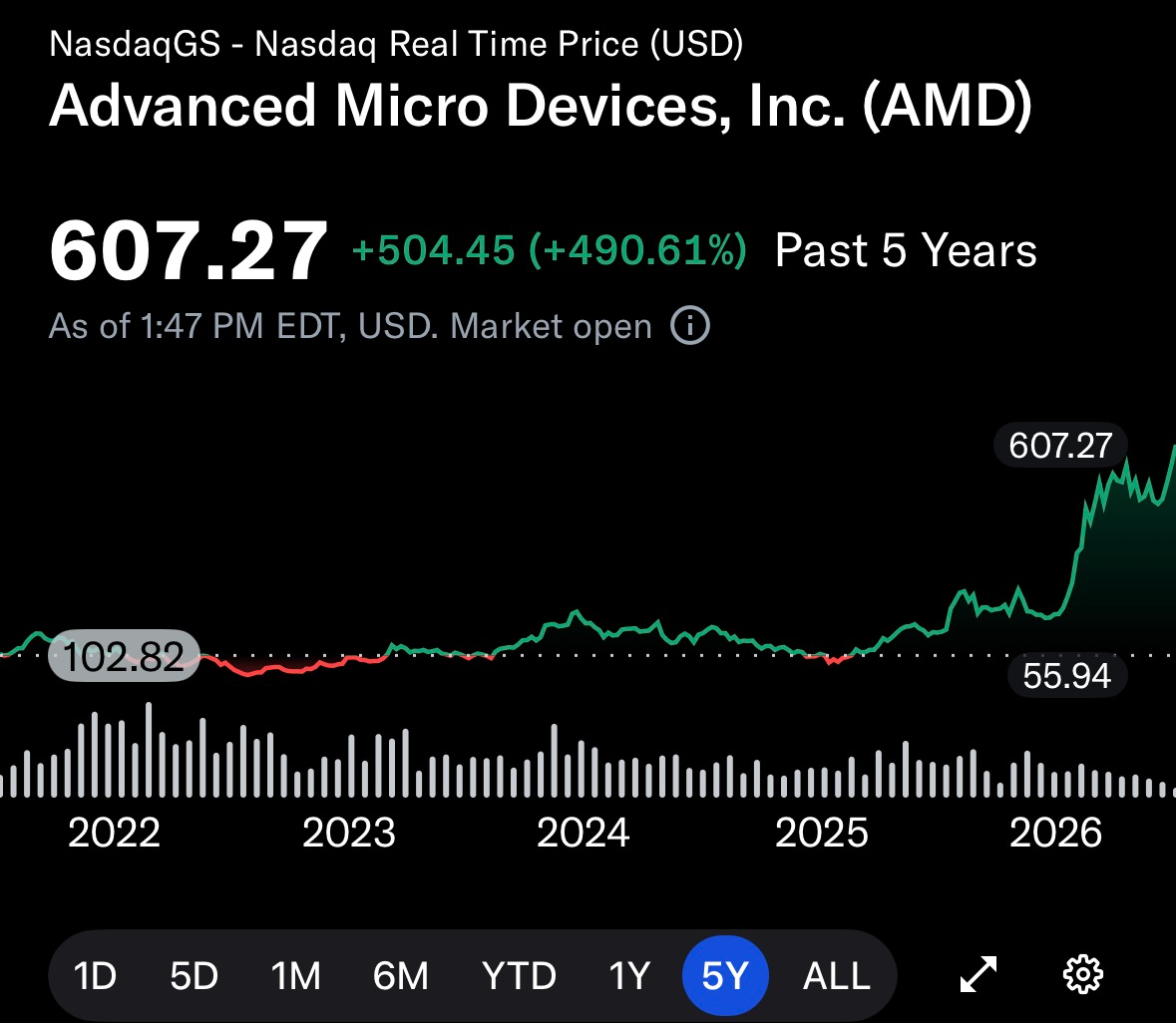
Much of the good story is already priced in. AMD's market cap crossed $1 trillion intraday for the first time on September 21. The stock climbed to around $613, up roughly 185% so far in 2026.
From here, the bar gets higher. A $1 trillion valuation is hard to justify with a simple story that "AMD will grow." EPYC needs to keep taking server CPU share, Instinct needs to keep winning repeat business as an Nvidia alternative, Helios needs to convert into system-level revenue, and margins need to hold up through all of it.
So what matters for AMD from here isn't the volume of good news, but whether it can keep clearing an ever-rising bar of expectations. A business getting better and a stock's expected return getting better are not the same thing.
Insight Times Editorial Desk