SpaceX Is Worth $2 Trillion. Three Bets Will Decide Whether It Gets Bigger
The company that dominates space now eyes ground-level wireless and AI data centers. The question is not whether the businesses can work. It is how much more value can be added to a company already above $2 trillion.
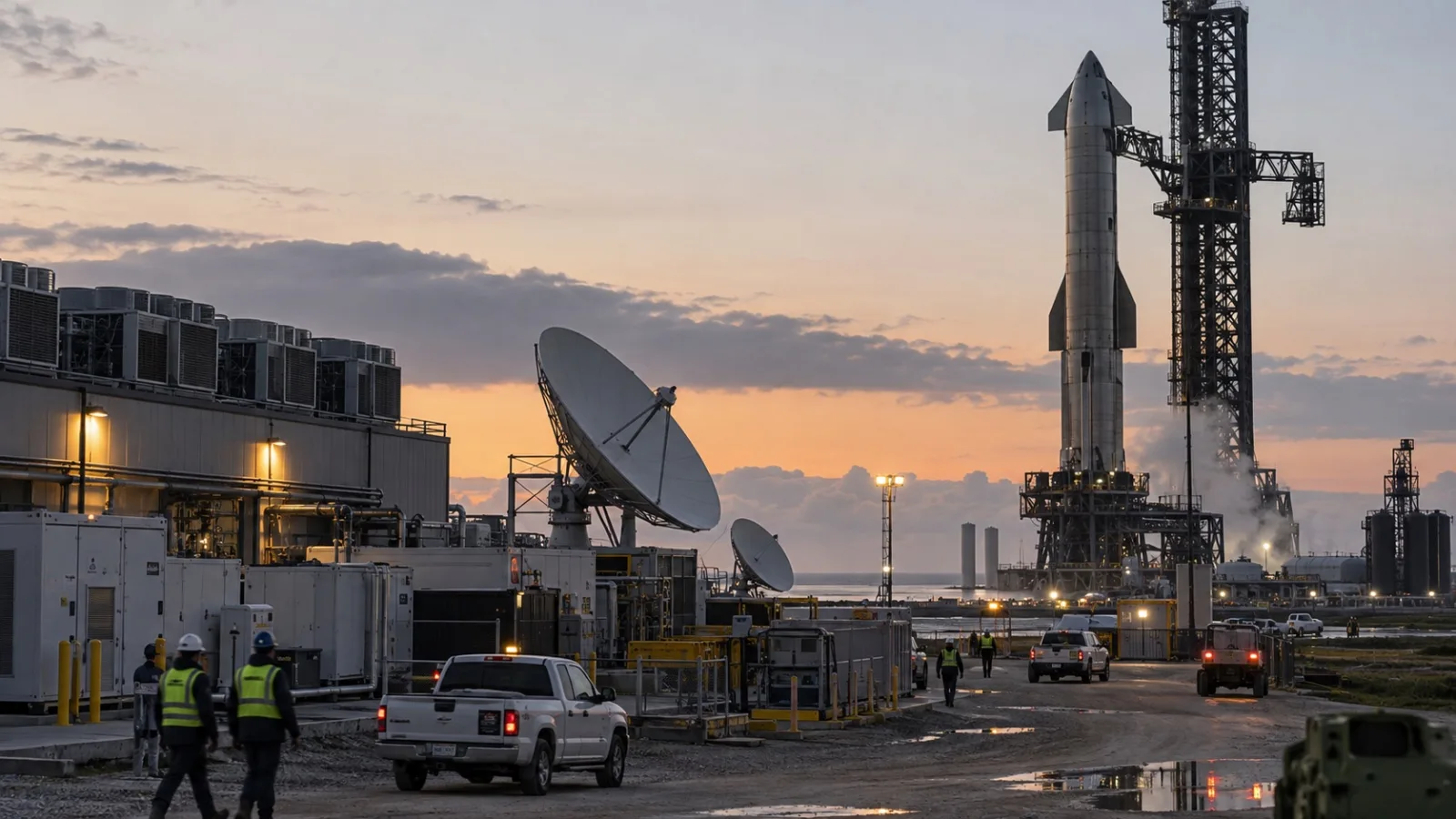
1. Why value a rocket company at more than $2 trillion?
Anyone who still thinks of SpaceX as a rocket company will struggle to understand the stock. It listed on the Nasdaq on June 12, 2026. On Oct. 9 it closed at $162.57, about 20.4% above the $135 IPO price.
Investors are paying a high premium for Elon Musk's plan to combine space transport, a global communications network and AI computing.
| Metric | Figure |
|---|---|
| Q2 2026 revenue | $7.8 billion, up 92% year over year |
| Adjusted EBITDA | $3.5 billion, up 191% year over year |
| GAAP net loss | $541 million |
| Market cap on Oct. 9 | About $2.1 trillion |
A fast-growing company is not the same thing as a cheap stock. Adjusted EBITDA is not net income or free cash flow.
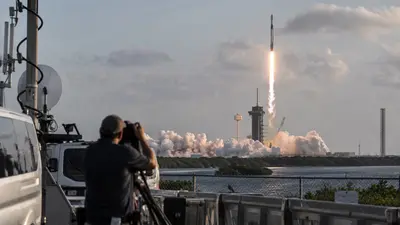
2. Growth engine one: why Starship matters
If a delivery company cut shipping costs by 90%, businesses that never made sense could suddenly work. SpaceX is aiming for something similar with Starship.
Reusing Falcon 9 changed the cost structure of rockets. Starship aims to reuse an entire heavy-lift vehicle over and over, launching more satellites faster.
But a launch cost of $100 per kilogram or less is not a proven commercial result. It requires repeated launches, shorter turnaround times and enough demand. The key is how cheaply and quickly the same rocket can fly again.
3. Growth engine two: Starlink threatens US carriers
On Oct. 8, SpaceX signed an agreement to acquire a nationwide portfolio of 800 MHz spectrum. The reported deal size is about $8 billion, but the official announcement did not disclose the price, and the deal needs FCC approval.
Starlink Mobile lets ordinary smartphones connect directly to satellites. The 800 MHz low band has relatively good range and indoor reach, and could complement the existing 2 GHz band.
That does not mean satellites will soon replace terrestrial 5G. A reasonable view is that the service starts as a supplement in coverage gaps and may over time compete in some markets. The important numbers are not just subscribers but revenue and profit per customer.
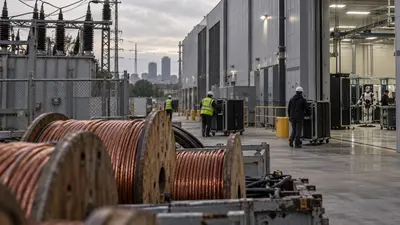
4. Growth engine three: SpaceX bets on AI data centers too
SpaceX has reportedly been pursuing about $40 billion in financing to buy Nvidia AI chips. The reported plan, roughly $10 billion in bank loans and $30 billion in bonds, is not a completed deal.
SEC filings include a contract to provide Google with computing capacity equivalent to about 110,000 Nvidia GPUs. The contract specifies fees of $920 million a month starting in October 2026. Supply and termination conditions apply, so not all of it can be treated as locked-in profit.
If $40 billion were borrowed entirely at 6%, annual interest alone would be $2.4 billion. Depreciation, power and operating costs come on top. What matters more than the contract value is how much cash is actually left.
5. Value emerges when the three businesses connect
- Starship: lower space transport costs
- Starlink: expanding communications revenue
- Cash flow and the ability to raise capital
- New growth opportunities in communications and AI
Rockets lower the cost of putting satellites in orbit, and satellites add communications customers. Cash from the communications business can be reinvested, and if AI infrastructure also earns high returns, growth opportunities could widen.
But AI data centers require enormous amounts of power and capital of their own. Whether the links between the businesses actually raise returns on capital remains to be proven.
6. 2027 price outlook: $100 or $250?
Earlier valuation estimates of $280 billion to $600 billion sit far below the current market cap of about $2.1 trillion and cannot serve as an upside forecast. The calculation has to be redone using the actual share count and valuation.
| Scenario | Price | Change | Valuation | Assumptions |
|---|---|---|---|---|
| Bear | $114 | -30% | $1.5 trillion | Starship delays, mobile regulatory burden, worsening AI returns |
| Base | $190 | +17% | $2.5 trillion | Starlink growth, AI contract revenue realized, financing burden managed |
| Bull | $266 | +64% | $3.5 trillion | Better Starship economics, mobile expansion, rapid AI cash flow growth |
This is Insight Times' assumption-based analysis, not an official Wall Street price target. It holds the share count fixed at about 13.182 billion and does not reflect new issuance, mergers or dilution. The reference close is $162.57 on Oct. 9, 2026.
The bear case is not a bankruptcy forecast. It describes high expectations coming down and the valuation shrinking. The average 12-month price target among 38 analysts tracked by Stock Analysis is about $221.97, but that should not be read as a firm forecast for the end of 2027.
7. Another risk in the stock: lockup expirations
Selling restrictions on employees, early investors and insiders who held shares before the IPO lift in stages from the second half of 2026 through 2027. Terms differ by holder, so no single date explains it.
A lockup expiration does not automatically mean a price collapse. Investors should watch actual selling volume, the market's capacity to absorb shares and whether insiders keep selling.
8. Who gains and who gets squeezed if SpaceX grows?
- Nvidia (NVDA): could benefit if the large GPU purchases go ahead.
- AI data center and power infrastructure: demand for power, cooling and networking could expand.
- AT&T (T), Verizon (VZ), T-Mobile (TMUS): profitability could come under pressure from tougher mobile competition.
- Existing satellite operators: more competition over coverage and launch costs.
- Telecom equipment and infrastructure: opportunity and threat both exist, depending on how terrestrial and satellite networks combine.
Shares of the major US carriers fell sharply right after the 800 MHz deal was announced. Still, delivering a ground-network-quality experience will take considerable time and investment.
9. Five numbers to track in 2027
- Starship reuse cost and launch cadence: actual turnaround time and cost of customer missions
- Starlink subscribers and ARPU: whether customer growth keeps profitability intact
- 800 MHz approval and real service quality: indoor connectivity, capacity, paid service areas
- AI revenue and free cash flow: contract revenue recognition and cash left after interest and capital spending
- Debt, interest coverage and share count: financial risk and dilution
How remarkable a future Musk describes matters less than whether that future has begun to earn real cash. The speed at which the answer shows up in quarterly results will likely shape the direction of the stock.
Insight Times Editorial Desk