Musk Takes Aim at the Big Three Wireless Carriers: Starlink's Next Market Is the Smartphone
SpaceX has agreed to buy a nationwide 800MHz spectrum portfolio in a deal reportedly worth about $8 billion. Winning spectrum is one task. Building a profitable national network is another.
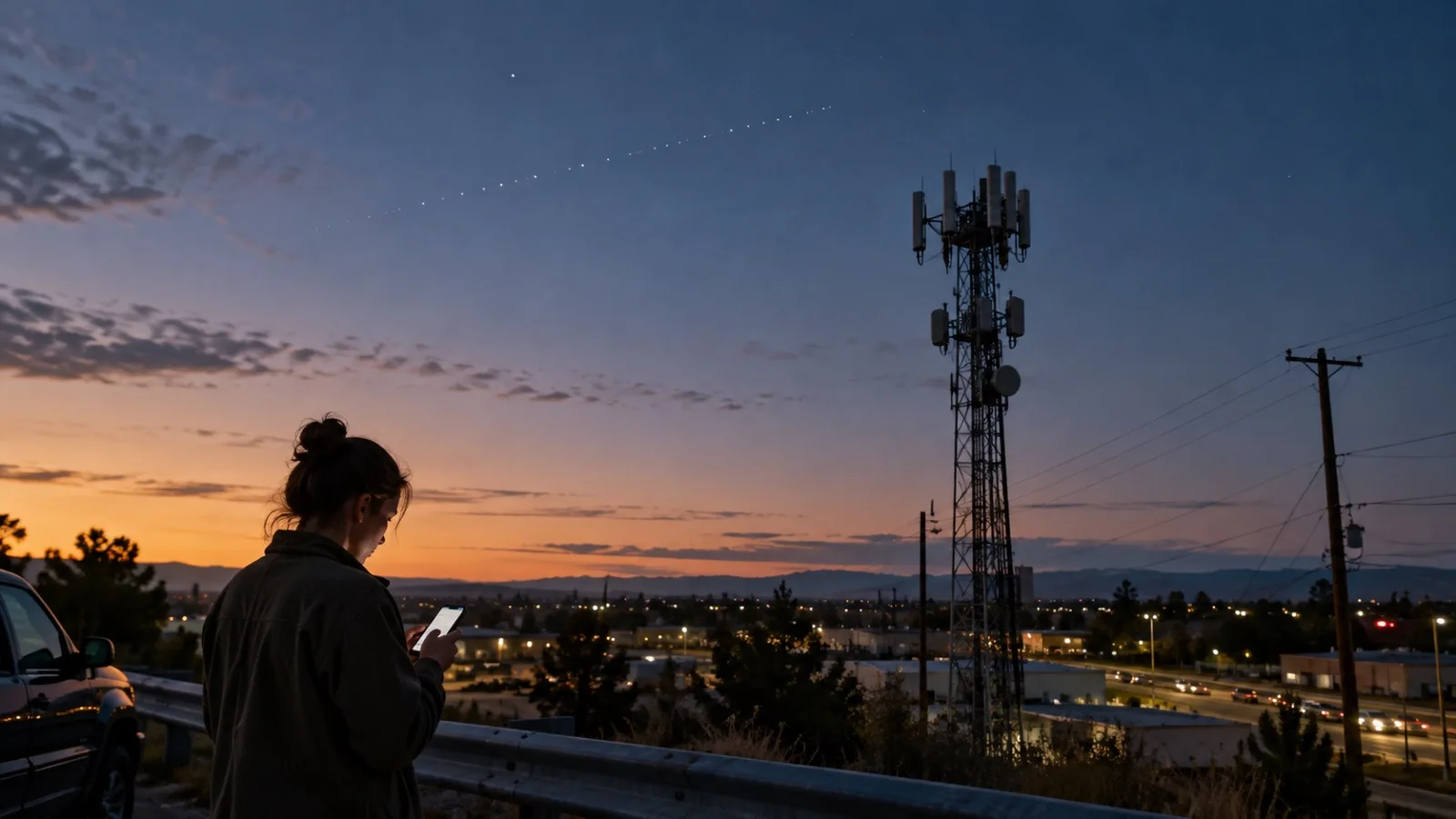
SpaceX has signed a deal to acquire a nationwide 800MHz spectrum portfolio. The reported price is about $8 billion. Starlink, which grew on satellite internet, now seeks a base from which it could compete directly with AT&T, Verizon and T-Mobile. If the mix of satellite and terrestrial networks works, the competitive map of US wireless could change. But securing spectrum and building a profitable national network are separate challenges.
1. What Starlink bought is a chance to enter a market
On Oct. 8, SpaceX signed a definitive agreement to buy the entire nationwide 800MHz spectrum portfolio held by US investment firm Grain Management.
The deal covers up to 14MHz of paired low-band spectrum. The $8 billion price is an estimate based on press reports. The official announcement did not disclose a figure. Closing requires approval from the Federal Communications Commission (FCC).
The key point is that SpaceX has begun to target a market different from its existing satellite service.
Until now, Starlink's strength has been in coverage gaps. It can connect mountain areas and open sea where there are no ground towers.
But Americans do not pay a monthly phone bill only for connections in dead zones. They pay for service that works without dropouts at home, in the office, in city centers and underground.
To win customers from the big three carriers, SpaceX has to prove itself in places where satellites struggle.
2. Why 800MHz
Radio waves behave differently by frequency. In general, lower frequencies cover wide areas and pass through obstacles more easily. Higher frequencies offer more bandwidth but can suffer more signal loss and demand denser tower networks.
- Wide coverage (800MHz): Relatively good at long range and indoor reach. Limited capacity per unit of bandwidth.
- Added capacity: Spectrum assets for satellite mobile service. Actual capacity depends on bandwidth, signal quality and satellite design.
Conceptual diagram of relative differences in frequency characteristics. It is not measured data on actual coverage or speed.
SpaceX's plan is to combine a low-band terrestrial network with its satellites. In particular, 800MHz could help improve indoor and wide-area coverage, where existing satellites have been weak.
But low-band spectrum is no cure-all. With at most 14MHz of bandwidth, it is hard to replace the full service capacity of the three incumbents.
The crux is not simply adding 800MHz to the satellites. It is how economically SpaceX can build a ground network that uses 800MHz.
3. To beat the big three, it has to come down to the ground
Through a separate process, SpaceX has also won approval for a system of 15,000 satellites for direct-to-phone connections. That approval is independent of the 800MHz transfer.
Satellites are strong in geographic coverage. In dense cities, though, a ground tower's capacity and ability to reuse spectrum matter more.
SpaceX therefore has three options: build its own towers, lease existing towers, or use incumbents' networks as a mobile virtual network operator (MVNO). In practice, it may combine them.
Building its own network gives more control but takes huge capital. Leasing speeds market entry, but wholesale rates can limit profit.
Wall Street also separates the threat of disruption from the commercial timetable. Citi sees a serious threat to incumbent carriers materializing in 2029 at the earliest. That is an analyst's forecast, not a fixed schedule.
4. Who gains and who worries in the US stock market
On Oct. 9, the prospect of SpaceX's entry pushed carriers and infrastructure companies in opposite directions. T-Mobile fell about 13.3%, AT&T about 9.8% and Verizon about 8.8%. American Tower rose about 9.3% and Crown Castle about 16%.
| Company | Opportunity or risk | What matters for investors |
|---|---|---|
| T-Mobile (TMUS) | Satellite partnership and direct competition could coexist | Changes to the partnership, net subscriber adds |
| Verizon (VZ) | Pressure on pricing and customer retention | Churn, wireless service revenue |
| AT&T (T) | Possible tougher nationwide competition | ARPU, free cash flow, capex |
| American Tower (AMT) | Possible demand for new tower leasing | New US leasing revenue |
| Crown Castle (CCI) | Opportunity from ground networks and small cells | New contracts and lease growth |
The towers are the interesting part. A new competitor could squeeze incumbent carriers' profits, yet the infrastructure demand needed to build a network could rise.
If SpaceX chooses small cells or another build method, the benefit to tower companies could be smaller than expected.
5. Four numbers investors should watch
- FCC approval and commercial timeline: The gap between spectrum transfer approval and actual service launch. The shorter it gets, the more concrete market entry becomes.
- Ground network spending and tower count: The split between self-build and leasing. Higher-than-expected costs would pressure profitability.
- Mobile subscribers and ARPU: Real growth in paying customers and monthly revenue per subscriber. These show whether technical success turns into revenue growth.
- Churn and service revenue at the big three: Evidence of whether market share is actually shifting. Earnings changes matter more than share-price drops.
In the end, the deal suggests US wireless may gain one more competitor. But the outcome will not be decided by technology alone. Coverage, quality, price and how efficiently invested capital is recovered will decide it.
The odds that Starlink changes the industry have risen. What remains to be confirmed is whether SpaceX itself can earn enough money while changing it.
Insight Times Editorial Desk