Rates Fell, Chips Cracked: Wall Street Worries About AI Payback, Not OpenAI Revenue
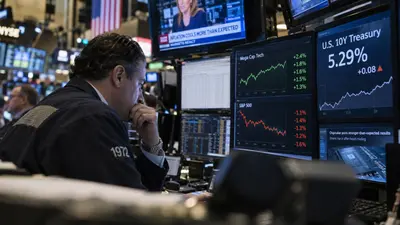
About two-thirds of S&P 500 stocks rose on Oct. 8, yet the Nasdaq fell 1.25%. Money did not leave the market so much as reprice the return on AI spending.
Indexes fell, but most stocks rose
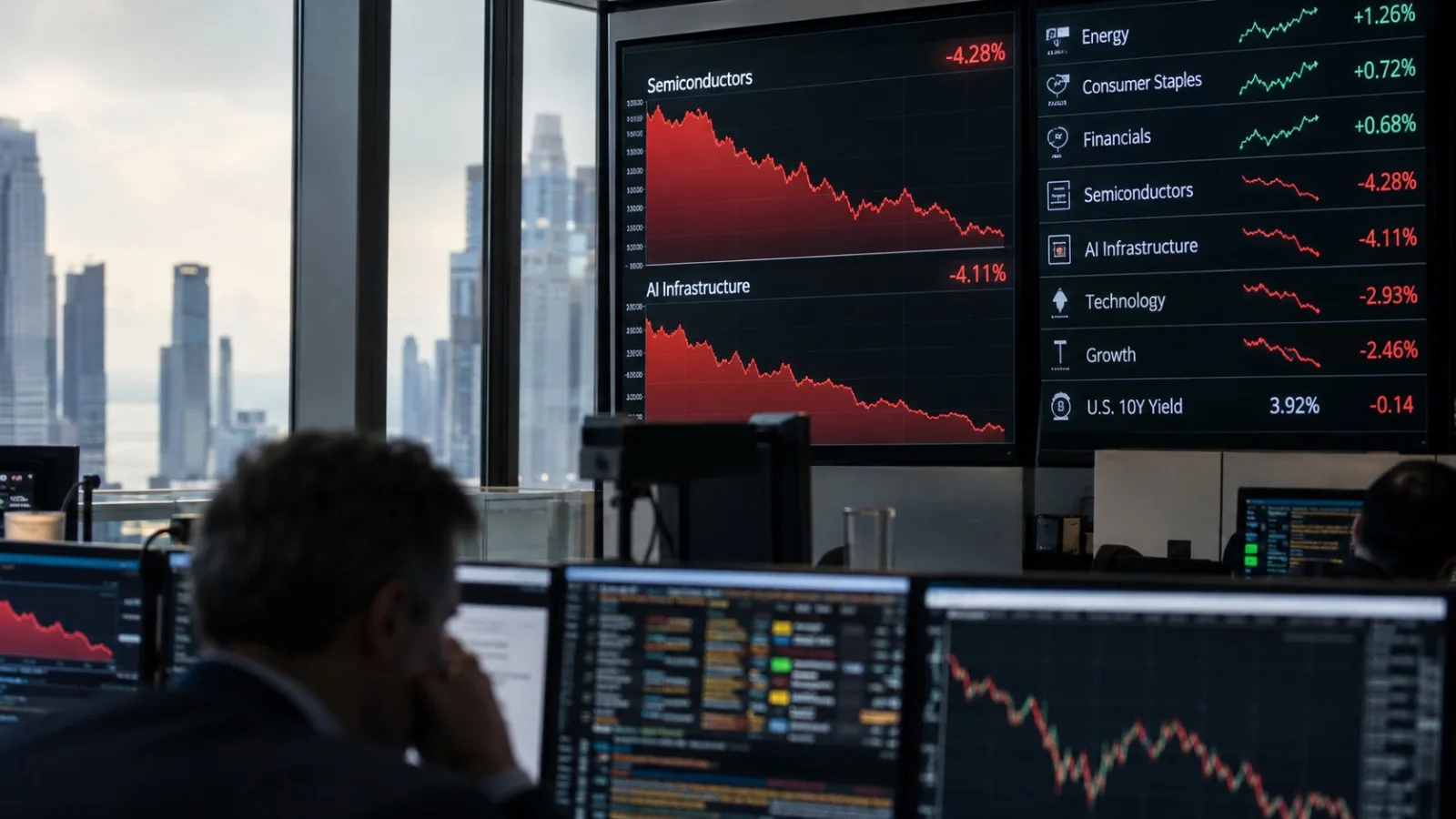
The Dow closed at 51,231.64 (+0.10%), the S&P 500 at 7,765.36 (-0.47%) and the Nasdaq at 27,193.34 (-1.25%). The semiconductor index dropped 3.39%. The equal-weighted S&P 500, by contrast, gained 0.60%, and about 66% of its components rose. The gap between cap-weighted and equal-weighted returns was 1.07 percentage points. A handful of mega-cap stocks, in effect, flipped the direction of the index.
Why $70 billion became $50 billion
The Financial Times reported that OpenAI's annualized revenue was approaching about $50 billion as of late September. Media had circulated a figure of about $70 billion in late September, a $20 billion difference. Neither number is confirmed full-year results. An annualized figure takes the revenue pace over a given period and extends it across a year.
The gap comes down to how much of the sales made through cloud partners is counted at gross value. The larger figure was reportedly circulated as investors built numbers comparable with rival Anthropic. Reuters said explicitly that it could not independently verify the related documents. There is therefore no basis to read this as a collapse in growth or a loss of $20 billion in cash.
So why did Oracle and CoreWeave hurt more?
What the market repriced was less the revenue figure itself than future ability to pay. AI model companies sign long-term contracts for large amounts of computing capacity with data center and cloud operators. The infrastructure companies then invest in equipment up front, relying on those contracts. If end-customer revenue and cash inflows fall short of expectations, the payback on that capital spending can slow even though the contracts exist.
On the day, CoreWeave fell 7.77%, Oracle 5.48%, Broadcom 4.35% and Nvidia 2.94%. That does not mean a contract default or a credit event occurred. What is confirmed is a repricing of the shares. Any actual deterioration in cash flow remains to be tested.
Lower yields did not rescue chips
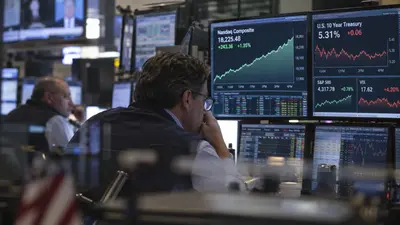
The 10-year Treasury yield eased from the 5.3% range intraday to about 5.23%. That direction normally favors growth stocks. Tech still failed to bounce. Energy rose about 2.97% and consumer staples 2.11%. Brent crude jumped to $104.28 a barrel in the regular session. The moves can be read as the product of two forces at once: worries about the profitability of AI investment and anxiety over oil supply.
Insight Times Editorial Desk