Fed Hikes 25bp, 10-Year Hits 5%. Why Did the Nasdaq Hold Up?
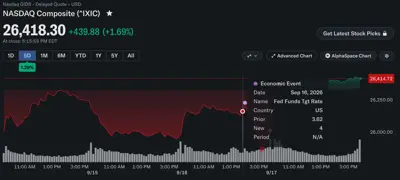
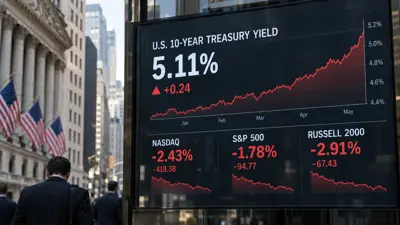
The Nasdaq slipped just 0.01% and chip ETF SOXX rose 0.64% even as the Fed raised rates for the first time in three years and the 10-year yield pushed back toward 5%.

At a glance, this wasn't one market
10-Year Treasury: ~5.00% (rebounded late in the session) Nasdaq: -0.01% (25,978.42) SOXX: +0.64% (502.06) Dow: -1.21% (51,461.90)
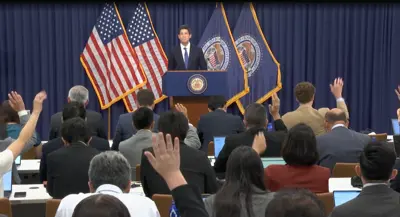
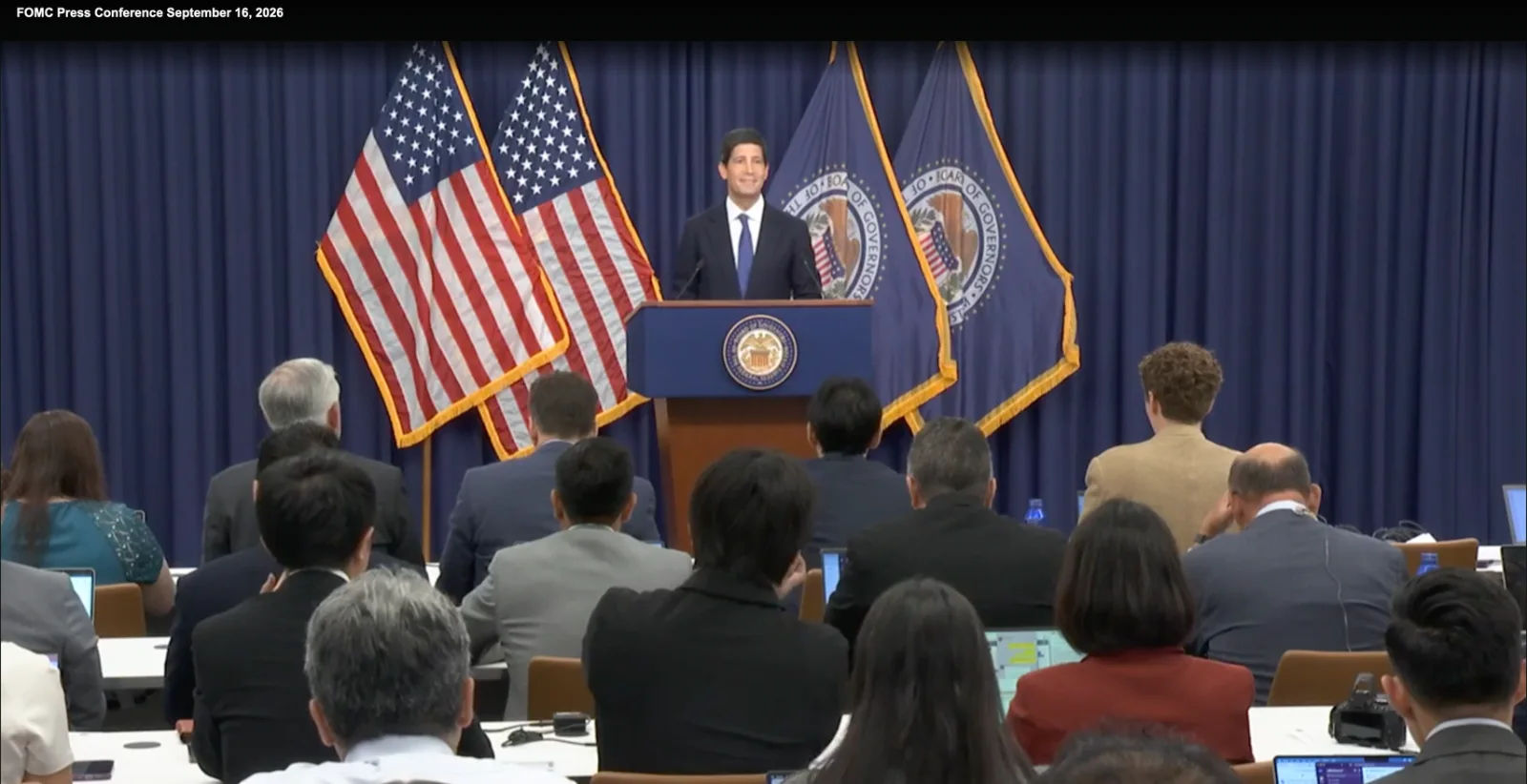
The Federal Reserve raised its target range for the federal funds rate to 3.75-4.00% on September 16, the first hike since July 2023. On the same day, August retail sales rose 1.2% month over month, and the control group, which strips out volatile categories, rose 1.4%. Import prices climbed 0.7% month over month and 7.0% year over year, while import prices excluding food and fuel were up 5.6% year over year.
That is an uncomfortable combination for bond markets. Consumer spending came in stronger than expected, and import-side inflation turned back up. As a result, the path forward, whether the Fed hikes again, mattered more than Wednesday's hike itself.
Brent crude fell 2.7% to $105.83. The fact that the 10-year yield climbed back to 5% even as oil dropped sharply in a single day suggests the rate move was driven less by energy prices and more by strong consumer demand and the possibility of further Fed tightening.
Why did the Dow drop 1.21% while the Nasdaq barely moved?
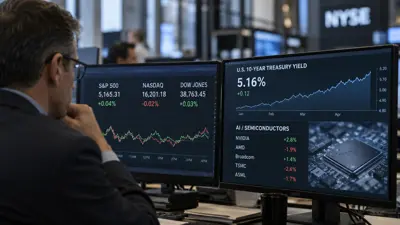
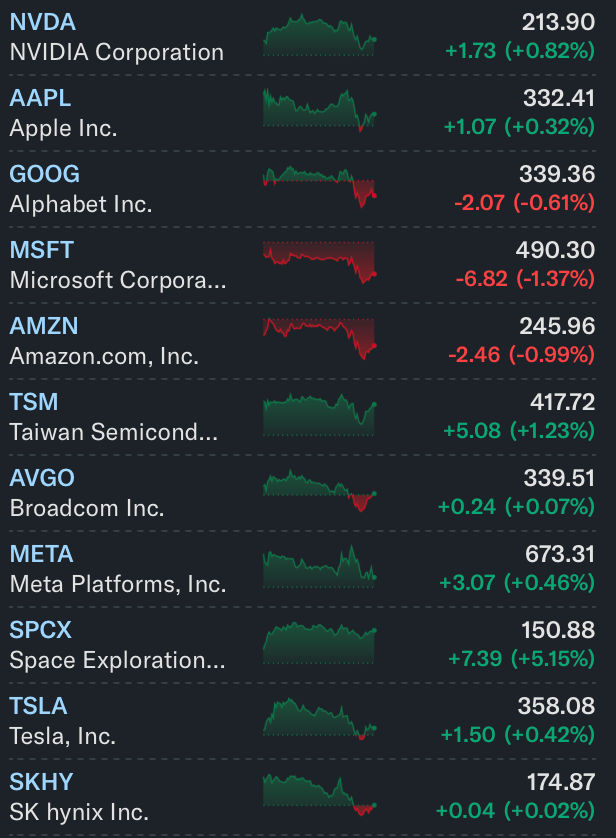
Normally, a 10-year yield near 5% raises the discount-rate burden on long-duration growth stocks. This time, though, the gap opened up inside tech itself. Nvidia rose 0.82%, AMD gained 1.65%, Dell jumped 3.64%, Marvell climbed 3.61%, Super Micro gained 3.40%, and Oracle rose 2.00%, with AI compute, servers, networking and cloud infrastructure names outperforming.
Microsoft fell 1.37%, Amazon dropped 0.99%, and Alphabet slipped 0.61%, with large platform stocks lagging. Reading that gap as "AI is safe, Big Tech is risky" goes too far. A more precise read is that the market is no longer trading AI as a single theme. It has started distinguishing how quickly capex turns into actual revenue.
Dell and Super Micro sell servers. Marvell is exposed to networking and custom silicon demand. Nvidia and AMD see accelerator sales tied directly to AI spending. For these companies, the distance between data-center capital outlays and reported results is short. Platform companies face a different math: AI investment itself is a massive cost, and they still have to prove how much revenue that spending will eventually generate.
| Category | Representative moves | Market's read |
|---|---|---|
| AI infrastructure | NVDA +0.82%, AMD +1.65%, Dell +3.64%, MRVL +3.61% | Relative preference for names where capex converts to revenue quickly |
| Large platforms | MSFT -1.37%, AMZN -0.99%, GOOGL -0.61% | AI growth expectations intact, but high multiples face a heavier discount-rate burden on long-dated cash flows |
| Semiconductors broadly | SOXX +0.64%, but some equipment makers and legacy chip names lagged | Selective buying concentrated in names with clear AI demand visibility, not a sector-wide rally |
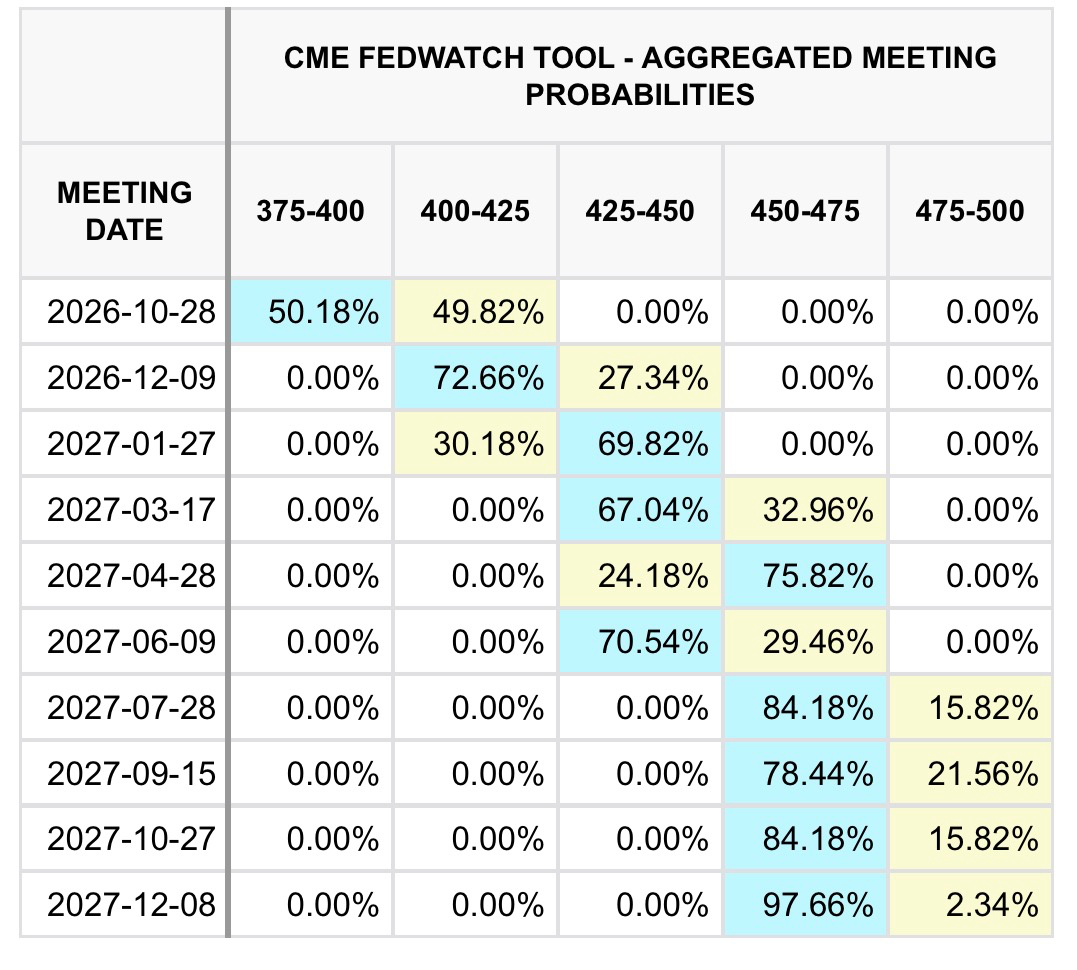
The number that mattered most Wednesday was 5%
The Fed's 25 basis-point hike was already largely priced in. The number more likely to set the next phase of pricing is the US 10-year yield at 5%. If the 10-year slips back below 5% and Brent stabilizes in the low $100s, the discount-rate pressure could ease, and the relative strength in AI and semiconductors could broaden across the market.
The opposite scenario stays on the table too. If consumer spending and import prices keep running hot and the 10-year holds above 5%, even today's resilient AI infrastructure names will eventually feel the weight of a higher discount rate. That is especially true for stocks whose prices have run well ahead of earnings, where "good business" and "good price" could split apart again.
So rather than reading Wednesday's Nasdaq resilience as proof that "the market shrugged off 5% rates," it may be more accurate to see the day as a test of how far money still reaches at a 5% rate.
Insight Times Editorial Desk