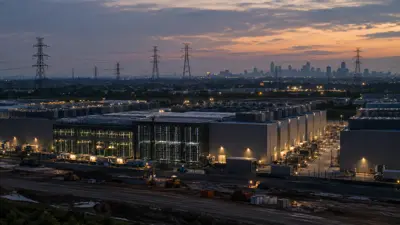
Nasdaq Jumps 1.69% as Rates Ease, But This Rebound Was Different
Falling oil and a retreat in the 10-year below 5% lifted growth stocks, but the real story was money concentrating in AI's actual bottlenecks: GPUs, memory, servers and power.
The market's math changed in a day
| S&P 500 | +1.14% |
| Nasdaq | +1.69% |
| Dow | +0.61% |
| VIX | -12.82% |
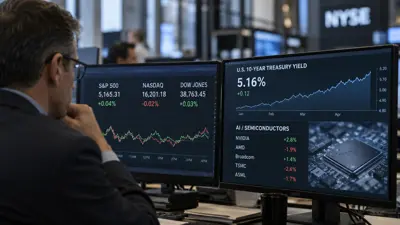
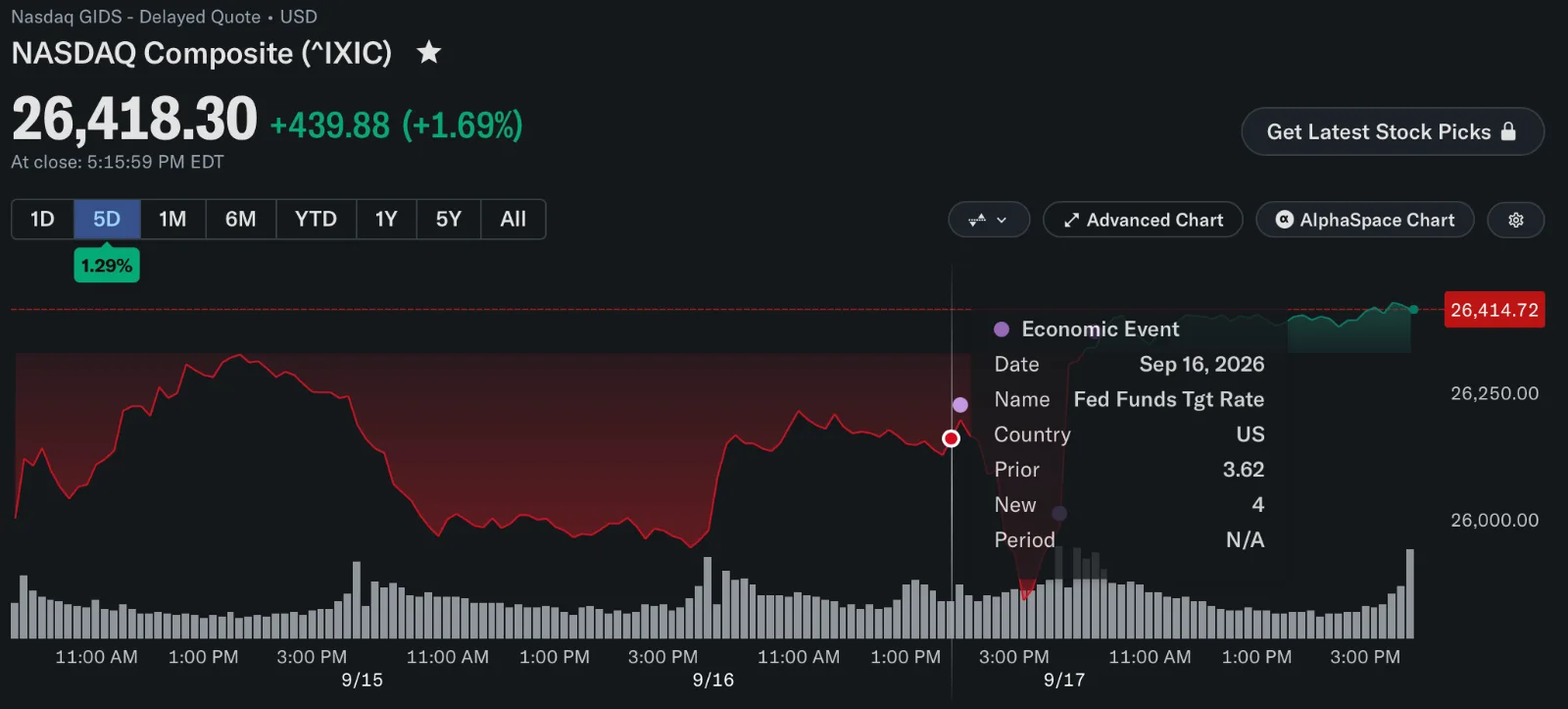
On September 17, US stocks reversed much of the previous day's FOMC-driven selloff. The S&P 500 rose 1.14% to 7,637.76, the Nasdaq gained 1.69% to 26,418.30, and the Dow added 0.61% to close at 51,778.04. The Nasdaq's gain was nearly triple the Dow's, a familiar pattern when long-duration growth stocks respond to falling rates.
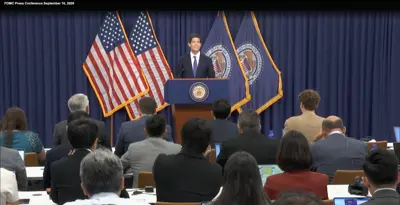
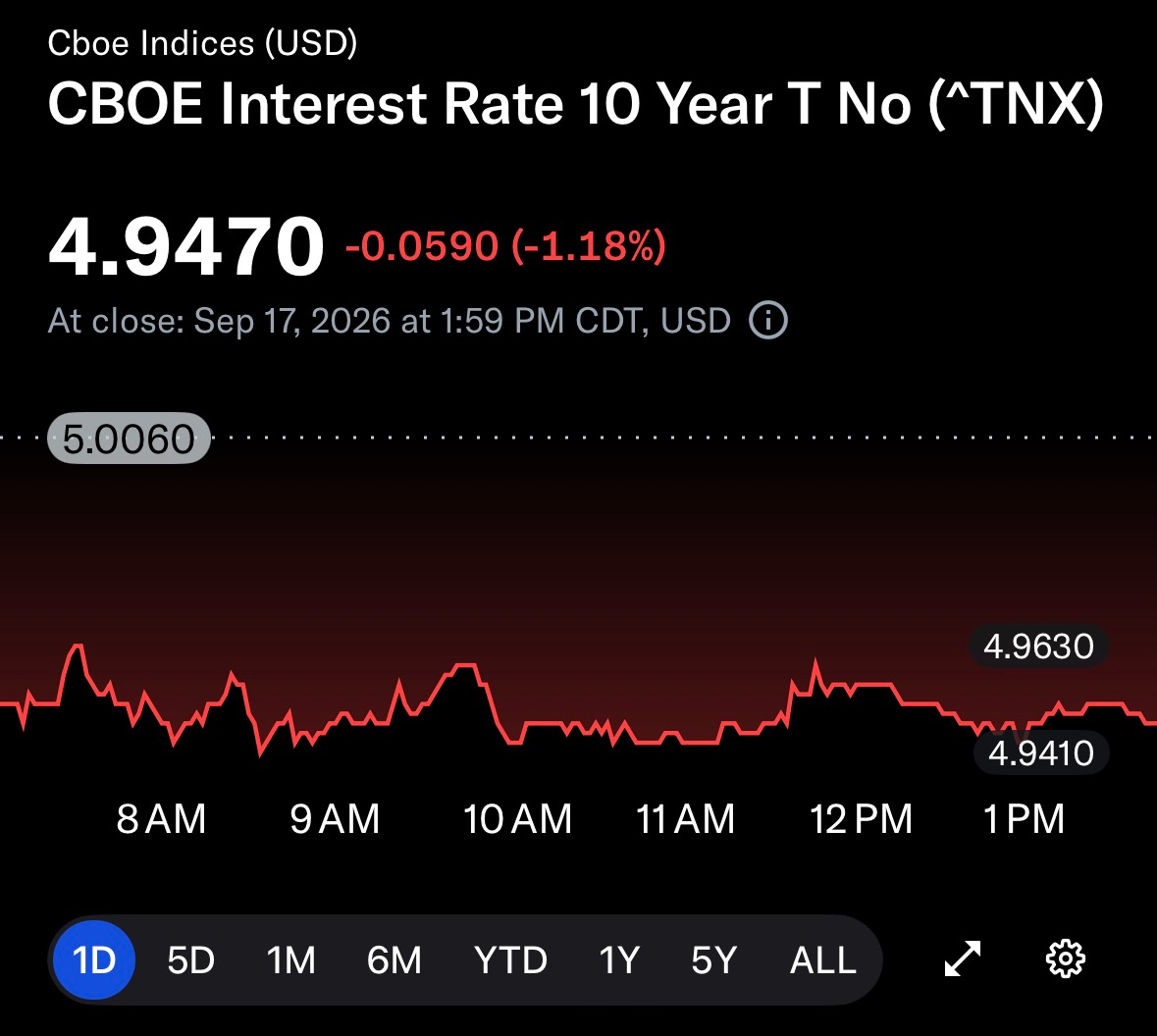
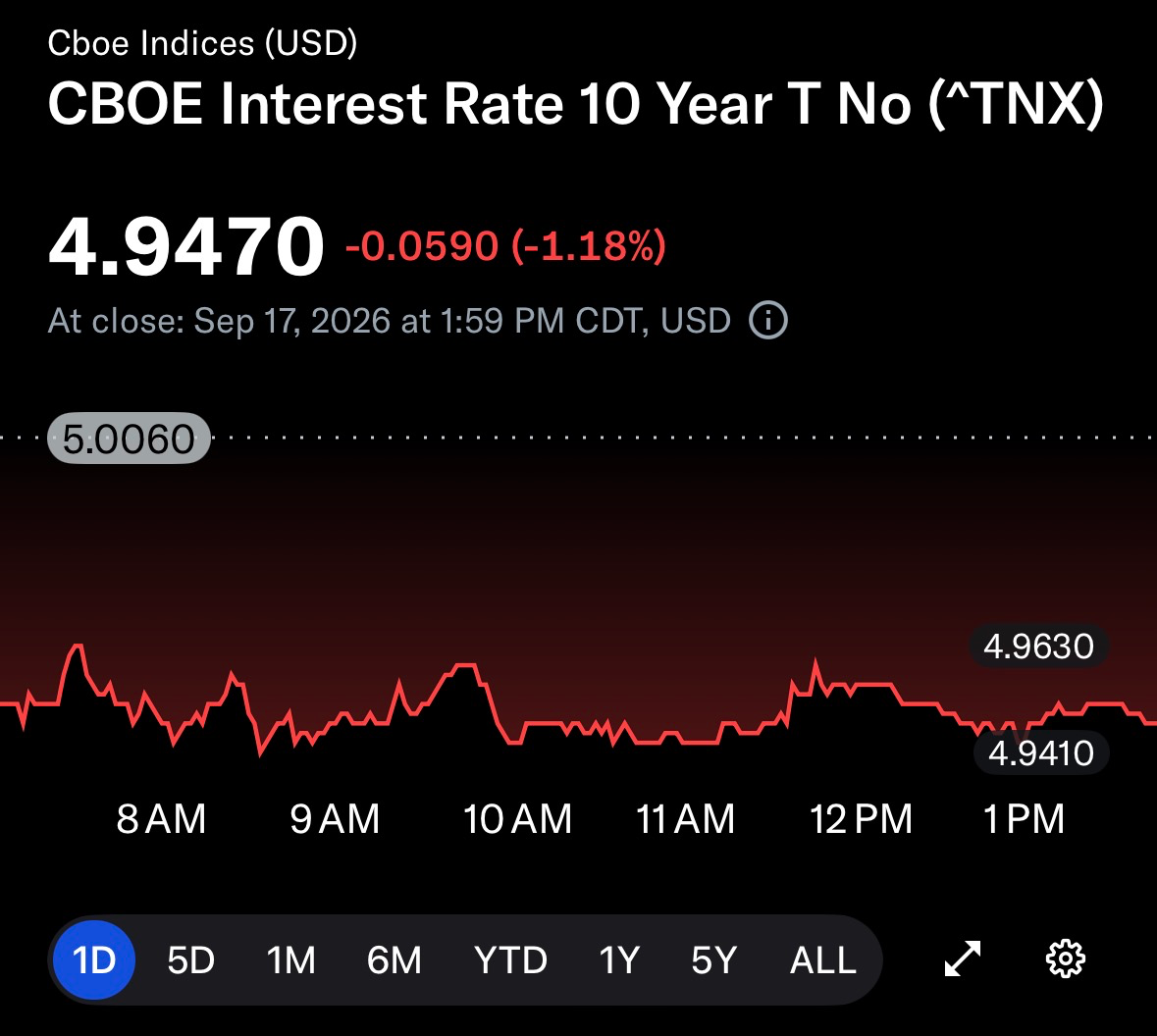
The key wasn't that the Fed turned less hawkish. On September 16, the Fed raised its benchmark rate by 25 basis points to a range of 3.75% to 4.00%, and it kept its assessment that inflation remains elevated. What actually moved markets was the next variable: oil prices fell, and the 10-year Treasury yield retreated to roughly 4.93% to 4.95%, back below the 5% mark.
Falling oil prices → eased inflation expectations → 10-year yield below 5% → less pressure on growth-stock discount rates → AI and semiconductor rebound
The quality of this rebound was set by AI's bottlenecks
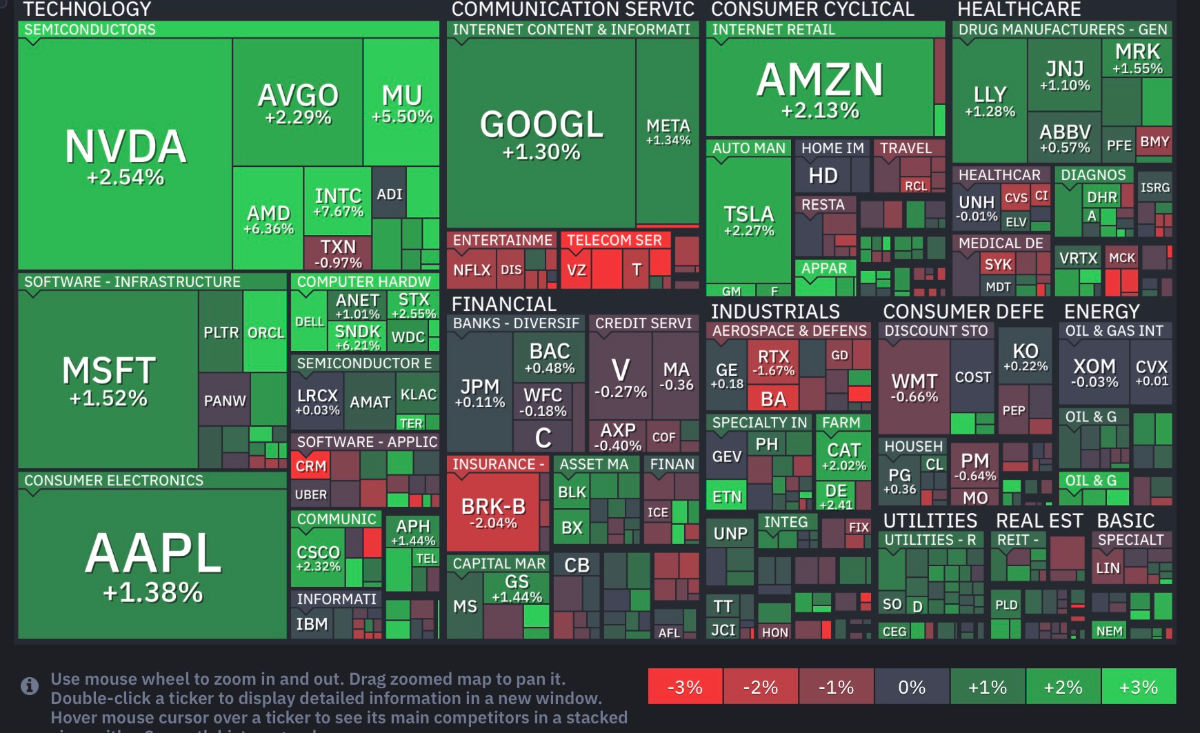
Not every semiconductor stock rose equally. The SOXX semiconductor index jumped 3.39%, while Micron gained 5.50%, AMD climbed 6.36%, ARM rose more than 8%, and Super Micro Computer surged over 9%. Nvidia added 2.54%. Money flowed most strongly into memory, accelerators and servers, the segments seen as direct beneficiaries of AI data center buildout.

Three separate pieces of news pointed in the same direction. Nvidia CEO Jensen Huang said he expects next year's chip sales to double from this year's level, though that's a CEO projection, not official company guidance. Intel CEO Lip-Bu Tan warned that memory supply shortages could worsen from here, as memory, power and cooling emerge together as bottlenecks in real-world AI projects.
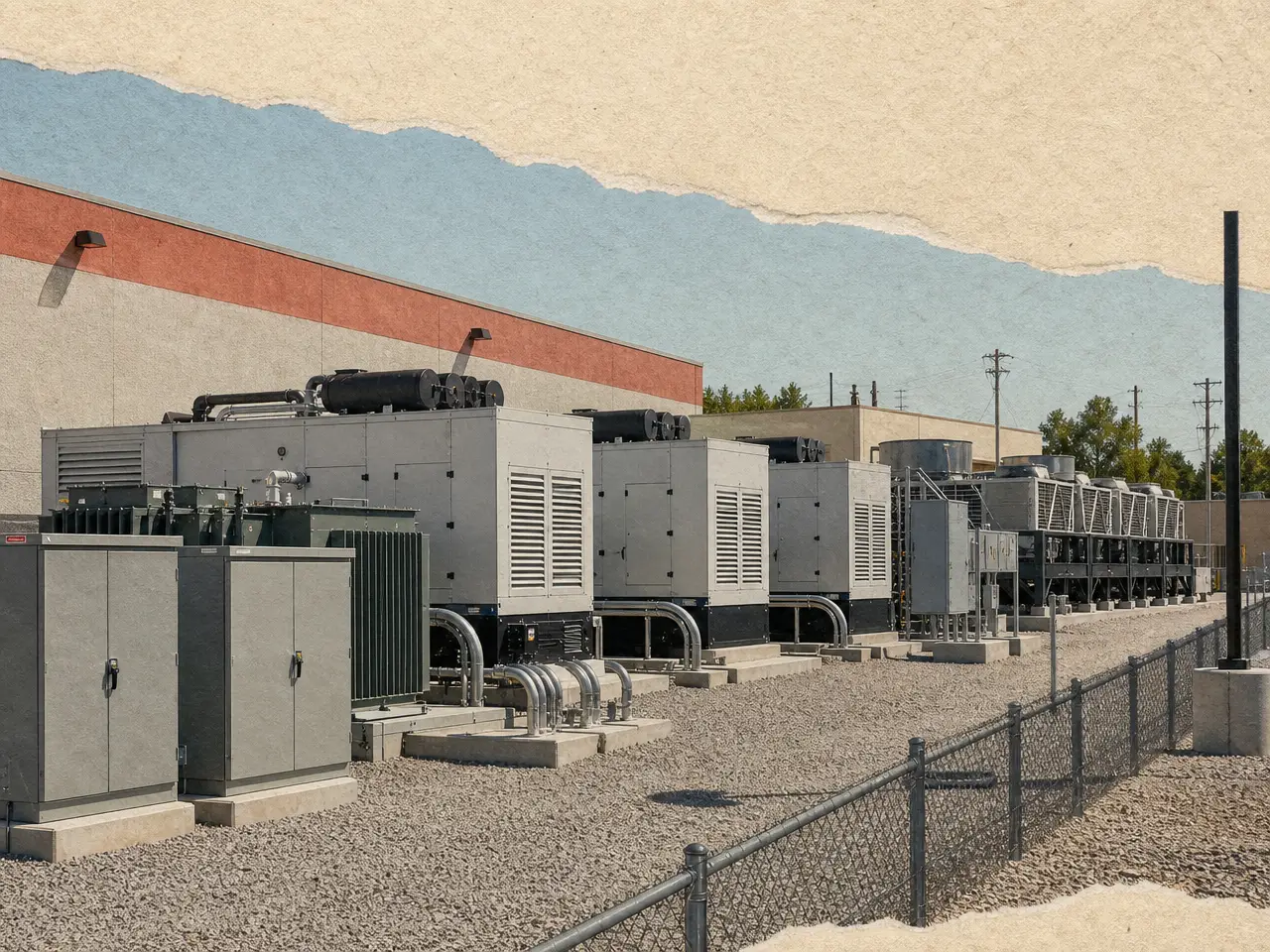
Separately, Amazon signed a long-term supply agreement with Generac for backup generators for data centers. According to an SEC filing, initial deliveries scheduled for 2027 and 2028 are valued at $2.4 billion. Warrants vest in stages as Amazon buys more Generac equipment, with a cumulative purchase cap of $8 billion used as the vesting benchmark, so treating $8 billion as a confirmed contract figure overstates the deal.
Rates fell, but FOMC risk hasn't gone away
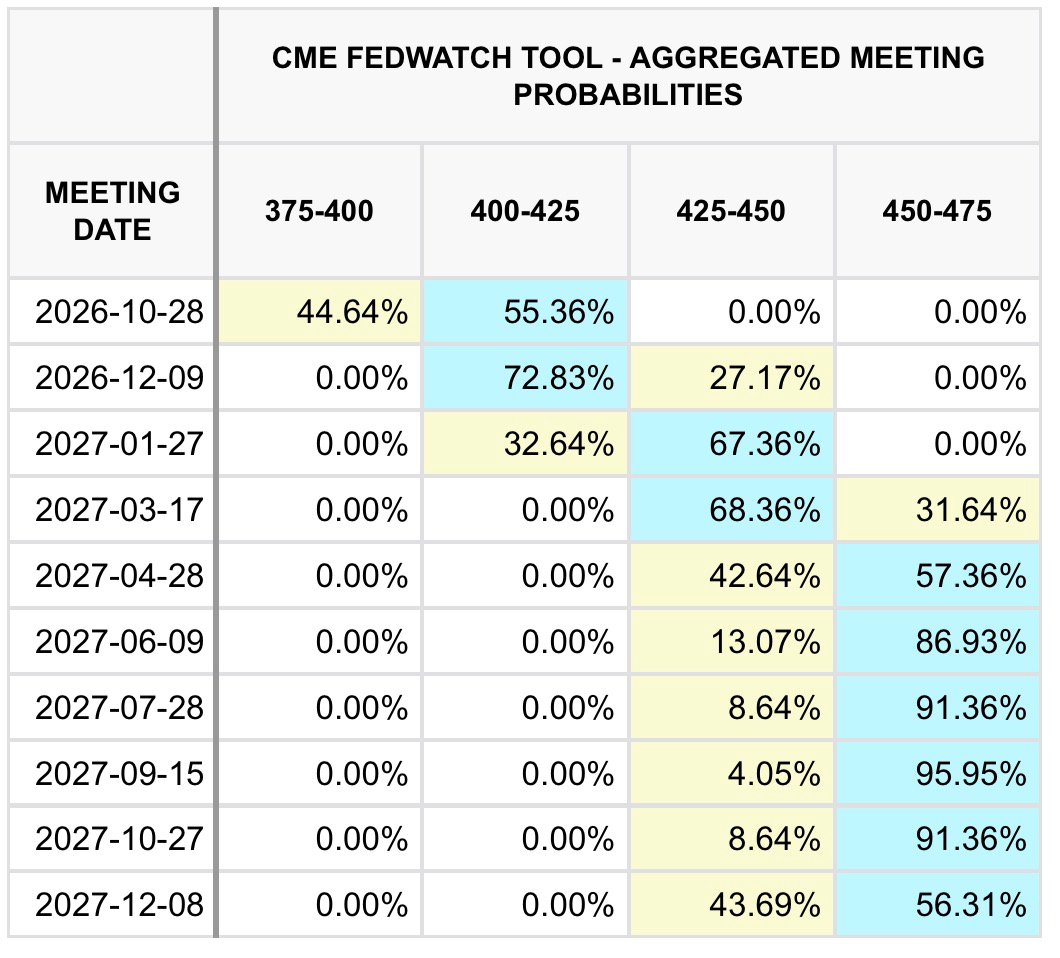
It's too early to read this rebound as confirmation of a new uptrend, because the Fed's policy stance itself hasn't shifted toward easing. The FOMC's 25 basis point hike was unanimous, and in the published policy outlook, a majority of members left the door open to further hikes this year.
So the market currently sits between two forces. One is genuine demand and supply bottlenecks in AI infrastructure. The other is the pressure that high oil prices and elevated long-term rates put on growth-stock valuations. On September 17, the first force won. But if oil prices jump again and the 10-year yield breaks back above 5%, that calculus could flip quickly.
How to read the stocks at the center of this move
| Ticker | Sept 17 | What this rebound signals |
|---|---|---|
| NVDA | $219.34, +2.54% | Expectations that data center infrastructure spending, not just GPU demand, could keep expanding |
| MU | $977.50, +5.50% | Memory supply constraints and rising prices could translate into earnings leverage |
| AMD | $545.09, +6.36% | AI accelerator demand possibly spreading to suppliers beyond Nvidia |
| AMZN | $251.19, +2.13% | A signal that AWS expansion is shifting from server purchases to a race for power capacity |
| TSLA | $366.20, +2.27% | A day where falling long-term yields, not company fundamentals, drove most of the move |
Invest at your own judgment. A structure built on real demand and cash flow tends to outlast any single day in the market.
Insight Times Editorial Desk