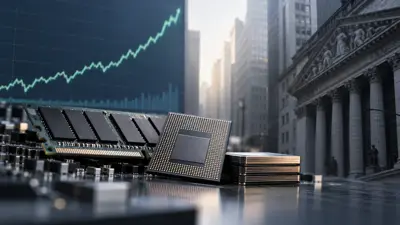
The Signal Markets Sent Before the FOMC: Nasdaq Fell, But Chips Didn't Break
Oil above $108, the 10-year near 5%, and a 25bp hike almost fully priced in. The question for markets is no longer whether the Fed hikes, but whether this is the last one.
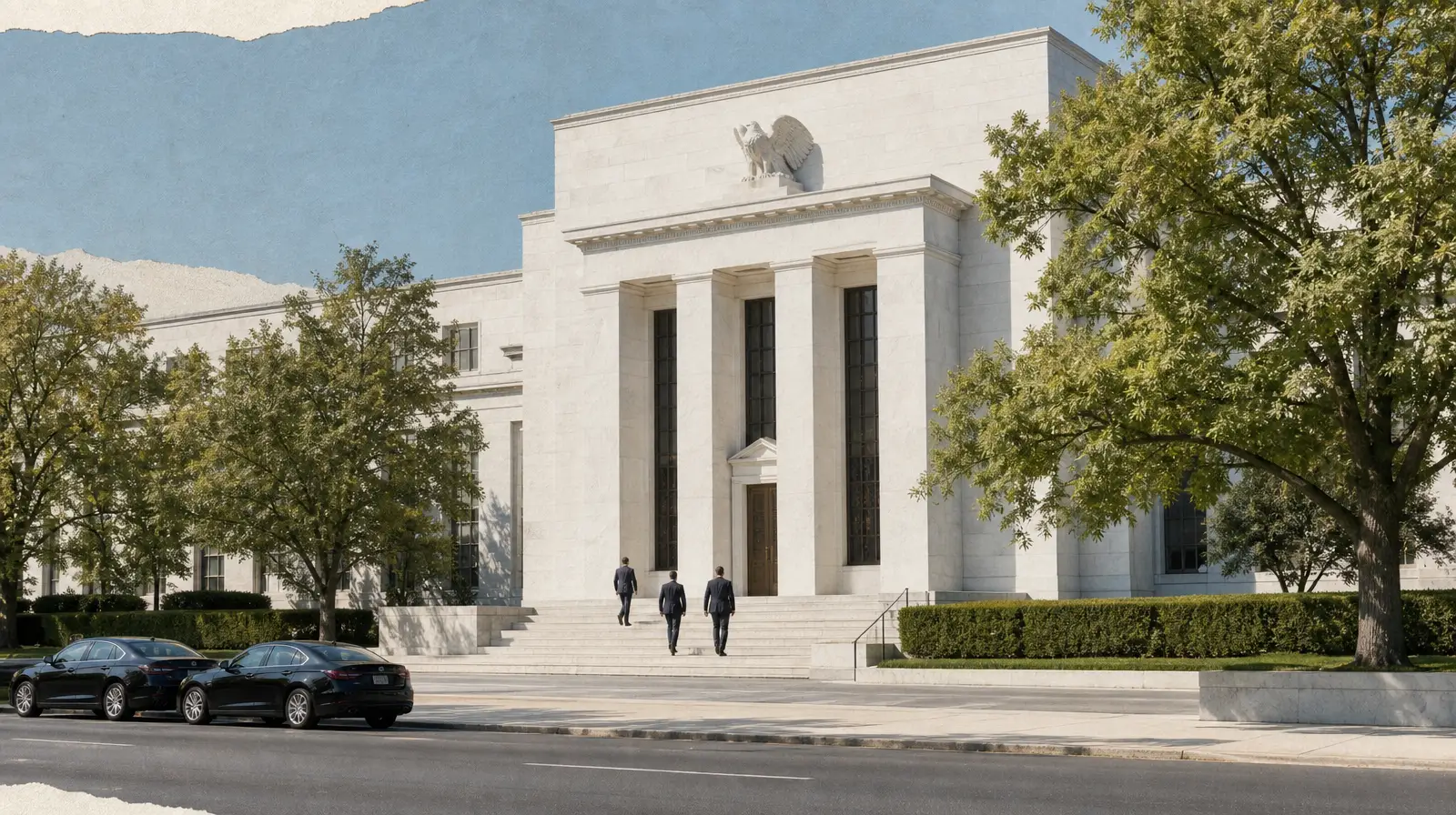
Markets already know the hike is coming
US stocks fell for a second straight session on September 15. The S&P 500 dropped 0.45% to 7,585.73, the Nasdaq fell 0.78% to 25,981.57, and the Dow slid 0.63% to 52,093.11. The Russell 2000 lost close to 0.8% as well.
On the surface, it looks like a routine risk-off day. But the drivers were fairly clear. Brent crude climbed above $108 a barrel, and the 10-year Treasury yield touched 5.041% intraday, its highest level since 2007. Fed funds futures were pricing in roughly a 94.5% probability of a 25 basis point hike at the September 16 FOMC meeting.
High oil prices → inflation concerns → higher long-term rates → higher discount rates for growth stocks
The key point is that a rate hike is not a fresh shock. It's already mostly priced in. That means the bigger swing factor after the FOMC decision is likely to be the Fed's statement and press conference, not the hike itself. If the Fed frames this increase as closer to a one-time response, markets could breathe easier. If instead it stresses the risk that oil prices feed into broader inflation and leaves the door open for further hikes, a 5% 10-year yield may stop looking like a brief touch and start looking like the new valuation baseline.
What matters more than chips closing higher
The Philadelphia Semiconductor Index tumbled roughly 5.9% the day before, as a debate over slowing the pace of frontier AI development collided with rising rates. But chips as a group did not collapse further the next day. SOXX rose 0.29% to $498.85, and the Philadelphia Semiconductor Index itself gained about 0.4%.
Still, that's not enough to call it the start of an AI stock rebound. The moves inside the index were too scattered. Qualcomm rose 4.25%, AMD gained 2.19%, and Nvidia added 0.57%, while Broadcom fell 1.58%. Rather than trading AI as one basket, the market is re-examining each company's earnings visibility, valuation, and how far it had already fallen.
Nasdaq: -0.78% — Pressure on rate-sensitive growth stocks SOXX: +0.29% — Limited bounce after the prior day's steep drop 10-year intraday: 5.041% — Highest since 2007 Brent crude: $108+ — Inflation concerns reignited
Why Nvidia held up
Nvidia's 0.57% gain matters. Even after the previous day's steep drop, the case for the company as a core AI infrastructure supplier doesn't appear to have broken down. Still, a 5% 10-year yield isn't a friendly backdrop for Nvidia either. A good company and a good stock are not the same thing. Even if earnings keep growing, if the market lowers the price-to-earnings multiple it's willing to pay for those earnings, the stock can struggle to rise.
Qualcomm and AMD are a different story
Qualcomm's 4.25% jump lines up with money rotating partly out of server-focused AI names and into mobile and edge AI plays. AMD's 2.19% gain looks more like a mix of bargain buying after the prior day's decline and lingering optimism about its own growth. Rather than treating one day's relative strength as confirmation of a longer trend, it's worth watching over the next several days whether trading volume and outperformance versus the semiconductor index hold up.
This looks more like a repricing of discount rates than an AI demand collapse
What the market is showing right now is not that AI demand has disappeared. Instead, two separate pressures have landed at once: a debate over pacing frontier AI development, and rising oil prices and rates.

For investors, the second pressure is the more direct one. In a world where the 10-year sits near 5%, companies that have pulled forward the most distant future earnings into today's valuation need to show stronger proof of results. That's why Oracle, which carries heavy long-term AI and cloud growth expectations in its price, fell 3.07%, while Coinbase, sensitive to risk appetite generally, dropped a sharp 10.1%.
In this kind of market, the question that matters is less "is it AI or not" and more "how much current earnings are visible, how strong is the cash flow, and how much has already been paid for that growth." Even if the growth story stays intact, a rising discount rate alone can be enough to justify a real correction in the stock price.
The numbers that matter
| Item | September 15 | Read |
|---|---|---|
| S&P 500 | 7,585.73 / -0.45% | Broad risk aversion |
| Nasdaq | 25,981.57 / -0.78% | Relative weakness in rate-sensitive growth stocks |
| Dow | 52,093.11 / -0.63% | Fell in tandem despite its more defensive tilt |
| SOXX | 498.85 / +0.29% | Limited bounce after the prior day's steep drop |
| 10-year Treasury | 5.041% intraday | Pressure on equity valuations |
| Brent crude | Above $108 | Reinforced inflation concerns |
| FedWatch | ~94.5% hike probability | 25bp hike largely priced in already |
</markdown> </invoke>
Insight Times Editorial Desk