SK hynix Weighs a 16 Trillion Won Special Dividend on Top of a Buyback
A reported special payout follows a 40 trillion won buyback. The bigger question is how an AI-memory leader splits its new cash between growth and shareholders.
1. Where would the 16 trillion won come from?
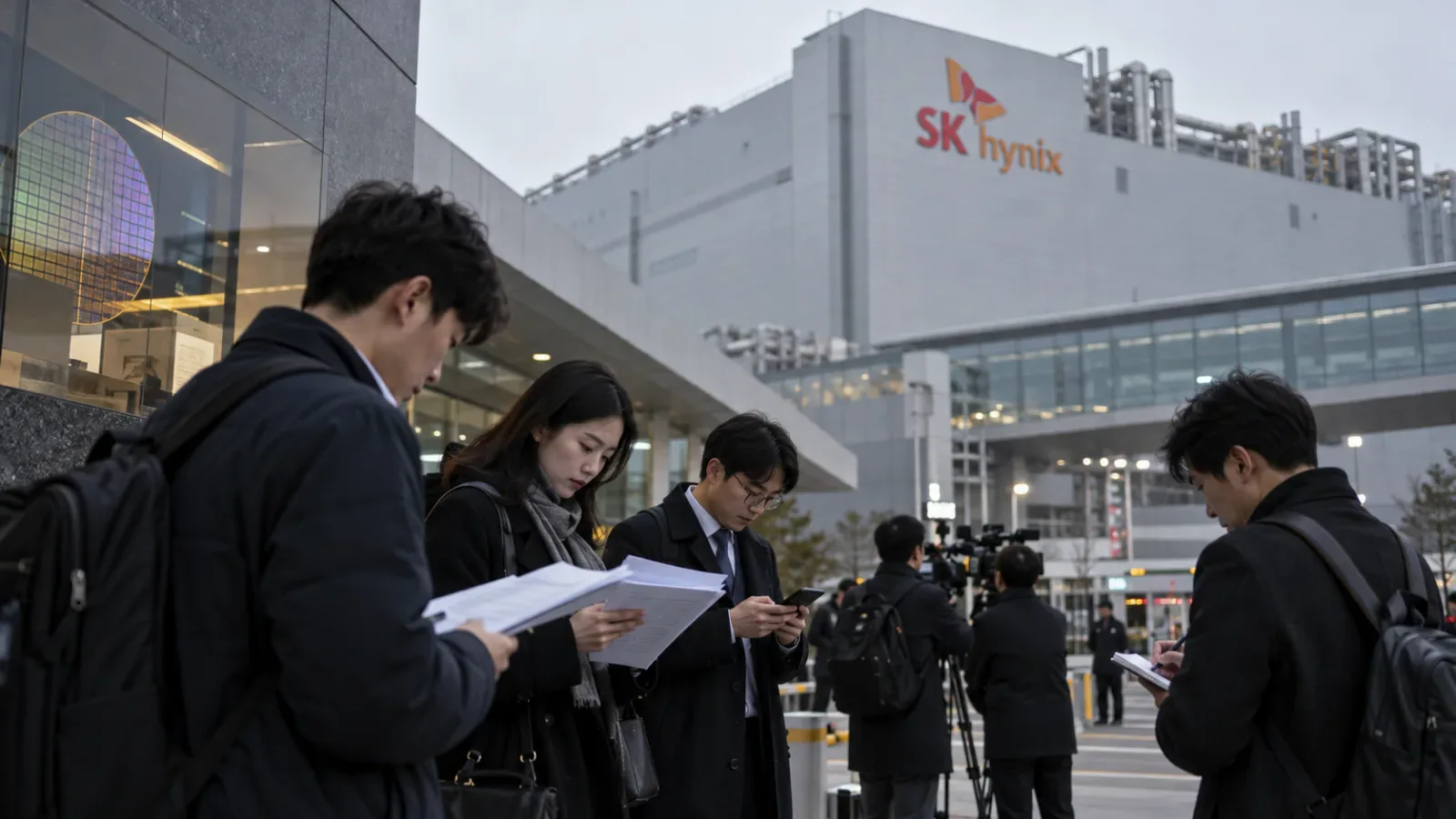
On Oct. 26, Dong-A Ilbo reported that SK hynix is considering a special dividend of about 16 trillion won. According to Reuters, the funding source mentioned is the gain on its investment in Japanese memory maker Kioxia.
In 2018, SK hynix put about 4 trillion won into the former Toshiba memory business, now Kioxia, through a consortium led by Bain Capital. The company is estimated to have booked a substantial gain as it later sold down that stake.
One distinction matters. The 16 trillion won is not confirmed net profit earned directly from AI chip sales. It is the size of a special dividend that was reported as payable from Kioxia investment gains. The exact makeup of the investment return and the dividend amount have not been confirmed.
In an official filing on the 26th, the company said it is reviewing various shareholder-return options but that nothing has been decided. It plans to announce additional policy on the 28th after a board resolution.
2. A 40 trillion won return is already committed
One set of numbers comes before the dividend report.
| Item | Figure | Note |
|---|---|---|
| Confirmed buyback program | 40 trillion won | Share repurchase and cancellation |
| Reported special dividend | 16 trillion won | Not yet confirmed by the company |
| Net cash at end of June | 69 trillion won | Cash and equivalents minus borrowings |
| Long-term shareholder return target | Above 50% | Of cumulative free cash flow, 2025 to 2027 |
Source: SK hynix newsroom, announcement of Aug. 19, and reports of Oct. 26. The 16 trillion won is unconfirmed.
The 40 trillion won buyback announced Aug. 19 equaled about 24.07 million shares at the then-current price, or roughly 3.3% of shares outstanding. The repurchased shares are to be canceled.
Cancellation reduces not only the float but the total share count. Even with the same total profit, that lifts earnings per share (EPS). A dividend, by contrast, pays cash directly to shareholders but also draws down the company's cash.
So the 40 trillion won buyback and the 16 trillion won special dividend are both shareholder returns, but they reach shareholders in different economic ways.
3. What would a 16 trillion won dividend mean per share?
A simple calculation assumes the full 16 trillion won is paid in cash: about 21,900 won per share, from 16 trillion won divided by roughly 730.49 million shares.
This is a pre-tax figure. The actual amount would depend on the number of eligible shares, how cancellations are reflected, the record date and taxes. It is not a confirmed payment.
The 16 trillion won is about 23% of the roughly 69 trillion won of net cash at the end of June. That is a large sum, but not one that SK hynix's balance sheet clearly rules out.
The issue for investors is opportunity cost. Paying cash expands shareholder returns now, but it can leave less money for HBM capacity, advanced packaging and next-generation memory technology.
Cash dividends also do not create new enterprise value on their own. In general, the share price adjusts by roughly the dividend amount when the stock goes ex-dividend.
4. Why would an AI growth company weigh a big dividend?
SK hynix, which has built a strong position in AI memory, faces two tasks at once.
First, it must keep expanding HBM technology and capacity to meet the demands of AI accelerator customers, including Nvidia. Cutting investment too far now could cost market share later.
Second, it must show that the cash swelled by the AI boom turns into shareholder value. Even with high profits, a company that uses cash inefficiently may struggle to sustain a high valuation.
That makes this debate more than a dividend story. It is a case study in how a highly profitable AI-industry company sets the balance between growth investment and shareholder returns.
5. What to watch on Oct. 28
| What to check | What it tells investors |
|---|---|
| Size of the special dividend | The gap between the reported 16 trillion won and the announced figure |
| Funding source | Whether it is one-off money such as Kioxia gains or cash from the core business |
| Progress on cancellations | How far the announced 40 trillion won program has actually been carried out |
| Free cash flow (FCF) | Whether enough cash remains after capital spending |
| HBM investment plan | Whether larger shareholder returns can coexist with next-generation product competitiveness |
The question on Oct. 28 comes down to one thing. Can SK hynix be both a company that spends its AI earnings well and one that returns the surplus to shareholders on reasonable terms?
Insight Times Editorial Desk