If AI Is Holding Up the Global Economy, Why Is the IMF Warning of an AI-Driven Financial Crisis?
AI succeeding and AI investors succeeding are different things. The IMF's concern is less that the technology fails than that the huge capital poured into it is not recovered.

Why has the global economy's growth engine become a risk?
In its Global Financial Stability Report on Oct. 13, the International Monetary Fund named three main financial stability risks: a correction in AI-related asset prices, rising government bond yields and cyberattacks.
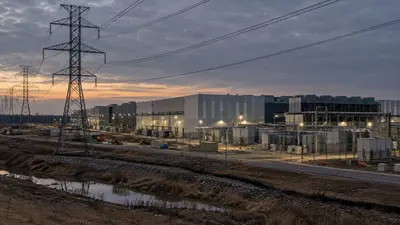
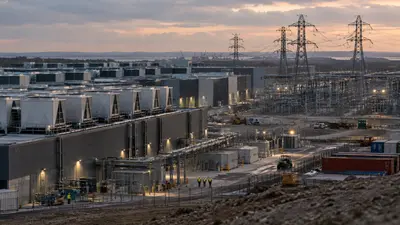
AI spending is propping up the global economy by lifting demand for semiconductors, construction, power equipment and cloud services. But the IMF warned that if returns on that spending fall short of expectations, the same growth engine could become the starting point of a market shock.
The logic is simple. An AI industry that grows is not the same as AI investors who earn enough. Once a data center is finished, depreciation starts and borrowings accrue interest. If customer usage fees come in below expectations, or if capacity grows faster than demand, the return on capital can fall.
The number the IMF flagged: from 1% to 10%
Hyperscalers' share of new global investment-grade corporate bond issuance rose from under 1% in 2024 to about 10%. That is a share of new issuance, not of total corporate bonds outstanding. Because the 2024 figure is below 1%, the exact multiple of the increase cannot be pinned down.
The prevailing belief used to be that Big Tech's vast operating cash flow would fund AI investment. As spending has grown, bonds and other outside financing have become important too. Issuing bonds is not risky in itself. The problem grows if expectations for profitability fall at the same moment funding costs rise.
| Share of new global investment-grade bond issuance | |
|---|---|
| 2024 | Under 1% |
| 2026 report | About 10% |
Share is based on new global investment-grade corporate bond issuance. The 2024 figure is below 1%, so the exact multiple is not stated.
How an AI slowdown could spread to financial markets
If expectations for AI profitability fall, new data center investment could shrink, and orders for chips and power equipment could slow. As earnings forecasts for suppliers drop, their shares could be marked down. For heavily indebted companies, wider credit spreads could add pressure.
Leveraged investors might be forced to sell as prices fall. A stock market shock could then pass into credit markets, and from there into corporate investment and jobs. This is a possible channel of contagion, not a future that must happen.
There is also little basis for equating this with 2008. In the IMF's stress tests, banks broadly stayed resilient. Still, the share of assets held by banks with weak capital levels rose to 22% in the 2026 test from 18% in 2025.
The channel, as a conditional scenario built from the IMF's description:
- AI profitability expectations fall. Cloud revenue disappoints or returns on investment decline.
- Data center spending is cut. Orders for chips, power and networking slow.
- Earnings and share prices come under pressure. Earnings forecasts are cut and valuations adjust.
- Stress spreads to credit markets. Corporate credit spreads widen and funding gets harder.
- Possible spillover to the real economy. Business investment shrinks, and hiring and consumption weaken.
What US equity investors should separate
| Group | Risk channel | Numbers to check |
|---|---|---|
| MSFT, GOOGL, AMZN, META | Speed of monetizing AI spending | CapEx, cloud growth, FCF |
| NVDA, AVGO, AMD | Customers' investment budgets shrink | Data center revenue, orders, gross margin |
| Memory makers such as MU | Rising supply and falling prices | ASP, inventory, operating cash flow |
| Data center and power infrastructure | Construction delays and financing costs | Backlog, net debt, contract terms |
These are conditional items to check, not a sign that any company's risk has materialized.
The most dangerous misconception about AI is that anyone who invests in a growing industry will make money.
The IMF's warning does not deny AI's future. It reads more as a reminder not to forget the cost of the capital used to build it.
The winners ahead may not be the companies that build the most data centers, but those that turn the capital they invest into cash for the longest and most efficiently.
Insight Times Editorial Desk