Who Really Wins the AI Memory Supercycle? HBM Pricing, HBM4 and the Valuation Question
Agentic AI is reshaping memory demand, and TrendForce projects HBM blended prices up 121% in 2027. That is a forecast, and the real contest looks likely to turn on HBM4 yield, customer qualification and shareholder returns.
Why AI memory is getting expensive again
The line that more AI means more chip demand is no longer enough. What matters more is which AI uses which memory, and for how long.
A chatbot answering one question is a different computation from an AI agent that analyzes a company's accounting records, operates outside systems and re-verifies its results. An agent calls a model many times to finish one task. As it keeps a history of the work, reasoning tokens and memory use can grow. A 2026 study called ActKV described how repeated agent runs increase the KV cache burden and limit inference throughput.
On the S-curve of technology adoption, 10% penetration is not an absolute threshold that applies to every industry. Consumer usage, actual enterprise deployment and paid-contract penetration all have different denominators. What investors should check is less the number of companies that have tried AI than whether AI adoption in the workplace creates recurring revenue and real compute demand.
What the 121% HBM price forecast really means
- 121%: forecast rise in blended HBM average selling price (ASP) in 2027, year over year
- 30%: forecast share of the three major memory makers' wafer input going to HBM in 2027
TrendForce expects the blended HBM ASP to rise 121% year over year in 2027, reflecting supply constraints and a larger share of expensive HBM4. That does not mean the price of any single HBM product rises 121%. Forecasts and actual contract prices can also differ.
One interesting shift is that GPU and ASIC makers are weighing 8-high HBM stacks instead of 12-high. Fewer dies per stack can lower total system cost, but the base die cost has to be spread over less capacity. TrendForce expects the 2027 price per gigabit of 8-high products to be 10% to 20% higher than 12-high.
The review of 8-high adoption should not be read as confirmed fact that Nvidia cut memory on all its flagship GPUs from 288GB to 192GB. What can be confirmed now is a possible change in design choices, driven by 2027 supply and cost. Customers have to negotiate memory capacity, performance and delivery timing together with price.
A shortage of HBM can lift prices for ordinary DRAM too
HBM and commodity DRAM share some advanced process and wafer capacity. Prioritizing HBM leaves fewer resources for other DRAM, a crowding-out effect.
HBM resource allocation, 2025 to 2027
| Year | Share of wafer input | Share of bit supply |
|---|---|---|
| 2025 | 18% | 8% |
| 2026 | 22% | 9% |
| 2027 (forecast) | 30% | 13% |
Source: TrendForce. The denominators of each share differ.
TrendForce estimates the three major makers' HBM wafer input share at 18% in 2025, 22% in 2026 and 30% in 2027, and the share of total DRAM bit supply at 8%, 9% and 13%. Because the two ratios use different denominators, they cannot by themselves yield an exact wafer-consumption multiple for each product.
Server DDR5 RDIMM is also a candidate beneficiary, because information that does not fit in GPU HBM can be moved to host memory when handling long contexts and simultaneous requests. Offloading adds transfer latency, though. Improvements in KV cache compression, scheduling and inference algorithms could also ease demand for physical memory.
Has pricing power fully shifted to memory makers?
Micron's SEC filings show a change from past chip cycles. The company says it has signed multiyear strategic supply agreements with customers and applied take-or-pay terms, which carry purchase obligations on contracted volumes. Prices are fixed or renegotiated periodically, and many contracts have minimum and maximum price ranges.
These contracts improve visibility into demand and earnings, but they do not eliminate downturns. Volumes outside the contracts, performance risk, capital spending costs and the chance of price renegotiation remain. So investors should look past the number of contracts to the share of revenue under contract, price floors, advance payments and actual cash inflows.
Swings in Nvidia's gross margin are also hard to read as direct evidence that HBM suppliers fully control pricing. Early costs of new product launches, product mix, networking share and system integration costs all play a part. Memory suppliers have gained bargaining power, but customer resistance on price and the option of alternative designs have not disappeared.
The HBM4 race is not only about memory
HBM4 is the generation in which the interface widens from 1,024 bits to 2,048 bits. As base die design grows more complex, logic process and advanced packaging capabilities matter more. SK hynix's strengths are its collaboration with TSMC and its existing supply record. Samsung Electronics points to its integrated capabilities across memory, foundry and packaging.
Integrated production, however, does not guarantee lower cost or customer adoption. HBM4 yield, customer qualification, base die cost, final packaging throughput and shipment schedules will decide the outcome. Each process has to be verified in practice, not just the ability to tie the supply chain together.
SK hynix and Samsung: shareholder value is harder than earnings
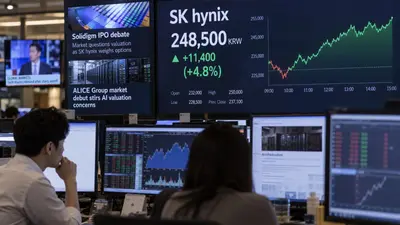
In August 2026, SK hynix announced a plan to buy back and retire 24.07 million common shares, worth about 40 trillion won. The filing sets the purchase window from August 20 to November 19, so it is not accurate to treat the amount as already bought and retired.
Adding to this are concerns over funding for Solidigm, its US NAND affiliate, and a possible double listing. Financial regulators have taken a negative view of the double-listing controversy, but SK hynix disclosed that no specific capital-raising plan has been decided. If new shares were issued, existing ownership stakes could be diluted. Conversely, if the capital raised earns high returns, the economic value of the parent's stake could rise.
Samsung Electronics projected 2026 shareholder returns of 90 trillion to 110 trillion won, and disclosed a third-quarter cash dividend of about 30 trillion won, with the remaining funds to be decided later. That does not mean the full amount is set for immediate share cancellation. Ownership rules on financial affiliates and governance burdens have to be weighed, but there is no reason to assert that cancelling treasury shares is legally impossible.
Comparing the two companies with TSMC on a simple P/E ratio to judge undervaluation also has limits. Foundry and memory differ in earnings volatility, business mix and capital intensity. In chip boom years in particular, surging profits can push P/E down mechanically, creating an illusion. Normalized earnings, free cash flow and return on capital should be compared together.
Insight Times Editorial Desk