The US-China Summit Didn't Erase Taiwan Risk for Chip Stocks
Washington's Taiwan policy held, but roughly $14 billion in arms sales is still on hold. For AI chip investors, the summit reads less like risk removed and more like a fragile balance extended.
SO WHAT · SEMICONDUCTORS · GEOPOLITICS
The most important outcome was what didn't change
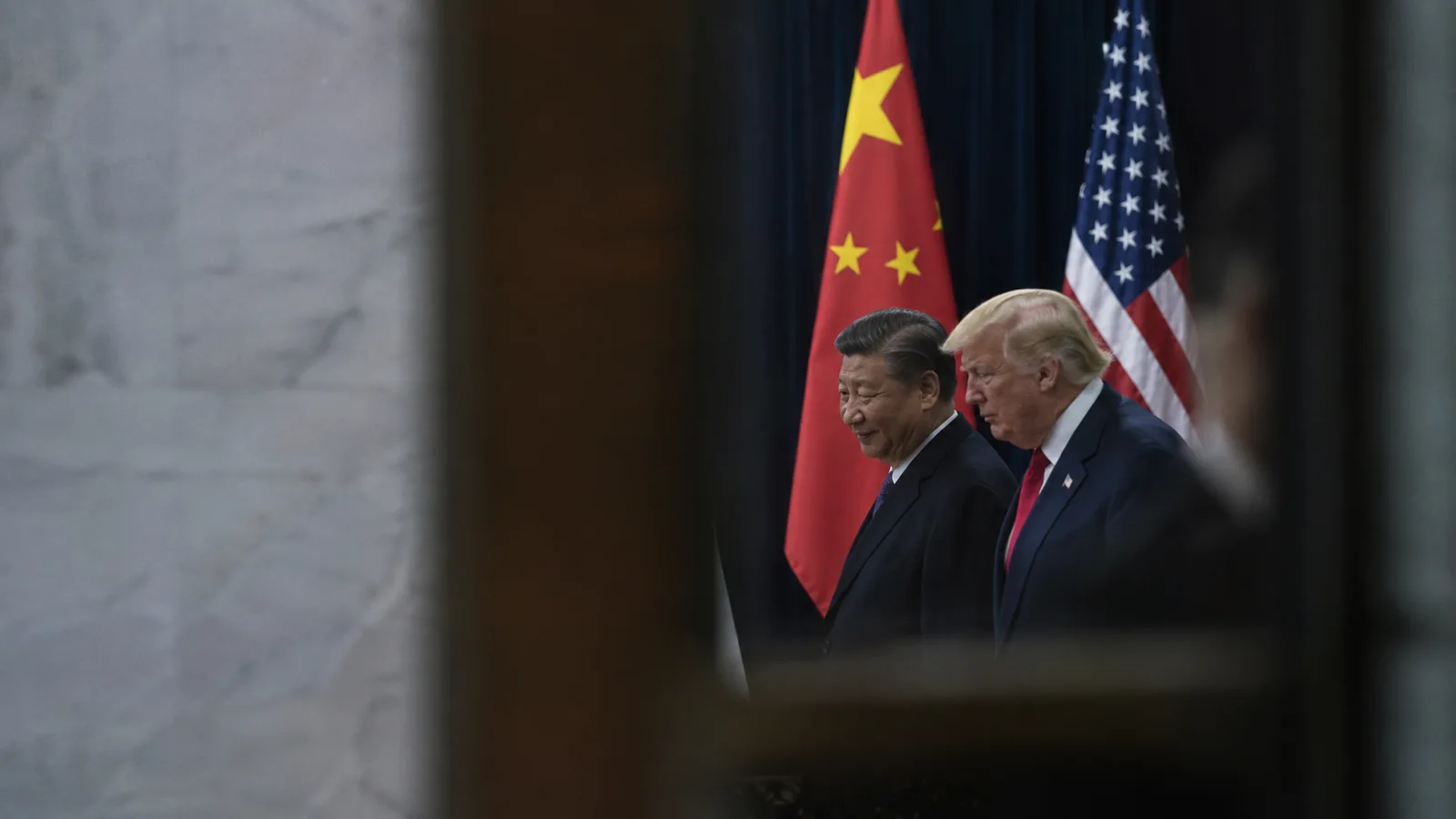
At this month's summit, China pushed Taiwan to the top of the agenda. President Xi Jinping wanted Washington to adopt stronger language opposing Taiwan independence, and reports before the meeting suggested Beijing would also demand a halt to arms sales to the island.
The official US line that emerged afterward, however, held. Ambassador David Perdue said there has been no change in US Taiwan policy. Nothing in the disclosed outcomes points to any change to the Taiwan Relations Act or an agreement to stop arms sales.
That distinction matters. Had Washington's institutional stance on Taiwan, the production base at the core of the AI chip supply chain, actually shifted, markets would have needed to recalculate the geopolitical discount applied to companies with heavy exposure to TSMC. At least for now, this summit did not go that far.
But $14 billion still isn't moving
| $11B | Taiwan arms package approved in December 2025 |
| ~$14B | Additional arms sales that have been on hold for months |
| $15B+ | Delayed Taiwan security assistance that Republican lawmakers have pushed to release |
What markets need to watch here is execution, not declarations. President Trump has previously described Taiwan arms sales as a card he can use in negotiations with China. So even if the broader US policy framework stays intact, the actual timing of approvals and the size of packages can still be shaped by the give and take of US-China talks.
That doesn't mean the US is abandoning Taiwan. But it's also hard to treat the delay in arms sales as pure bureaucratic routine. Both things are true at once: policy continuity and execution uncertainty.
For chip stocks, a frozen risk premium, not a rally trigger
It's hard to read this summit as a direct positive for Nvidia, AMD or TSMC. There was no agreement to meaningfully ease export controls on AI chips headed to China, and there isn't yet solid evidence that military risk in the Taiwan Strait has eased.
At the same time, the worse-case scenario didn't materialize either. Nothing confirms that Washington formally softened its Taiwan policy or agreed to halt arms sales. So the effect of this summit looks less like a new catalyst for upside and more like something that kept existing geopolitical risk from being repriced sharply.
| Variable | Confirmed at the summit | Question left for markets |
|---|---|---|
| Taiwan policy | US side says there's no policy change | Does actual deterrence and support keep being delivered |
| Arms sales | Roughly $14 billion in additional sales still on hold | Approval, scaling back, or further delay: which path does it take |
| AI chip controls | No confirmation of a major public compromise | Do Commerce Department licensing rules change |
| TSMC dependence | The underlying structure is unchanged | How fast can US production build real substitute capacity |
The supply chain map to watch before individual tickers
NVDA · AMD
Chinese revenue isn't the only variable for these two companies. The continuity of production for cutting-edge AI accelerators is tied closely to TSMC's leading-edge process nodes and advanced packaging capacity. Even after the summit, HBM supply, expansion of CoWoS-family packaging, and how TSMC allocates leading-edge capacity and customers remain more direct drivers of earnings visibility than the summit itself.
TSM · AAPL · AVGO · QCOM
These companies span different product lines, but they share one common variable: the stability of Taiwan's foundry ecosystem. TSMC in particular functions less like a single company and more like the central node in the supply chain for leading-edge chips used in AI, smartphones and networking. Tension in the Taiwan Strait can raise not just the risk of production disruption but also costs tied to inventory, logistics, insurance and building redundant capacity elsewhere.
INTC · GFS · AMAT · LRCX · KLAC
As long as geopolitical uncertainty persists, the logic behind diversifying production across the US and its allies remains intact. Still, it's a stretch to treat US fab expansion as an immediate substitute for Taiwan. Leading-edge yield, process integration, advanced packaging and the surrounding supplier ecosystem aren't replicated just by building factories. For equipment makers, regional fab expansion can broaden the demand base, but actual orders still depend on customers' capex plans and installation schedules.
LMT · RTX · NOC · GD
For defense contractors, whether additional arms sales get approved is the more direct event to track. But the total dollar value of a package doesn't automatically translate into revenue for any single company. Line items, prime contractors, production capacity and delivery schedules all need to be disclosed before the earnings impact for individual firms can be calculated.
Insight Times Editorial Desk