Samsung's HBM4 Yield Hits 80% - Now the Real Fight Is Production Volume
Reports confirm Samsung's HBM4 yield has climbed to roughly 80 percent, but the bigger number is capacity: HBM wafer input is projected to jump nearly 40 percent next year, from about 180,000 to 250,000 wafers a month.
Why an 80 percent yield actually matters
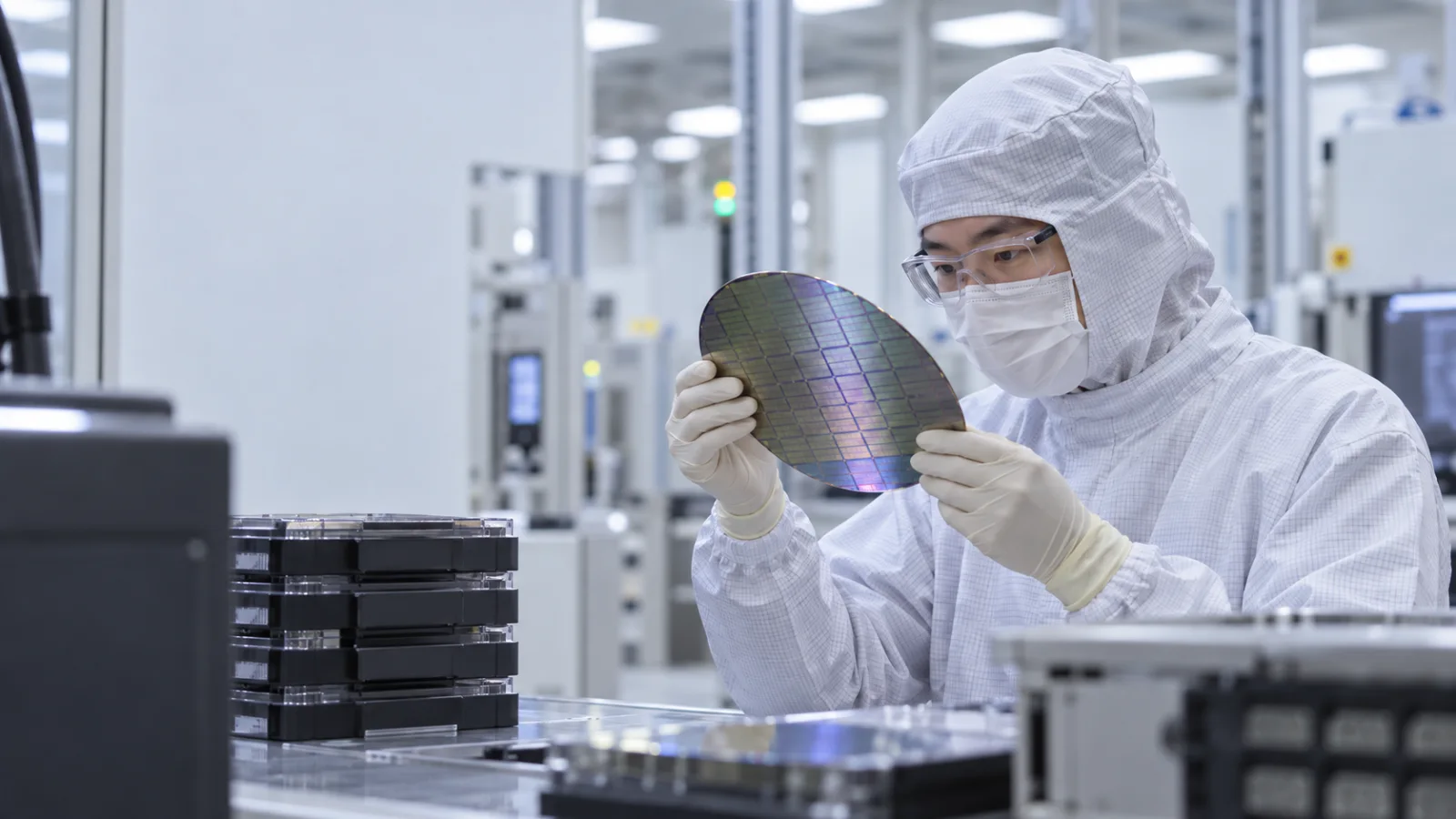
HBM (high-bandwidth memory) is built by stacking and connecting multiple layers of DRAM. A defect in a single layer can ruin the entire finished chip. That makes yield a far more direct driver of cost and supply than it is for ordinary DRAM.
According to industry sources cited by Seoul Economic Daily and TrendForce, Samsung's HBM4 yield has climbed from under 60 percent in February, when mass production began, to roughly 80 percent recently. The figure is an industry estimate, not an official disclosure from Samsung. There are also reports that SK Hynix's HBM4 yield has reached the 80 percent range.
The number that matters more than 80 percent
- HBM4 yield: about 80 percent. Based on industry sources, not an official disclosure.
- Next year's monthly HBM wafer input: about 250,000 wafers. Up roughly 40 percent from about 180,000 wafers this year.
- Outsourced glass-carrier cleaning: 2.5x. From 20,000 wafers a month to 50,000. This does not map one-to-one onto finished-product volume.
According to a September 20 report, Samsung's HBM production capacity, measured by average monthly wafer input, is expected to rise from about 180,000 wafers this year to about 250,000 next year. Outsourced cleaning volume for the glass carriers used in HBM4 and HBM4E is also reported to be rising from 20,000 to 50,000 wafers a month.
Glass-carrier numbers alone cannot be used to calculate finished-chip shipments, since reuse counts and process conditions vary. Still, the direction is clear. Samsung's HBM strategy is shifting from "can it pass customer qualification" to "how much can it supply, and how reliably."
Market share has already started to move
A report citing Counterpoint Research shows Samsung's share of HBM revenue rising from 21 percent in the first quarter of 2026 to 33 percent in the second quarter, while SK Hynix's share fell from 58 percent to 50 percent over the same period. That narrows the gap between them from 37 percentage points to 17 points.
UBS projects that, measured in shipped bits, SK Hynix will keep the number one spot this year at 48 percent, but that next year Samsung could reach 41 percent versus SK Hynix's 39 percent. These are forecasts. Whether the lead actually flips depends on product-by-product qualification and supply contracts with key customers such as Nvidia, AMD and Google.
| Question | What favors Samsung | What still needs confirming |
|---|---|---|
| Productivity | HBM4 yield has improved rapidly to about 80% | This is an industry estimate, not an official yield disclosure |
| Capacity | Monthly wafer input projected to rise about 40% by 2027 | Actual equipment installs, ramp speed, product mix |
| Market share | Revenue share reportedly rose to 33% in Q2 | Sustained volume wins with major HBM4 customers |
| Profitability | Rising mix of higher-margin HBM4 | How much yield gains translate into operating margin |
Bernstein's data shows speed, not a confirmed reversal
An August Bernstein report used July's Korean multichip memory export data to estimate HBM revenue at Samsung and SK Hynix. The regression model put Samsung's third-quarter HBM revenue at about $12 billion and SK Hynix's at about $5.6 billion, implying roughly an 80 percent quarter-over-quarter increase for Samsung and a roughly 20 percent decline for SK Hynix.
This should not be read as confirmed results. The model uses regional export data as a proxy for company-level HBM revenue, and SK Hynix's shipments could recover later in the quarter. What matters is that multiple data sources are now pointing to the same thing: Samsung's HBM4 ramp is moving faster than the market expected.
Is this bad news for SK Hynix?
Looking at market share alone, competitive pressure is clearly increasing. But if the overall HBM market is growing fast and supply stays tight, Samsung ramping up production does not automatically mean lower revenue for SK Hynix. TrendForce expects HBM supply to keep falling short of demand growth even in 2027, which would let suppliers hold onto pricing power.
So the number SK Hynix investors should watch is not Samsung's yield in isolation, but whether SK Hynix keeps its share of high-spec product and contract pricing with core customers, including Nvidia. Technology leadership in this market is not a single yield figure. It has to be read alongside customer adoption, supply stability, packaging quality and price.
The bigger picture in Korea's export data
Provisional figures from Korea's Customs Service show semiconductor exports of $34.12 billion between September 1 and 20, up 259.4 percent from a year earlier and accounting for 47.8 percent of total exports. Total exports over the same period rose 78.3 percent to $71.4 billion.
These figures are not HBM-specific. They mix in commodity DRAM pricing, server demand, shipment timing and base effects. Still, they show that the HBM race between Samsung and SK Hynix is not purely zero-sum right now, because the broader memory market itself is running very hot.
Insight Times Editorial Desk