Nvidia and Google Want AI to Take a Break When the Grid Runs Short
The power problem for AI data centers has looked like a question of how many new plants to build. Nvidia and Google are offering a second answer: delay the AI work that can wait until the grid's worst hours pass.
Grids are built for the worst hours, not the average ones
Electricity is not like most goods. Supply and demand have to match almost in real time, even at the exact moment demand spikes. If average daily usage sits at 70 but evening peak hits 100, power plants and transmission lines still have to be built to handle that 100.
The catch is that 100 is not needed all day. A large share of grid infrastructure exists only because of a few peak hours a year. That is why the power industry has long had a mechanism called demand response: when the grid is under stress, a factory temporarily cuts production and gets paid for it.
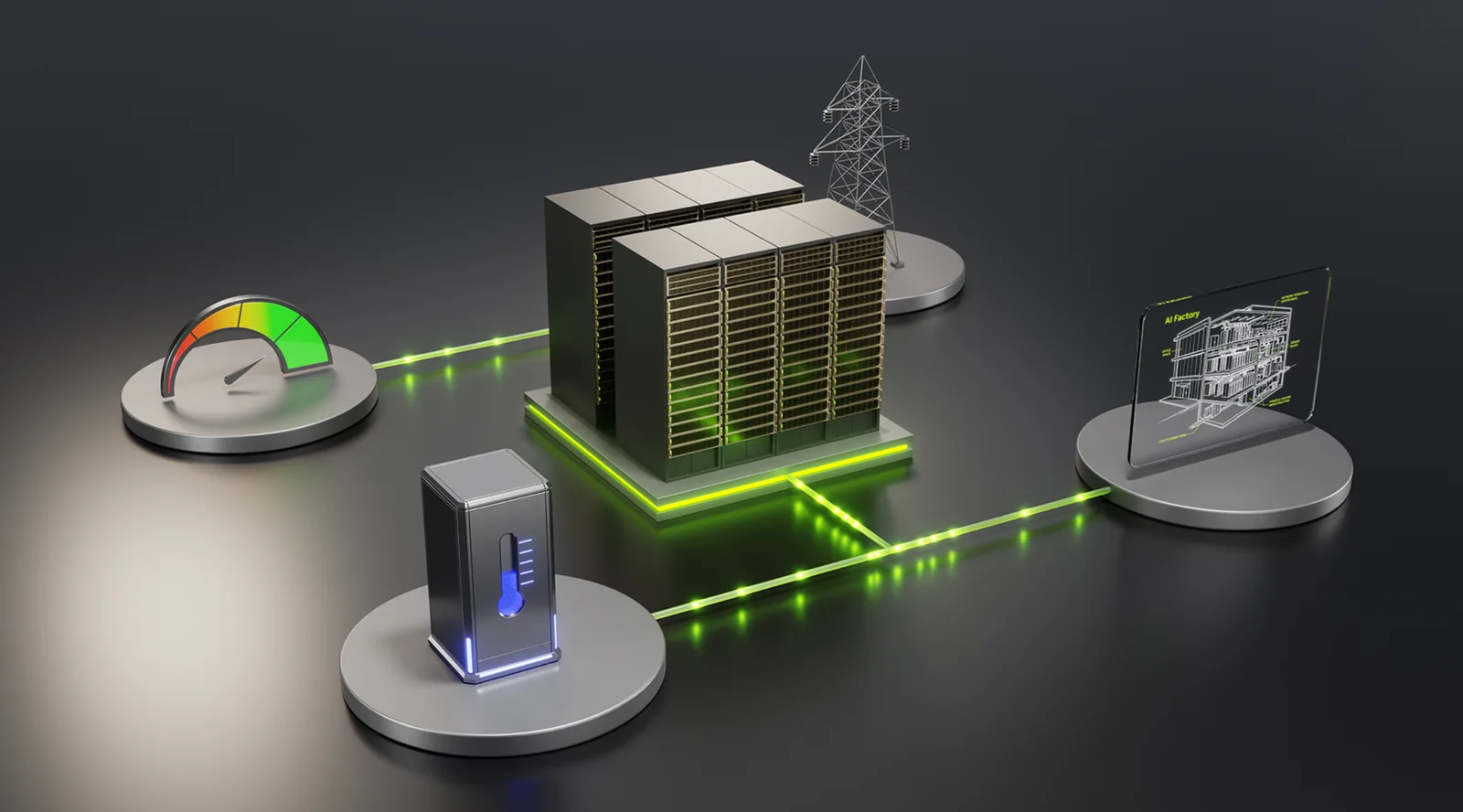
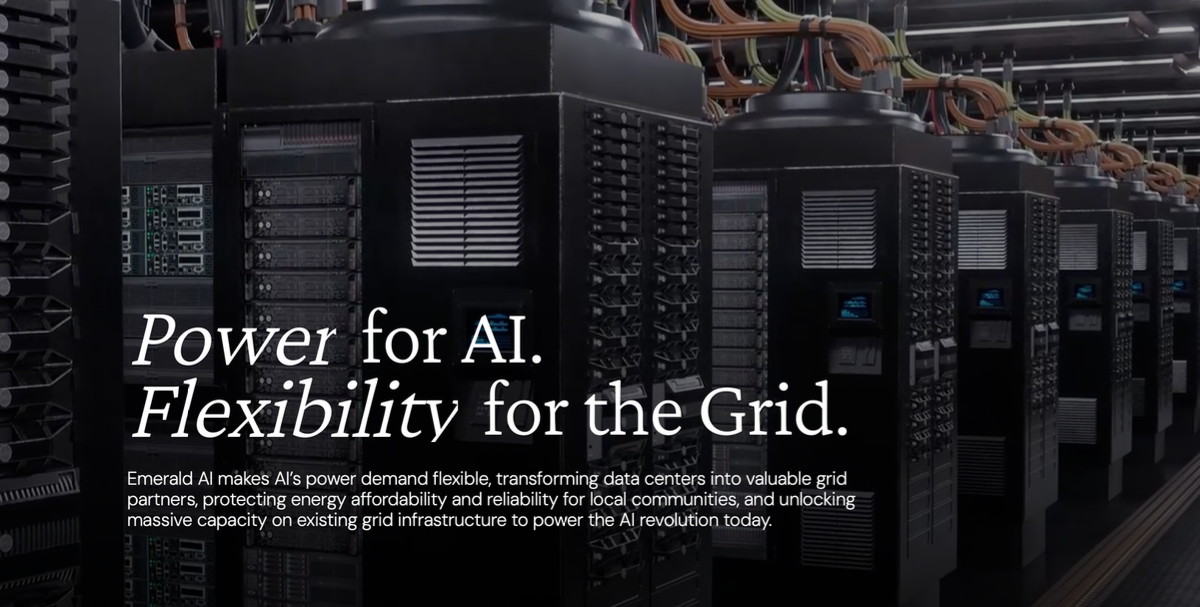
What makes the new Advanced Energy Management Alliance (AEMA) interesting is that it tries to apply this old idea to AI data centers. According to Nvidia, a flexible data center can shift compute jobs, discharge batteries and tap on-site generation to cut what it pulls from the grid. The core idea is to treat a data center not as a fixed consumer of electricity, but as a dispatchable resource.
How it would work:
- Grid peak hits as air conditioning and household demand surge
- Non-urgent AI compute gets delayed or moved to a different region
- That compute runs again once the peak passes and power is more available
Not every AI computation would stop
Work that people are doing right now, a live ChatGPT query, a real-time search, a financial trade, cannot easily wait. But not every calculation inside an AI data center is real-time.
Portions of model training, batch inference, data preprocessing, synthetic data generation, checkpoint saves and some research jobs can shift by tens of minutes or a few hours without much cost. Google already runs demand response by shifting non-urgent machine learning jobs across time or geography, and it said in March 2026 that the demand response capacity it has folded into long-term contracts with several US utilities has reached 1 gigawatt combined.
The numbers so far:
- 1GW — demand-response capacity Google says it has built into contracts with US utilities
- 18 — launch partners in AEMA, including Anthropic, Analog Devices, AES, National Grid, Constellation, NRG and RWE
- 100GW — additional data center grid-connection potential AEMA says could open up if flexible load is applied broadly. This is not confirmed capacity.
When a 1GW data center stops being "always 1GW"
For a utility, today's large data centers are demanding customers. They pull enormous amounts of power and expect it delivered reliably around the clock. That is the logic behind building out more generation and transmission every time a new data center comes online.
But if a 1GW data center can cut 200 megawatts during the grid's most stressed hours, and that ability is verified through contracts and technology, the math changes. Utilities no longer have to assume the entire data center runs at maximum output all the time.
That is exactly what AEMA is trying to formalize: standardizing how fast a data center responds, how long it can sustain a cutback, how predictable that is, and whether it actually delivers the promised reduction during an emergency. In exchange, the idea is to give data centers that offer reliable flexibility a faster path to grid interconnection.
| Traditional data center | Flexible data center | Shift in grid thinking |
|---|---|---|
| Load assumed nearly fixed | Some workloads shifted by time of day | Less reserve capacity needed for peaks |
| Relies mainly on backup generators in emergencies | Combines batteries, on-site generation and workload shifting | Data center becomes a grid participant |
| New connections may require major buildouts upfront | Flexibility commitments built into interconnection terms | Faster connection timelines in some regions |
Nvidia's rival is no longer just AMD
Nvidia's reason for stepping directly into this issue is simple: without power, a GPU you've already sold cannot be turned on. As the bottleneck in AI infrastructure moves from silicon to power and grid interconnection, simply shipping more GPUs does no longer pull forward the moment that capacity turns into revenue.
Nvidia's DSX Flex is a software layer designed to coordinate AI workloads and power sources in response to grid curtailment requests, demand-response signals and price signals. Emerald AI's Conductor plays a similar role, linking utility signals to a data center's compute load. That context sharpens why Nvidia keeps pushing the phrase "AI Factory."
A factory's output is not determined by the top speed of its machines alone. It also depends on electricity costs, uptime, maintenance, peak demand and bottlenecks managed together. AI data centers are moving into that same phase.
If the language of AI performance competition has so far been tokens per GPU, a growing power bottleneck could make tokens per watt, and eventually tokens per grid capacity, the metric that matters for economics. Two companies holding the same 1GW might produce very different output depending on how well they dodge peak hours and how high they keep GPU utilization.
The 100GW figure is tempting, but not yet real
TechCrunch, citing AEMA, reported that broad adoption of pausing or relocating non-urgent workloads could open up roughly 100GW of additional data center interconnection capacity on the existing grid.
That figure is not generation capacity already secured, nor a confirmed investment plan from Nvidia or Google. The actual payoff will vary widely by region depending on transmission constraints, the makeup of data center workloads, battery scale, how long curtailment can be sustained, and each utility's operating rules. Emerald AI itself says demand flexibility can reduce the need for new power plants, but it does not eliminate it.
So this technology looks less like a solution that lets the US skip building power plants, and more like a way to use existing infrastructure more efficiently while new plants and transmission lines are still being built. Expanding supply and managing demand are complements, not substitutes.
The answer to AI's power problem may lie not only in how many power plants get built, but in how smartly the electricity that already exists gets used.
Insight Times Editorial Desk