AI Data Centers in Space? The Real Test Launches This Week
On October 1, a SpaceX rocket carries a sub-50kg satellite with a Nvidia Orin NX chip and Google TPU test hardware into orbit. It is too early to call this a "space data center," but the signal is clear: the AI industry is rethinking where computing should physically sit.
Why send a computer into orbit on an expensive rocket at all
You could just build a data center on the ground. Cooling is easier, repairs are possible, and you can swap in new GPUs as they arrive. By any common-sense measure, space is one of the worst places to put a computer.
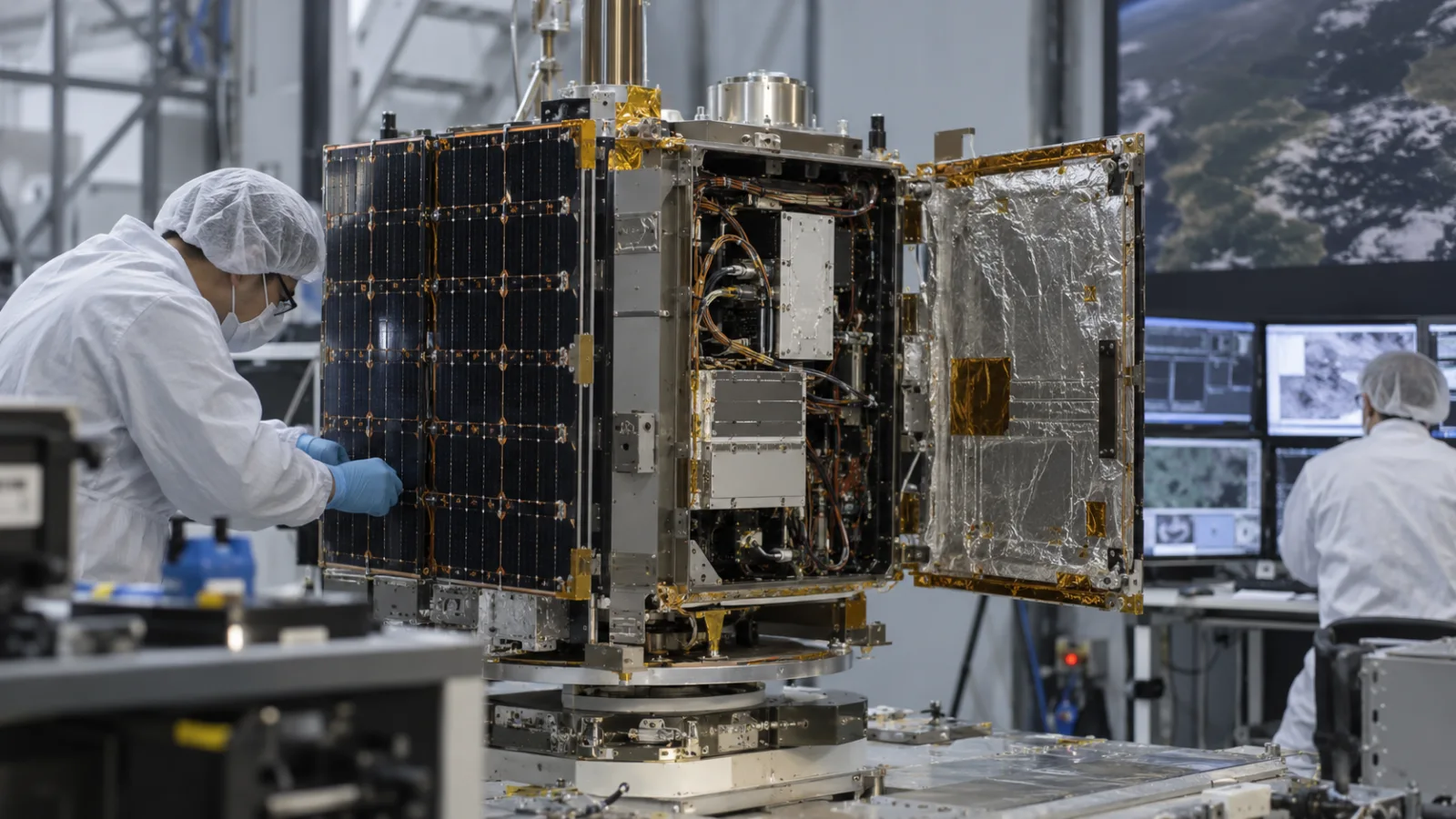
Yet on October 1, hardware built to test that common sense will fly aboard SpaceX's Transporter-18 mission. MOI-1A, a satellite built by Indian startup TakeMe2Space, packs a Nvidia Orin NX edge AI processor into a spacecraft weighing less than 50kg. The company says it has already lined up 23 customers across agriculture, mining, supply chains, insurance, and GIS mapping.
Customers upload their own AI models onto the satellite. The satellite photographs the Earth, then instead of beaming every raw image back down, it runs inference in orbit first. Only the useful signal, a new excavation scar at a mine site or a crop anomaly, gets sent to the ground.
That is the most realistic business model in this week's test. According to Reuters, MOI-1A runs on roughly 150 watts of power. Calling that a "data center" would be a stretch. What it actually is: Data-to-Compute, orbital edge computing that moves the processing to where the data is generated, rather than the other way around.
Shift one: shortening the path from satellite to Earth to AI
Old pipeline: Satellite → large raw data files → ground station → data center → AI analysis
New pipeline: Satellite + onboard AI → only the result gets sent to Earth
In the Earth-observation business, bandwidth itself is a cost center. Downloading gigabytes of high-resolution imagery for ground-based analysis is expensive. If a satellite can instead transmit just "something changed here," the downlink capacity it needs drops sharply.
TakeMe2Space is betting that the savings can offset the premium of computing in orbit. The economics per customer haven't been disclosed yet, but the problem statement is at least clear. At this stage, space-based AI isn't trying to replace ground data centers. It's closer to edge AI aimed at cutting data-movement costs.
Shift two: Google wants to move the compute to where the power is
Google's Project Suncatcher goes a step further. On this same Transporter-18 mission, Google plans to put actual TPU hardware into orbit to test how it holds up against radiation, temperature swings, vacuum cooling, and launch stress.
The longer-term concept: a constellation of solar-powered satellites linked by high-speed optical communication, forming large-scale machine learning infrastructure. Google says solar panels in the right low Earth orbit could be up to 8 times more productive than on the ground, since orbit largely escapes night, clouds, and atmospheric losses.
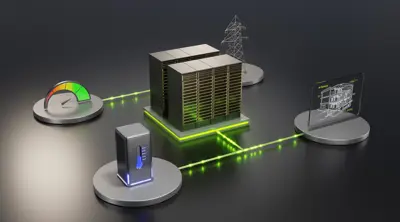
Ground-based AI: power generation → transmission grid → substation → grid connection → data center → AI
Long-term space concept: solar panel → electricity → AI chip
This is the second logic behind space AI: Compute-to-Energy, the idea of moving AI computation to wherever electricity is abundant, rather than moving electricity to the compute.
The backdrop for this idea is straightforward. US data center power consumption is already climbing fast. A 2026 update from Lawrence Berkeley National Laboratory estimates data centers could account for 9.5% to 15.3% of total US electricity use by 2030. Grid interconnection delays and massive new load requests have already become real constraints on AI infrastructure buildout.
But calling this a "space data center" today is getting ahead of the story
<50kg — MOI-1A satellite mass 150W — MOI-1A onboard power budget 23 — customers TakeMe2Space says it has signed Up to 8x — Google's estimate for potential solar productivity in certain orbits versus the ground
Ground-based AI campuses scaling from hundreds of megawatts toward gigawatt scale and a 150-watt satellite are not in the same category. What launches this week is not the migration of hyperscale data centers into orbit. It's technical feasibility testing.
And the list of problems to solve in space is, if anything, longer than on the ground. There's no air to dump heat with fans. Radiation can corrupt memory and semiconductors. Broken hardware is hard to fix. AI chips turn over on a one-to-two-year cycle, but a satellite, once launched, isn't easy to swap out. And connecting satellites at data-center-grade bandwidth requires optical links that don't fully exist yet.
The economics remain unsettled too. SpaceX's current public rideshare pricing starts at $350,000 for up to 50kg to sun-synchronous orbit. Google's own research calculates that if launch costs eventually fall below $200 per kilogram, the cost structure of an orbital data center could approach parity with ground-based power costs. But that's a research scenario premised on the mid-2030s, not today's prices.
Splitting reality from science fiction into three stages
| Stage | What it does | Where it stands today | Core economics |
|---|---|---|---|
| 1. Edge AI in Space | Satellite runs inference on its own data onboard | Already in testing and early commercialization | Savings on downlink cost and latency |
| 2. Distributed Orbital Compute | Multiple satellites link up to run distributed inference | Early research and prototype stage | Inter-satellite high-speed links and operating cost |
| 3. Orbital AI Data Center | Large-scale training/inference infrastructure built in orbit | Long-term hypothesis | Launch cost, power, cooling, reliability, hardware replacement cycles |
The distinction matters because it keeps investors from collapsing different timelines into one. Whether TakeMe2Space's model works and whether Google's long-term orbital data center economics pencil out are not the same question.
In the end, it's a bet on two cost curves converging
For orbital AI infrastructure to become economical, at least two cost curves need to fall at the same time.
AI compute cost ↓ — power draw per unit of performance, inference cost per query, chip efficiency gains
+
Launch cost ↓ — reusable rockets, larger launch vehicles, rideshare efficiency
Either one falling alone isn't enough. If compute gets cheaper but launch and upkeep stay expensive, space still loses to the ground. If launch costs fall but cooling, communications, and hardware replacement cycles remain unsolved, the system won't scale into large clusters.
So it's premature to draw a straight line from this test to a single-stock winner like SpaceX or Nvidia. Right now, the thing worth watching in this space isn't revenue. It's how fast the cost curves are actually coming down.
Insight Times Editorial Desk