If AI Slows Down, Is Chip Trade Over? Mapping Money After the 'Amodei Shock'
Anthropic CEO Dario Amodei's weekend call to pace frontier AI hit chip stocks first. The real question is which layer of the AI stack loses money, which gains it, and when that shows up in Nvidia, memory, cloud, power and security earnings.

Reading this as "AI is stopping" gets it wrong from the start
Of the three steps Dario Amodei proposed, only the first is immediately workable: placing outside evaluators inside Anthropic to check training processes and safety procedures. Step two, where US companies jointly slow down, needs government coordination. Step three, bringing China into the arrangement, is far harder still.
Amodei himself admits a full global pause is unlikely anytime soon. If a rival breaks the rules, the United States could lose military or economic advantage. With AI now a strategic asset in the US-China rivalry, "every major lab cuts compute at the same time" is not yet a base case.
So last Monday's chip selloff was not a reaction to confirmed order cuts. It was the market repricing the probability that such cuts could happen down the road.
Base case: model releases get spaced out, but data centers do not stop
The current numbers still point the opposite direction from an "AI capex cliff." Capex guidance for big tech compiled by Reuters runs to roughly $795 billion for 2026 and about $1.08 trillion for 2027.
Microsoft has guided calendar-year 2026 capex to about $175 billion and expects another increase in fiscal 2027. Alphabet raised its 2026 capex guidance to $195 billion to $205 billion and flagged a sizable increase again in 2027. Amazon plans to spend about $200 billion in 2026, and Meta has guided to $130 billion to $145 billion.
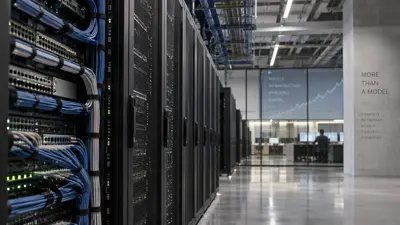
None of that money goes only toward training the next frontier model. It also covers inference on existing models, cloud customer demand, storage, networking, in-house ASICs, data center buildings and power grids. Much of it is already contracted or under construction.
The more realistic shift, then, is not that AI investment disappears but that its purpose changes. The center of gravity could tilt, at least somewhat, from a race to build the next model first toward a race to run existing models more cheaply, deploy them to more customers, and connect them safely into enterprise systems.
Layer 1: Model makers like OpenAI and Anthropic — monetization time lengthens more than growth slows
For frontier model companies, slower pacing is not automatically bad news.
Building each new model reopens billions of dollars in training, data and personnel costs. If model generations turn over a bit more slowly, companies get more time to recoup costs by selling existing models longer. Notably, Anthropic reportedly told investors it expects adjusted operating profit in the black for two straight quarters, though that figure comes with a major caveat: it excludes model training costs and some partner revenue sharing.
The risk is real too. The high valuations of OpenAI and Anthropic bake in an expectation that capability keeps rising fast. If the pace of capability gains structurally slows, that is a drag on valuation.
The competitive yardstick for model companies may shift from "who ships the next model first" to "who generates more revenue and cash flow from current models, and who keeps enterprise customers longest by clearing safety certification."
Layer 2: Microsoft, Google, Amazon, Meta — a slowdown could actually buy breathing room
Hyperscalers sit in the most complicated spot in this debate. If AI capability gains slow, growth in GPU purchases for cloud use could ease. But at the same time, companies carrying heavy depreciation and power costs on data centers get more time to run those assets longer and lift returns on investment.
Companies with their own chips, Google's TPUs, Amazon's Trainium and Inferentia, are particularly positioned to compete on cost efficiency in an inference-heavy market. Microsoft has Azure and Copilot as deployment channels. Meta can wire AI directly into ads, recommendations and personal agents.
By contrast, neoclouds that leaned on debt and outside capital to rapidly expand GPU data centers, or operators concentrated around a few large customers, are more exposed. If slower model releases drag down GPU rental rates and utilization, financing costs stay fixed while the payback period stretches out.
In a slowdown, "who holds the most GPUs" matters less than "who can turn those GPUs into cash at high utilization for the longest time."
Layer 3: Nvidia, AMD, Broadcom — as the center shifts from training to inference, the game changes
Accelerator makers took the first hit in the stock market, unsurprisingly. If the number of giant frontier-model training runs falls, growth in demand for the cutting-edge GPUs that have generated Nvidia's and AMD's highest margins could slow.
But "less GPU demand" and "less AI compute demand" are not the same thing. As hundreds of millions of people use already-trained models and countless agents run around the clock, inference compute can keep growing.
In that world, competition shifts from raw peak performance toward performance per watt and cost per token. Nvidia can defend its position with a full platform spanning CUDA, networking and Rubin, but the relative opportunity grows for in-house ASICs like Google's TPU and Amazon's Trainium, for custom accelerators Broadcom designs, and for new chips built specifically for inference.
Amazon recently announced a multi-generation collaboration with Qualcomm to develop custom chips for AI inference. The more a slowdown materializes, the more the economics of "cheapest tokens per watt" could matter relative to "fastest chip."
Layer 4: SK hynix, Samsung, Micron — the data still argues against "memory is over"
Memory is where retail investors are most confused right now. DeepSeek says its V4.1-Flash model cut the HBM needed for KV cache by a quarter and SSD by an eighth versus the prior generation. Nvidia is also reportedly considering lower HBM stack configurations for Rubin Ultra. On the surface, that reads as "AI is moving toward using less memory."
But the actual reasoning behind the Rubin Ultra case runs the other way. TrendForce says Nvidia is weighing not just 12-Hi HBM4E but also 8-Hi HBM4E, 12-Hi HBM4 and 8-Hi HBM4 because of an expected DRAM supply shortage in 2027 and uncertainty over HBM4E yields and qualification. Even if HBM bit shipments rise 50% to 60% year over year in 2027, TrendForce expects that growth still won't keep up with demand.
Less HBM per GPU and a shrinking total HBM market are entirely different things. If a wafer that used to produce 100 GPUs with more memory attached can instead produce 130 GPUs with less memory each, total HBM bit demand can actually rise. DeepSeek's efficiency gains work the same way. Memory use per token falls, but if lower token prices bring in agents and users faster, total demand grows.
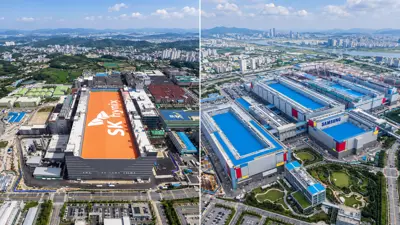
The competitive landscape is shifting too. By Counterpoint's count, HBM revenue share in the second quarter of 2026 stood at 50% for SK hynix, 33% for Samsung, and 18% for Micron. SK hynix still leads, but Samsung's expanding HBM4 shipments are closing the gap quickly.
What memory investors should watch right now is not the "AI slowdown" headline but HBM average selling prices, bit shipments, customer qualification, days of inventory, and Rubin Ultra's final spec. DRAM and NAND need to be tracked separately too. TrendForce expects DRAM to stay tight through 2027 while NAND supply conditions could loosen in the second half of that year. That is why treating "memory" as one lump is a mistake.
Layer 5: TSMC, ASML, packaging — a physical bottleneck that outlasts any slowdown
Frontier model release cycles can shift by months. Fab and advanced packaging capacity cannot be switched on and off nearly that fast.
ASML's existing EUV tools are nearly sold out through 2027 order volumes, and TSMC, Samsung, SK hynix and Intel are all preparing to adopt High-NA EUV systems priced around $400 million each. TSMC keeps approving tens of billions of dollars in capital for advanced-node and advanced-packaging expansion through 2026.
Even if a near-term AI slowdown materializes, CoWoS and advanced-node bottlenecks are unlikely to disappear quickly. If hyperscaler capex for 2027-2028 does come down in reality, the equipment makers with the longest lead times would likely feel the effect on new orders last, and late.
For TSMC and ASML, checking customers' 12-to-24-month production plans matters far more than this week's AI debate.
Layer 6: Power, cooling, security — a slowdown narrative that raises their importance
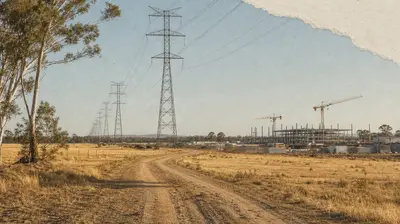
The physical bottlenecks of AI data centers move more slowly than the pace of model releases. Power grids, transformers and cooling capacity are already scarce. Google recently committed 13 billion euros to AI infrastructure in Finland and signed a deal to buy up to 50% of a nuclear plant's power output over 22 years. Vertiv announced an acquisition of a microgrid company to help secure on-site power for data centers.
If model capability climbs a bit more slowly over a quarter or two, that does not make the billions of existing AI requests, or the power data centers already consume, disappear. That makes power and cooling a relatively long-duration layer in the AI investment cycle.
Security is even more direct. Amodei's own proposal calls for stronger outside evaluation, monitoring, sandboxing and verification of model behavior. On September 14, the day chip stocks tumbled, cybersecurity names like CrowdStrike and Palo Alto Networks jumped by double digits.
A single day's stock move guarantees nothing about long-term earnings. But as AI agents get direct access to a company's code, payments and cloud accounts, identity and access management, behavioral monitoring, policy enforcement and audit logs are likely to become an operating cost rather than an optional extra. If an AI slowdown materializes, "safety spending" is more likely to grow than shrink.
Three scenarios cut through the confusion
First, the most realistic base case is "pacing without pause." Model release intervals and safety verification stretch out, but training and inference investment continue. Nvidia's growth expectations could ease somewhat, but there's not yet a reason for HBM, cloud, power and security demand to collapse. If anything, inference and efficiency work take up a larger share.
Second is a strong-slowdown scenario in which actual regulation caps training compute itself, with some degree of coordination extending even to China and the US. In that world, Nvidia, AMD, HBM, advanced packaging and highly leveraged data center operators would likely take the first hit. But Amodei himself rates the odds of a genuine global pause as low.
Third is a scenario where geopolitical competition means almost no real slowdown happens. In that case, the current AI infrastructure investment cycle could run longer. The question then shifts away from safety and toward the profitability, debt and power constraints, and valuation of capex that now tops $1 trillion.
Under any of the three, "AI is over" is too simple a conclusion. What changes is where the money sits inside the AI industry.
The headline changed. The investment logic has not broken yet
This is not news to ignore. For the first time, chief executives at frontier AI labs have made "the pace of capability improvement" an investment variable. Going forward, it's fair to treat this as a new discount factor for Nvidia and HBM.
But there is not yet enough evidence, at this stage, to conclude that chips, memory in particular, are finished. Actual customer capex has not come down. HBM remains supply-constrained. ASML equipment and advanced packaging still carry long order backlogs.
What should worry investors most is not the stock decline itself but the moment the order of fundamentals flips: hyperscalers cutting 2027 capex, HBM ASP and bit-shipment forecasts turning down together, Rubin-series GPU shipment plans getting revised lower, and binding compute regulation actually becoming law. If those four things show up, the view should change.
Until those four are confirmed, this looks less like evidence of an AI infrastructure collapse and more like the first major stress test for repricing the relative value of training, inference, security and power inside the AI investment story.
How AI investors might respond
Separate the headline from the investment logic. Rather than revising revenue estimates for holdings based on Amodei's comments alone, check first whether customer capex, orders and pricing data have actually changed.
Do not treat "AI chips" as one basket. Training GPUs, HBM, foundries, networking, power, cooling and security are affected by a slowdown in different ways. If a portfolio is heavily concentrated in one layer, it is worth checking concentration risk.
For memory, watch supply indicators before price moves. A 5% to 10% stock drop matters less than HBM contract prices, inventory levels, customer qualification and wafer allocation as leading indicators.
Treat valuation risk separately. Even if industry demand holds up, high rates combined with high expectations can still pressure stock prices. "The industry isn't over" and "the current price is cheap" are not the same sentence.
Decide in advance what would change your mind. If two or three of the following happen together, capex cuts, falling HBM prices, lowered GPU shipment guidance, or binding compute regulation, it is worth revisiting the existing bullish case.
Insight Times Editorial Desk