Bitcoin Mining Sites Are Becoming AI Data Centers
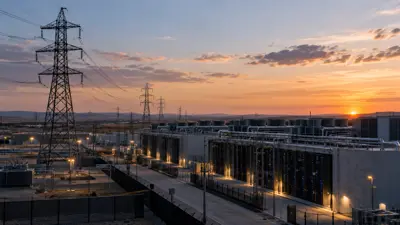
The most valuable land in the AI era may not be prime real estate but land already wired for power. What Bitcoin miners really owned was never the rigs, it was the grid connection.
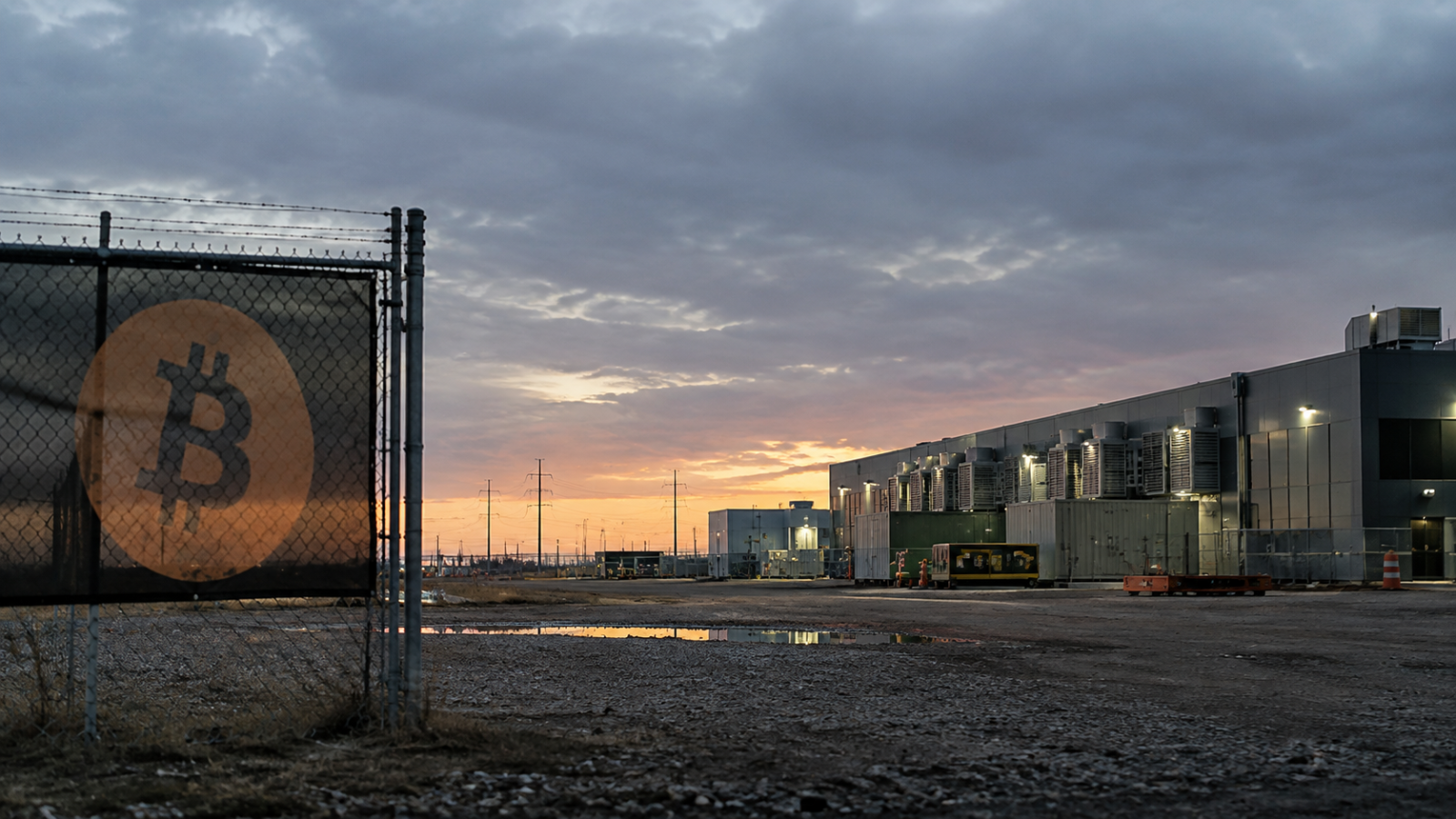
The most valuable land in the AI era may not be in the middle of Silicon Valley. Industrial sites that can deliver hundreds of megawatts of power starting next year are becoming the scarcer prize.
Cipher Digital, TeraWulf and Hut 8, all former Bitcoin miners, are showing that shift first. These companies are moving quickly from mining Bitcoin to leasing out the power and land they once used for it to AI data center operators, under long-term contracts.
On the surface, Bitcoin and AI look like unrelated industries. One mines coins, the other runs AI models. But from an infrastructure standpoint, the overlap is obvious. Both need enormous, continuous amounts of electricity.
The AI Boom Changed the Land's "Highest and Best Use"
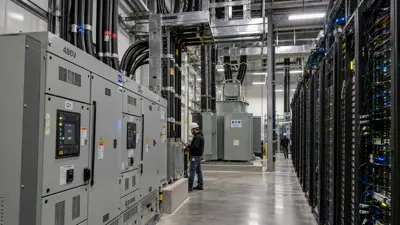
Bitcoin mining was always a business where power costs decided profitability. So miners hunted for places with cheap electricity, available grid connections, and the ability to absorb massive loads. Along the way, they locked up sites that already had substations, transmission links, land and cooling infrastructure in place.
When the AI boom took off, hyperscalers and neoclouds started wanting the exact same assets. The land itself did not change. Its economic use did.
Old highest and best use: Bitcoin Mining — using electricity to produce Bitcoin.
New highest and best use: AI Compute Infrastructure — leasing out power and data center capacity long term.
In real estate terms, the site's "highest and best use" has flipped. A parcel that once generated its highest return as a mining farm can now generate more value as an AI data center.
By the Numbers, This Already Looks Like an Industry Pivot
- US data center power demand: 68 GW, per Morgan Stanley estimates for 2026-2028
- Projected power supply shortfall: 38 GW, the gap between demand and supply
- Power owned or planned by crypto miners: about 14 GW, per Bernstein estimates
According to Reuters Breakingviews, a powered-shell business can typically generate up to roughly $2 million in annual revenue per megawatt. Neocloud-style contracts, where the company also runs the AI servers and GPUs itself, can generate more revenue per megawatt, but they also carry the risk of chip depreciation and reinvestment.
The market has started pricing that difference. Based on 2028 projected revenue compiled by Breakingviews, Hut 8, Cipher Digital and TeraWulf traded at roughly 15 times, 12 times and 7.7 times respectively, while IREN, which owns the chips outright, traded at about 2 times. Those multiples shift with time, but the pattern at the time was clear: the market was placing a higher value on the durability of power access than on the electronics sitting on top of it.
| Company | Core of AI Pivot | Scale |
|---|---|---|
| Cipher Digital | 15-year data center lease with AWS | 300 MW |
| TeraWulf | Long-term AI infrastructure contracts | 839 MW contracted capacity |
| Hut 8 | Long-term AI data center leases | 949 MW contracted IT capacity |
The Real Scarce Asset Isn't Power, It's Time-to-Power
Imagine building an AI data center from scratch. Buying land, putting up a building and ordering GPUs are, in the end, questions of capital and supply chains. Connecting 500 megawatts to the grid is a different problem entirely.
If substations and transmission capacity fall short, the grid needs upgrades. More generation capacity may be required. Permitting and community approval have to happen too. Berkeley Lab data show that for US power projects that actually reached commercial operation in 2025, the median time from grid interconnection request to going live exceeded five years. That is not exactly the same process as connecting a data center load, but it is a strong signal of just how slow grid expansion can be.
"In the AI race, how quickly you can get power is becoming as important as how cheaply you can get it."
That is why 500 megawatts available next year can carry more economic value than 500 megawatts available cheaply in 2030. This is time-to-power.
Seen this way, a data center's announced 10-gigawatt development pipeline and its currently energized 1 gigawatt are not the same 1 gigawatt. One is a plan. The other is an asset that can generate revenue right now.
AI Is Redrawing the Map of Industrial Real Estate
This repricing does not stop with Bitcoin miners. Shuttered factories, aluminum smelters, steel mills, paper mills and coal power plant sites can all be viewed through the same lens.
What matters more than the building itself is what remains on site: the transmission connection, the substation, the land, the water access. Retired power plant sites in particular can retain grid-connected infrastructure even after the generation equipment stops running, giving them strategic value to AI data center developers.
Timeline of what's scarce:
- 2023: GPU
- 2025: HBM + Networking
- 2026: Power
- Next: Time-to-Power
Insight Times Editorial Desk