SK hynix Rebounds After a Slide: Solidigm IPO Debate and AI Spending Doubts
Memory demand and pricing remain strong. The selloff reflects worries over AI spending and Solidigm's planned US listing, and the coming earnings report should test them.
SK hynix is showing signs of life again.
Chips are still selling and prices are still rising. Brokerage earnings expectations are high. The stock has fallen sharply of late, but the business has not lost its competitive edge along with it.
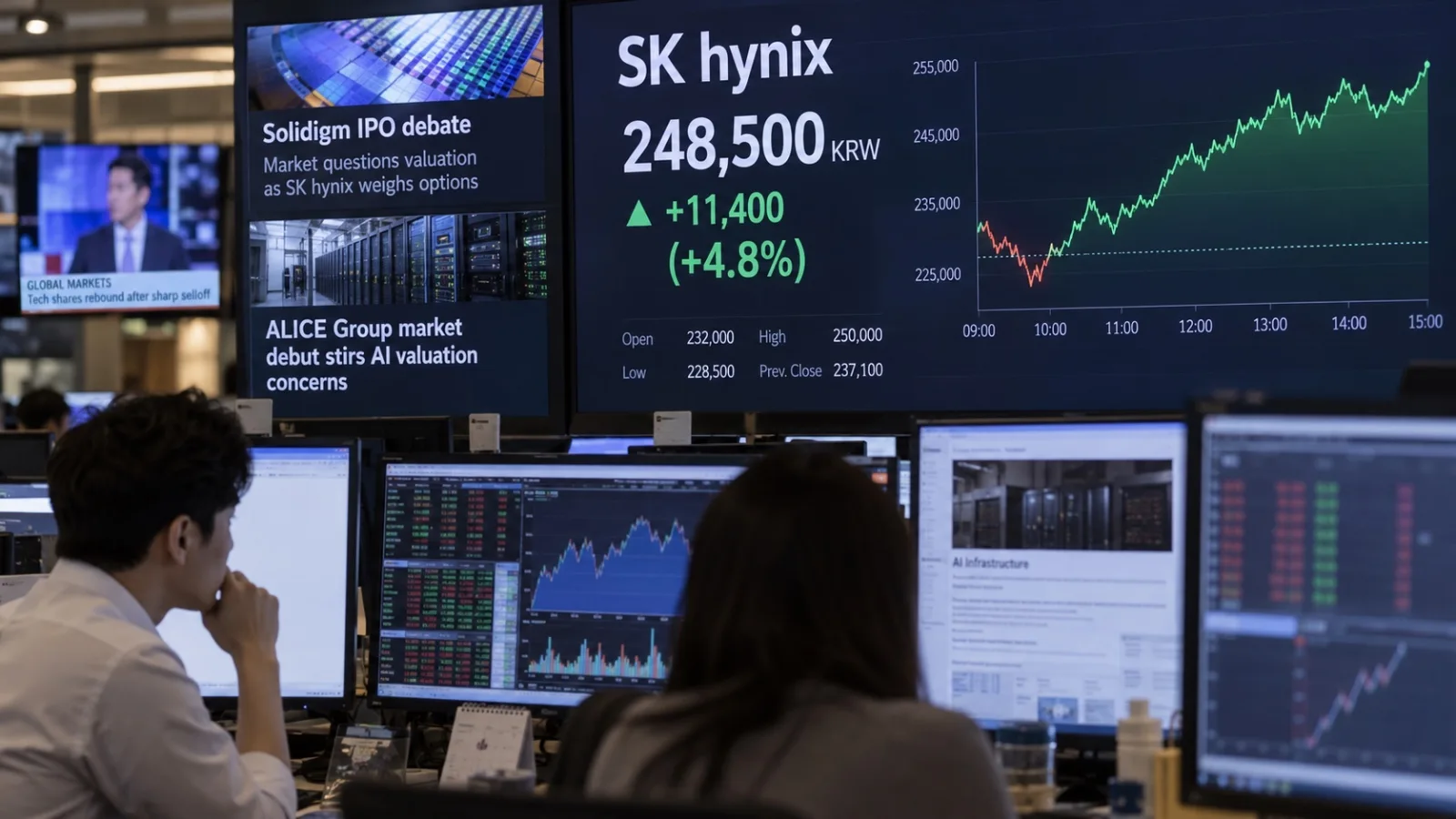
On October 21, the stock tried to bounce in Seoul trading. SK hynix closed at 1,223,000 won on October 20. On the morning of October 21 it rose as much as about 4.82% from the previous close at one point. That is an intraday gain and will differ from the final close. The move follows a rebound in US chip stocks on October 19 that snapped a losing streak, though US tech stocks were mixed by name on October 20.
How should investors read the bounce?
Two things weighed on the stock: doubts about how long AI spending will last, and the controversy over a possible listing of its subsidiary Solidigm. The market is now asking whether SK hynix's actual earnings outlook has weakened as much as those worries suggest.
1. Is the chip business really doing well?
Yes. For now, the memory market is still strong.
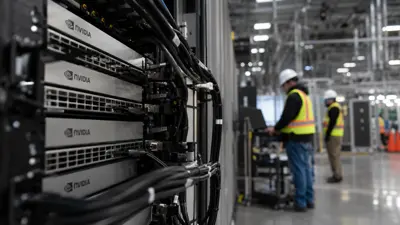
Running AI services such as ChatGPT takes huge data centers. Those facilities hold not only Nvidia's AI chips but also vast amounts of memory and storage.
Chip plants cannot be built overnight just because orders rise. When supply is scarce, prices climb. That is a good setup for SK hynix.
- Q4 general-purpose DRAM contract prices (forecast): +10% to 15% from the prior quarter
- Q4 NAND contract prices (forecast): +15% to 20% from the prior quarter
These are market research forecasts. They may differ from confirmed prices or from SK hynix's realized selling prices.
Not every chip sells equally well. Smartphone and PC makers are feeling the strain of higher memory prices. Even so, it is hard to explain this selloff as a sudden failure of chip sales.
2. The Ellis Group plunge: AI spending is now being graded
Microsoft, Amazon, Google and Meta are spending enormous sums on AI data centers. That is a major reason SK hynix's memory is selling well.
But the question on Wall Street has changed.
What if companies spend heavily on data centers and AI service revenue falls short? They could slow new construction. In time, chip orders could shrink too.
A hot AI listing, then a first-day drop
A Korean AI company, Ellis Group, is an instructive case. It provides GPU servers and cloud environments so companies can build and run AI. Put simply, it rents out the computing resources AI needs.
Interest before the listing was intense. Subscription deposits from retail investors reached about 10.26 trillion won. But on October 20, its first trading day, the stock closed about 32% below its offering price.
- Subscription deposits: 10.26 trillion won (money put up to subscribe, not confirmed investment)
- First day vs. offering price: about -32% (at the close of the first session)
The business did not deteriorate in a day. The gap was between the enthusiasm in the subscription and the price investors were willing to accept in real trading.
That need not be read as a crisis for the whole AI industry. Early selling pressure and a high offering price may have played a part. It looks more like investors now weighing real profitability and the odds of recouping investment, rather than the AI label.
What does that have to do with SK hynix?
In AI, money and orders are linked.
- AI service companies such as Microsoft and Google invest in data centers for AI services.
- AI infrastructure operators such as Ellis and CoreWeave build servers and computing capacity and provide services.
- Chipmakers such as Nvidia and SK hynix benefit from demand for GPUs and memory.
A simplified view of how the industry connects. Actual contracts and purchasing paths differ by company.
If the companies at the front of the chain slow their spending, the effect can pass in turn to servers, GPUs and memory makers. That is why sentiment toward AI infrastructure names like Ellis matters to SK hynix.
One distinction matters here. Weakness in some AI infrastructure stocks is not the same as a real drop in SK hynix's memory orders. If AI spending holds and chip orders prove solid, excess worry could ease and the stock could be re-rated.
3. The Solidigm IPO: uncertainty or new growth capital?
SK hynix owns a US subsidiary, Solidigm. Its main business is enterprise SSDs, which store large amounts of data in data centers.
News emerged that SK hynix is weighing a separate listing of the company on the US stock market. Selling shares to outside investors would raise money for more production capacity and R&D.
Existing SK hynix shareholders face a different question.
Consider a profitable division inside a company you own. If it takes in new shareholders, the company receives capital, but there are also more people to share future profits.
A listing is not necessarily a loss. If the proceeds lift the scale and earnings of the business far higher, existing shareholders can benefit too.
The good case: Solidigm earns a high valuation and invests the proceeds well in growth. Value flowing back to existing shareholders could rise.
The bad case: Too large a stake is given up, or the investments underperform. Existing shareholders' share of earnings shrinks, and a discount may attach to the group's valuation.
Regulation adds complexity. On October 19, the head of Korea's Financial Supervisory Service raised the possibility that a US listing of Solidigm could run afoul of Korean rules on double listings of subsidiaries.
In the end, what matters is less whether it lists than at what value, how big a stake is sold, and where the proceeds go. If terms and an investment plan favorable to shareholders are presented, the current dispute could become a chance to restore growth expectations.
4. After 1.22 million won, what has changed?
SK hynix shares fell sharply. The company's competitiveness did not weaken by the same amount.
Memory prices are still rising, and SK hynix remains strong in HBM, the high-bandwidth memory AI servers need. The stock and the underlying business moved in different directions, and that is the starting point for understanding this pullback.
That is why the bounce deserves attention. If the market turns back to the core franchise and future earnings, the stock could be valued differently.
Open questions remain. It is not yet clear whether AI data center spending will continue, or how a US listing of Solidigm would affect existing shareholders. Neither uncertainty means SK hynix's chip competitiveness has weakened.
If SK hynix's earnings report at the end of October confirms that memory demand and profitability remain strong, today's rebound could be read as an early sign of a revaluation.
One day's gain cannot confirm a bottom. But saying there is no basis for a rebound would also be at odds with the real state of the memory business.
The most useful test for shareholders now is calmly checking how well the outlook for SK hynix's future earnings is holding up.
5. What the rebound needs to continue
Short term (1 to 4 weeks): The strong intraday gain on October 21 suggests sentiment could recover. If US chip stocks stabilize, foreign selling eases and the earnings outlook holds, the rebound gains credibility. One day's rise does not confirm a trend reversal.
Medium term (1 to 6 months): If memory prices and AI server investment continue, the earnings-based room for recovery remains large. If Solidigm's listing terms are also settled in shareholders' favor, that could be another trigger for a re-rating. If AI spending slows or the shareholder-value dispute drags on, recovery could be slower.
Three things to watch
- SK hynix's earnings report: Not only profit already earned, but the outlook for memory prices and orders.
- Follow-up on the Solidigm listing: At what valuation and how many shares, and whether there are protections for existing shareholders.
- US Big Tech AI spending plans: Whether Microsoft, Meta, Google and Amazon keep raising data center outlays.
SK hynix is not a company that wobbled because it could not sell chips. The market recently worried about the durability of AI spending and Solidigm's shareholder value, but the memory franchise still stands out.
How long will the chip boom last, and who gets the money it generates?
Today's rebound may be a welcome start. If answers on earnings and shareholder value build up, the recovery will look more convincing.
Insight Times Editorial Desk