Nvidia's Next Target After GPUs: Controlling What AI Agents Are Allowed to Do
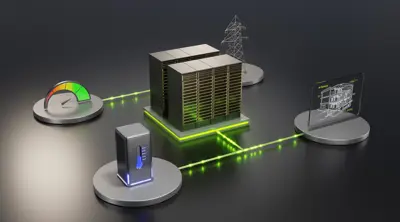
OpenShell and Sentry are not about policing what an AI says. They are about controlling, at the server infrastructure level, which files and APIs an AI can touch, what it can execute, and who can actually pull the plug when something goes wrong.
The bottleneck in the agent era is not just accuracy
A chatbot can give you a wrong answer. An agent can take a wrong action. It queries databases, edits code, calls external APIs, uses credentials, and works autonomously over long stretches. Once agents connect to robots or industrial equipment, a mistake no longer stays on the screen.
That is why giving agents more authority takes more than a model's built-in safety instructions. Companies need to know which files an agent can read, which networks it can reach, which tools it can call, and who actually blocks execution when the agent strays from policy.
OpenShell and Sentry play different roles
OpenShell Isolates each agent in a sandbox and enforces policy on file access, processes, network calls and credentials. It is open source under Apache 2.0 and can extend to environments built on Arm and Intel.
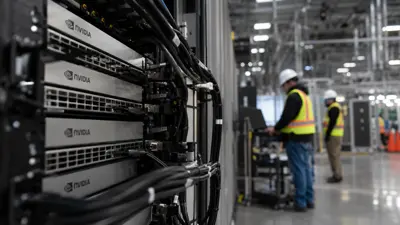
Sentry A monitoring layer that sits apart from the host. The goal is to keep enforcing policy even if the agent or the operating system is compromised. Nvidia says Sentry runs real-time isolation and blocking on its BlueField-4 chip.
BlueField-4 + DOCA The DPU and its programmable security software become the hardware enforcement point that governs an agent's identity, policy, network path and data access.
The key distinction is product maturity. OpenShell is an open-source runtime available broadly today. Sentry, by contrast, is a reference system design built around BlueField-4. So it is too early to read this announcement as an immediate driver of large BlueField revenue.
Nvidia is after revenue per AI factory, not just security revenue
Nvidia has already used CUDA to build a developer ecosystem, DGX and HGX to shape server design, NVLink and Spectrum-X to control cluster networking, and NIM and AI Enterprise to own deployment software. This time it is trying to fold agent permissions, auditing and enforcement into the same stack.
If the strategy works, the purchasing conversation changes too. In the past, buyers focused on GPU performance and power efficiency. Going forward, questions like "which agent touched which data and tools," "which actions require human approval," and "can we still block the agent if the host is compromised" could become part of data center architecture decisions.
That reframes what BlueField is worth. It used to be an infrastructure processor for offloading network and storage tasks. In the agent era, it has a shot at being reevaluated as a trusted zone that enforces policy from outside the host itself.
Less a replacement for security vendors, more a new enforcement layer
| Area | Incumbent | Where Nvidia is stepping in |
|---|---|---|
| Endpoint detection | CrowdStrike and others | Independent monitoring and blocking from a DPU outside the host |
| Network security | Palo Alto Networks, Cisco and others | Hardware enforcement of AI model call paths and data access |
| Cloud identity and management | Hyperscalers | Extending per-agent permissions and execution boundaries to the infrastructure layer |
| AI runtime | Agent frameworks and dev platforms | Offering OpenShell as an open-source entry point |
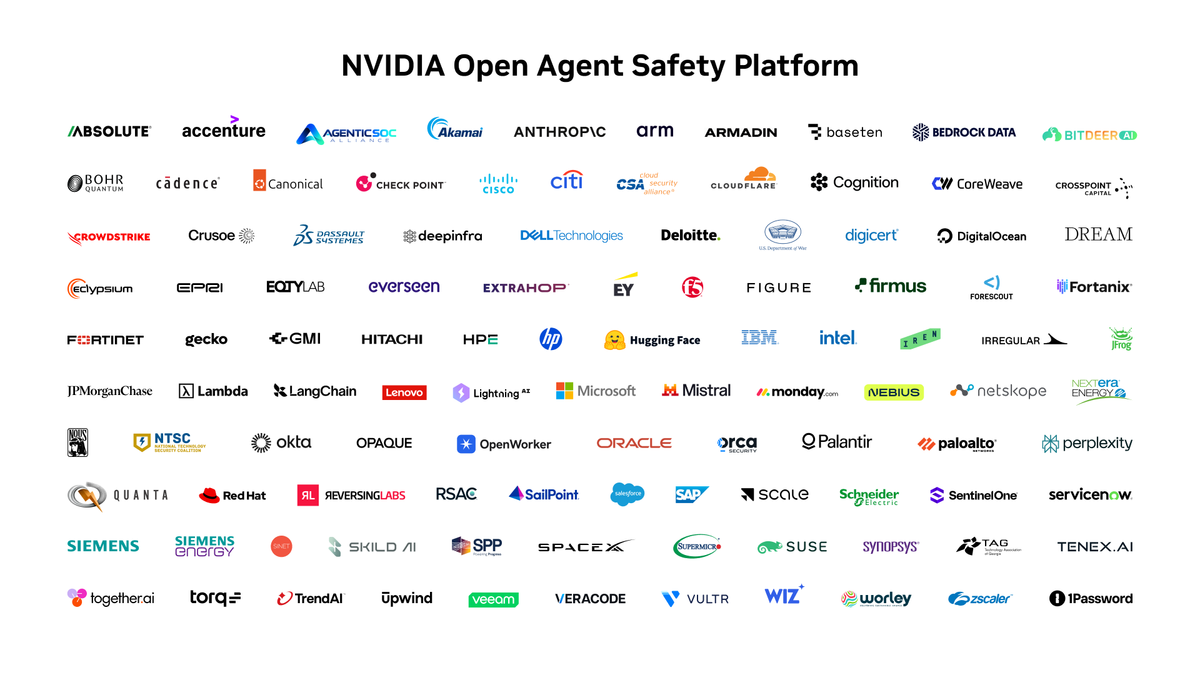
The more realistic scenario looks like combination rather than replacement. Nvidia supplies the underlying layer that can execute and block, while existing security vendors handle threat intelligence, organization-wide policy management, and incident analysis. More than 100 organizations, including Cisco, CrowdStrike and Palo Alto Networks, are already part of the related ecosystem.
Insight Times Editorial Desk