AI Was Supposed to Live in the Cloud. Apple Is Bringing It Back to the Desktop.
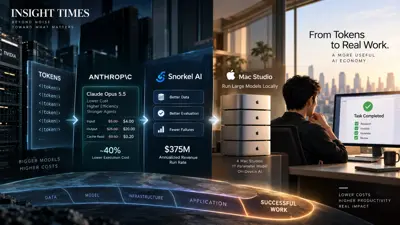
Four Mac Studios running a trillion-parameter model matters less than the economics behind it: heavy, repeated AI use can make owning compute cheaper than renting it by the token.
The Build-or-Buy Question Has Arrived for AI
For the past three years, the AI investment logic has run almost entirely one direction: bigger models, more GPUs, bigger data centers, more power. That direction still holds. But Apple has just raised a different question. If a company keeps using AI over and over, at what point does it stop making sense to keep renting the compute?
Cloud AI runs on usage-based pricing. The more calls a company makes, the more it pays in tokens. Local AI flips that: buy the hardware upfront, then cover power and upkeep. Simplify the economics and the break-even point sits where hardware cost plus electricity and maintenance meets cumulative cloud inference spend. When usage is small or erratic, the cloud wins. When usage is large and steady, ownership can win instead.
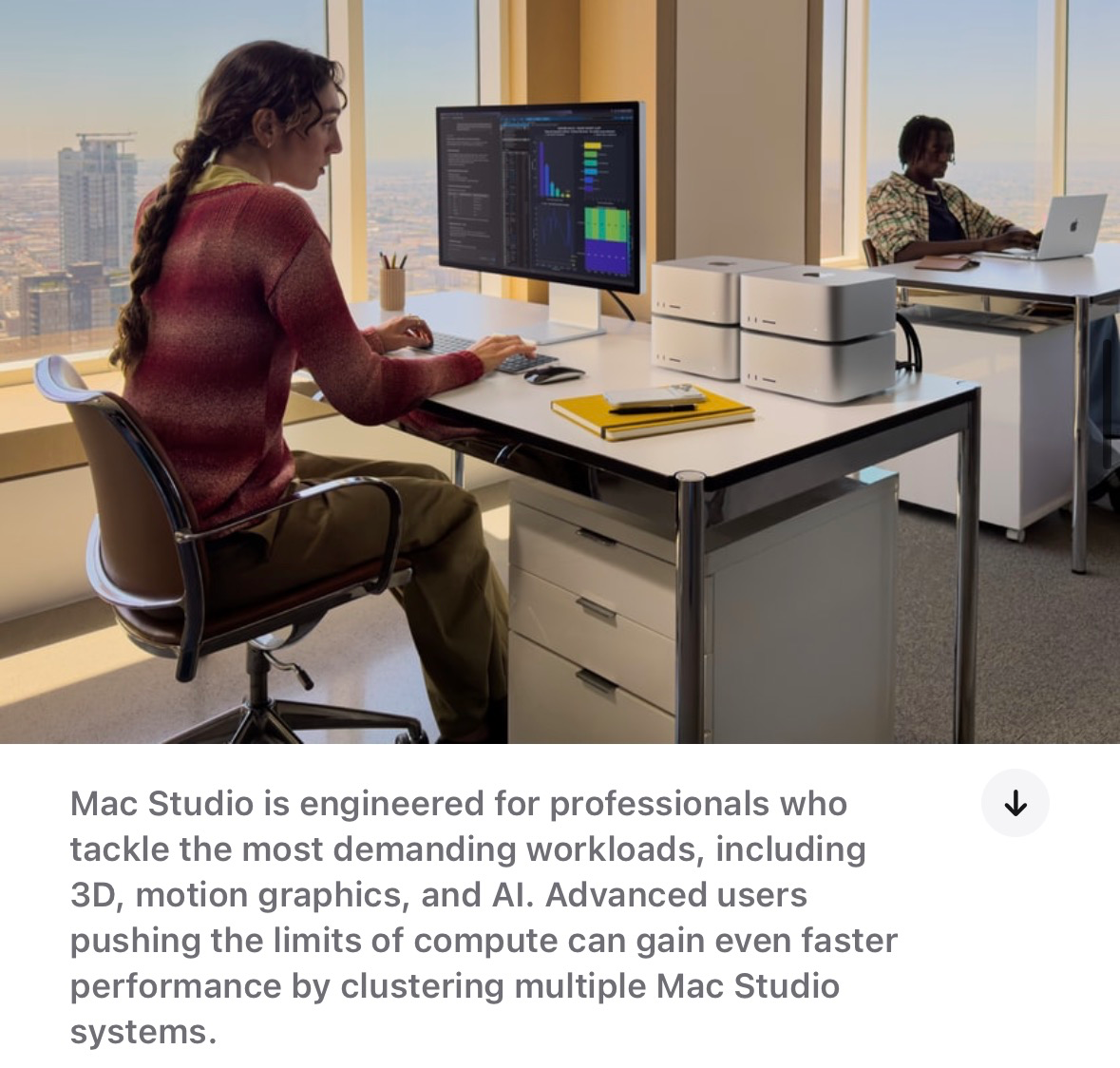
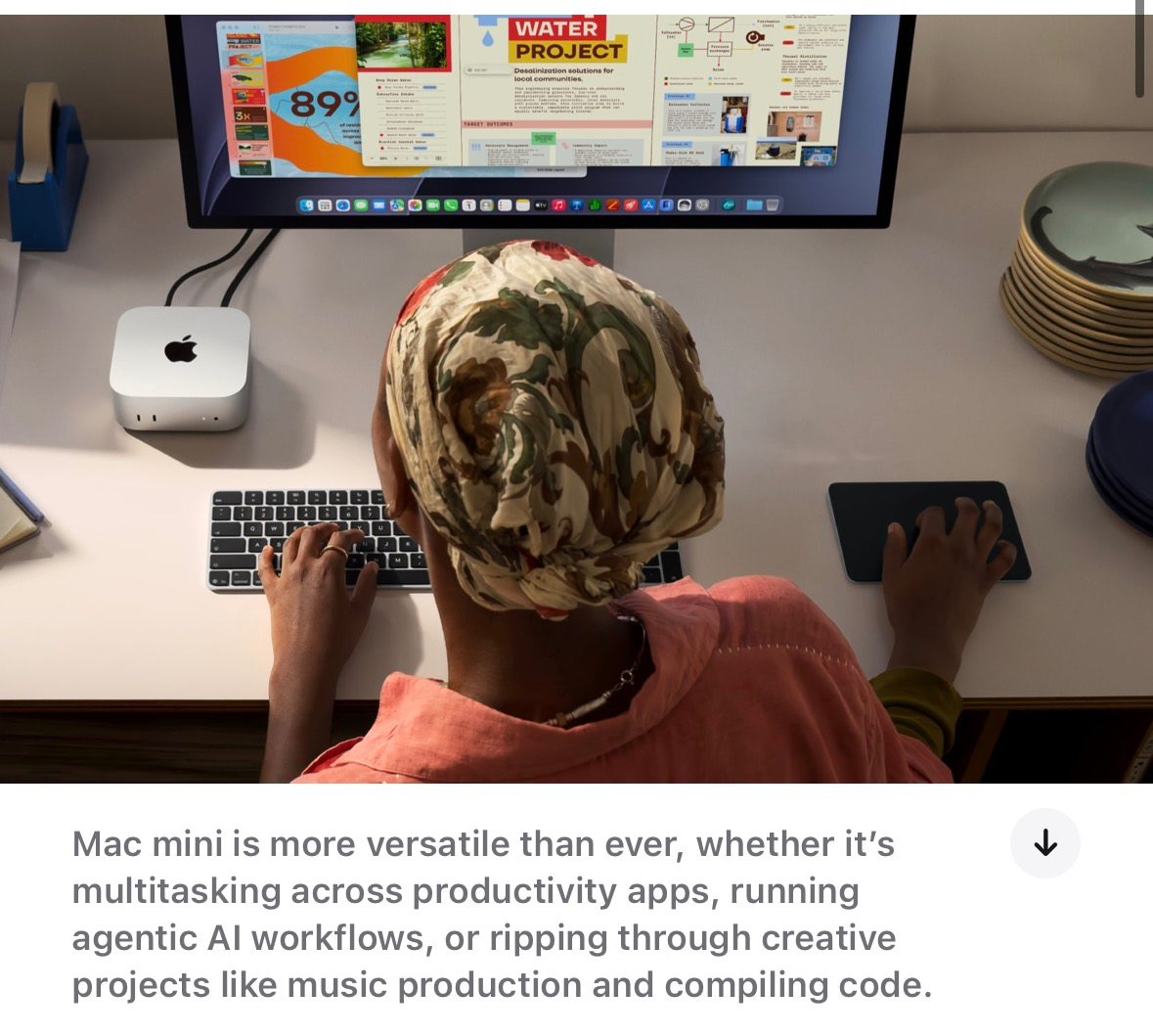
That gap matters more in the age of AI agents. An agent that answers a handful of questions a day is one thing. An agent that continuously reads files, checks code, indexes documents and monitors work in the background is another, since its inference volume climbs fast. That is why Microsoft CEO Satya Nadella has described on-device AI as "unmetered intelligence": compute that doesn't run a meter every time you use it.
Apple Silicon's Accidental Advantage Just Got Bigger
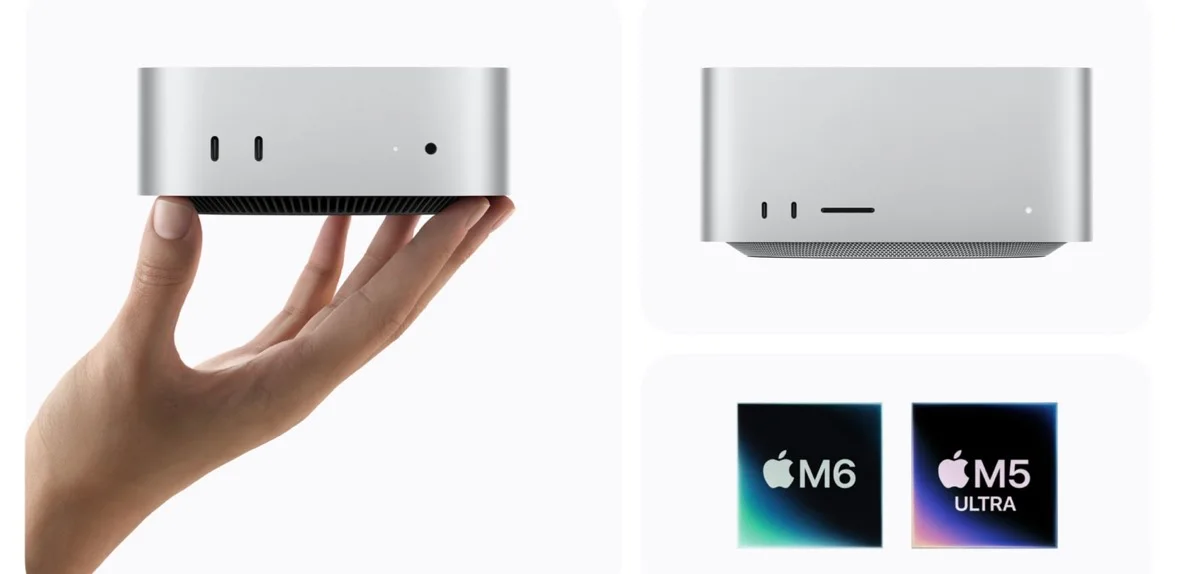
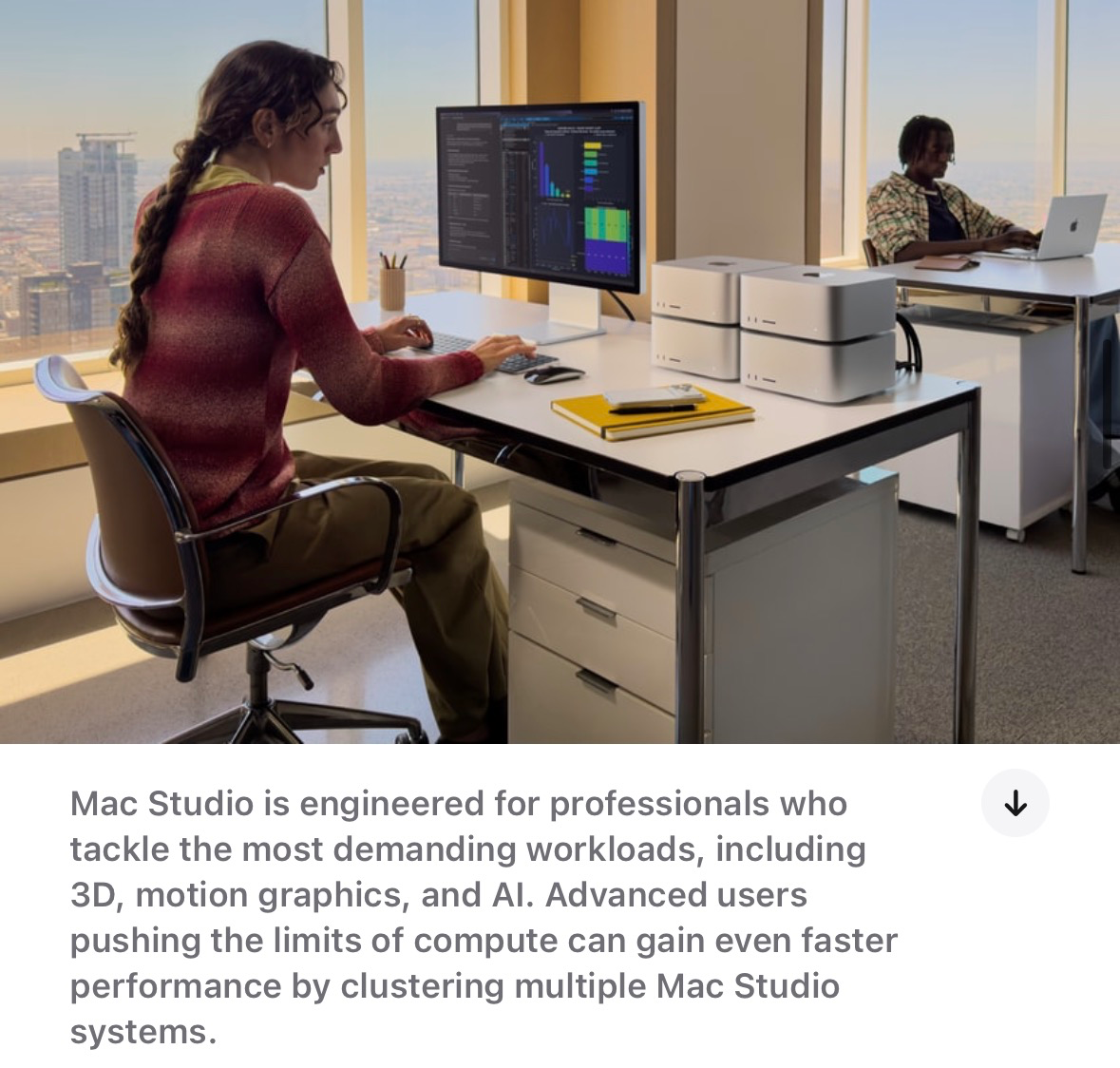
When Apple rolled out Apple Silicon in 2020, it built CPUs and GPUs around a single shared pool of unified memory. The original goal was performance and power efficiency. In the era of large language models, which need enormous weights loaded into memory, that design turned out to carry a different advantage. The new Mac Studio offers up to 512GB of unified memory and 1.2TB/s of memory bandwidth.
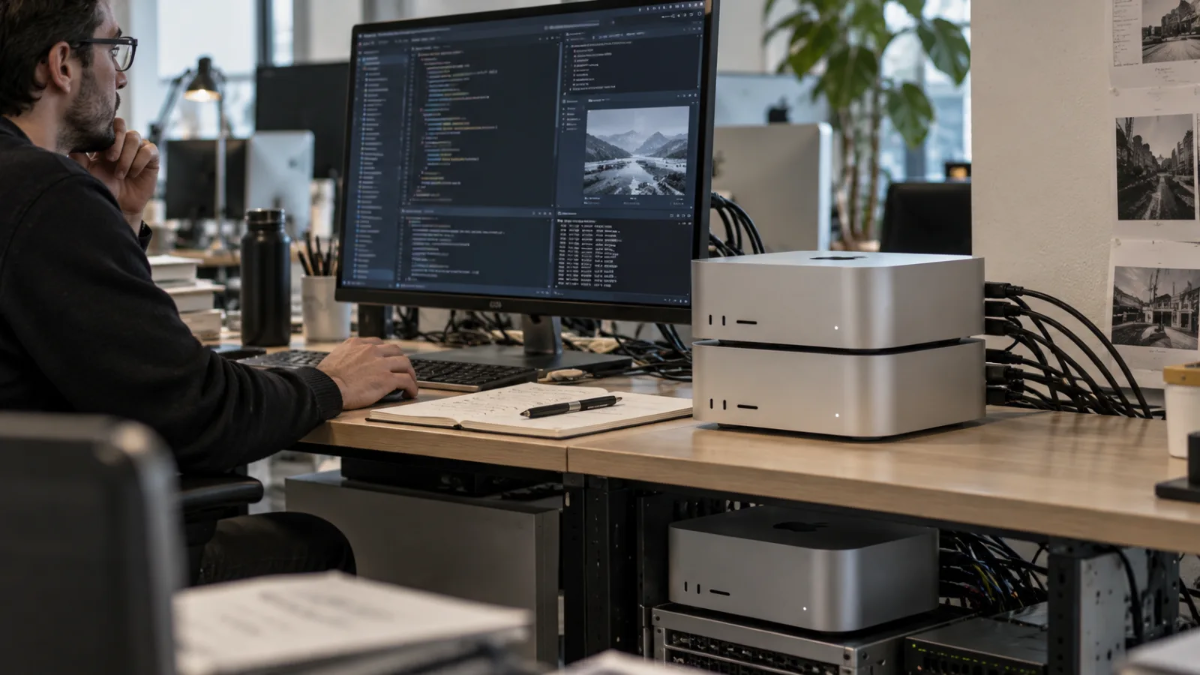
Apple paired that with Thunderbolt 5-based RDMA, which pools the memory and compute of multiple Mac Studios to run models too large for a single machine. According to Reuters, Apple demonstrated four Mac Studios running a trillion-parameter model to find and fix a graphics coding bug, drawing power from a single wall outlet.
Still, the "trillion parameters" headline shouldn't be read as a stand-in for data-center-scale AI. Loading a model into memory and running inference on it is one thing. Delivering hyperscale throughput and availability to a huge number of users at once is another. What Apple showed is less a replacement than a new deployment option.
AI Infrastructure Is Getting Bigger on One End, Smaller on the Other
AI infrastructure is likely heading toward two extremes at once. On one end, gigawatt-scale data centers, hundreds of thousands of GPUs and ever-larger training clusters keep growing. On the other, inference moves down into Macs, PCs, phones, cars, robots and wearables.
The roles naturally split along those lines. Training frontier models, running massive batch inference and absorbing sharp demand swings still favor the cloud. Tasks that are repetitive and data-sensitive, such as searching internal company documents, analyzing source code, processing video, or running long background agents, are where local economics can start to win out.
Privacy matters just as much as cost here. For data where sending it off-device is itself a liability, legal documents, medical records, source code, customer information, the value of local inference goes beyond saved tokens. Keeping data on-device can also change the cost of security and compliance.
Investors Shouldn't Read This as Nvidia Loses, Apple Wins
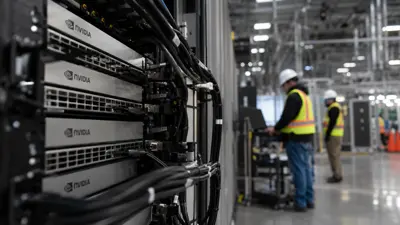
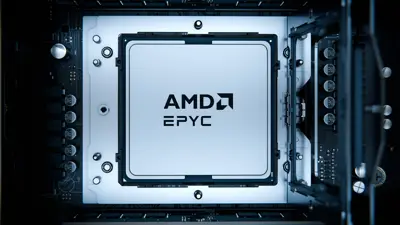
This shift isn't the end of cloud AI. A more realistic read is that AI use is spreading wide enough that compute is splitting into layers. The hardest training and inference work still runs through Nvidia-centered data centers, while repetitive personal and enterprise tasks can move to endpoints like Apple devices or Windows PCs. Both markets can grow at the same time.
Apple's weak spot is clear too. IDC data cited by Reuters puts Apple's share of enterprise desktops and laptops at about 4.6%, versus 91.3% for Windows. Corporate IT standards, management tools and software compatibility still run overwhelmingly on the Microsoft ecosystem. Apple's local-AI economics may be technically attractive, but that doesn't automatically translate into large-scale enterprise adoption.
Apple's counterweight is the hardware already in people's hands. The same design philosophy spans not just Macs but iPhones and iPads. As AI use splits between cloud and local devices, Apple may end up being re-rated less as "the biggest AI model company" and more as the company holding the largest fleet of AI inference endpoints.
Insight Times Editorial Desk