What Jensen Huang sold at the G20 was not GPUs. It was national infrastructure
Nvidia's message is that AI should be laid down like electricity, roads and the internet. After the hyperscalers, the buyers are governments, telcos, regional clouds and industrial data centers.
Why a GPU company talked about roads and electricity at the G20
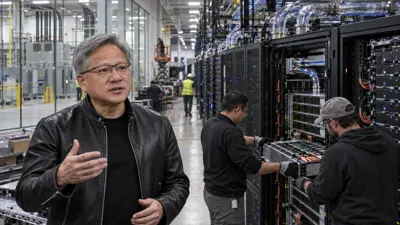
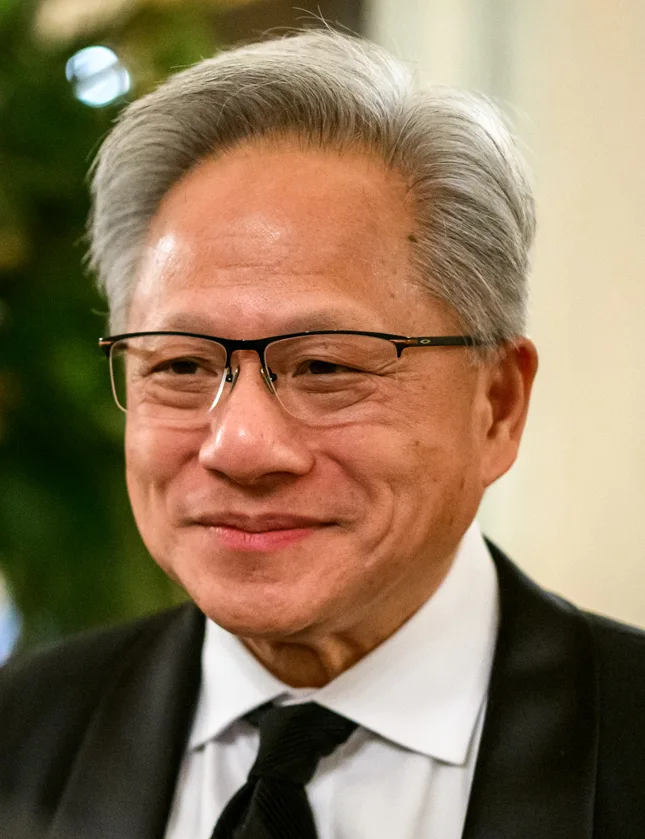
Chapel Hill, North Carolina, September 2. At the G20 innovation ministers' meeting, the word Jensen Huang kept repeating was not GPU. It was infrastructure.
The Nvidia CEO described AI as five layers. Energy sits at the bottom, then chips, then data center infrastructure, then AI models, and finally data and applications. A country does not need to build all five layers domestically to be competitive in AI, he said. It needs to choose which layers it will be strong in, and above all it needs to push AI out into its own industries.
The important move in that argument is the separation of "AI sovereignty" from technological self-sufficiency. A country strong in semiconductors can own infrastructure. A country strong in manufacturing can attach robotics and digital twins. A country strong in bio can attach drug discovery and research computing. What matters is not the nationality of the foundation model, but how much productivity and added value a country's own data, companies and factory floors can generate with AI.
That is why Huang said every nation should see AI as infrastructure, like water, roads, electricity and the internet. The goal is not to produce a handful of companies that use AI. It is to install a national capacity to produce intelligence that researchers, students, startups and manufacturers can all draw on.
This was not a call to ignore AI risk
Read as pure deregulation, the speech is only half right.
Huang said the companies building the technology have to own safety and security, and have to work with regulators. His argument was about focus: regulation should target "actual and practical harm" rather than "hypothetical and theoretical harm."
What he objected to was not the regulation of real harms such as fraud, privacy violations, copyright infringement, discrimination, cyberattacks and physical safety failures. It was the practice of pre-emptively blocking research, deployment and industrial adoption across the board on the grounds of long-term risks that have not concretely materialized.
Nvidia's own interest is plainly in there. A company whose compute demand grows as the technology spreads has an obvious reason to emphasize adoption speed over regulatory speed. So the accurate reading is not a neutral policy principle but a strong industry position on where the center of gravity of regulation should sit, between AI safety and AI diffusion.
The G20's own adopted document did not declare a free-for-all either. Alongside flexible policy frameworks that promote innovation, it specified sector-specific and risk-based approaches and the adoption of safe, trustworthy technology. Huang's message is closer to an argument for narrowing the focus of regulation toward real harm inside that frame.
For Nvidia investors, the story is the second customer base
The AI investment cycle so far has been driven by US hyperscalers: Microsoft, Amazon, Alphabet, Meta. The problem is that the market already knows this. For Nvidia's next growth narrative to hold, it needs demand beyond "those four keep buying more."
The G20 remarks point precisely at the next customer base.
AI clusters run by national governments and state research institutes. Regional AI clouds operated by telcos. Robotics and digital twins in manufacturing. High performance computing in bio and the sciences. And sovereign infrastructure for public sector and financial institutions that do not want national data leaving the country.
The trend is starting to show up in the numbers. On its FY2027 second quarter call, Nvidia said its sovereign AI business grew 35 percent quarter over quarter and more than tripled year over year. The sovereign AI demand the company described is arising mainly through regional neoclouds.
Those figures alone do not prove a new mega-market has been built to replace the hyperscalers. The absolute revenue figure was not disclosed separately. But the direction, a widening customer mix, is confirmed. This diversification of demand is the part that matters in Nvidia's long-term growth logic.
One trillion dollars is not Nvidia revenue
Here is the line most easily misread.
Huang said that in the United States "almost a trillion dollars will be invested in infrastructure this year alone." That sentence does not mean Nvidia is investing a trillion dollars, and it does not mean a trillion dollars of Nvidia revenue.
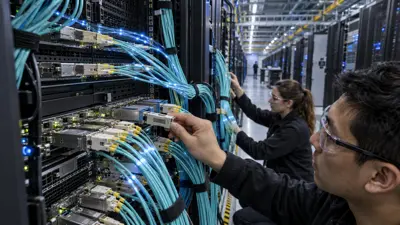
In context, the number refers to the whole US AI infrastructure ecosystem: not just GPUs and servers but data center buildings, power, transformers, transmission and distribution networks, networking, cooling, land, cloud facilities and the associated supply chains.
He also put the cost of building a gigawatt of AI infrastructure at roughly 50 to 60 billion dollars, and said 100 gigawatts would be built by 2030. That, too, is his forecast for the AI infrastructure market, not a confirmed Nvidia order book.
The calculation an investor needs is not simple arithmetic like "one trillion dollars times Nvidia's share." It is whether the power actually gets connected and the data centers actually run, what share of total build cost GPUs and networking represent, how far competing ASICs penetrate, and whether end customers generate enough revenue and productivity gains from AI services to justify the spend.
For Korea, going deep in the industries it is good at beats trying to build everything
Korea fits Huang's selective sovereignty strategy fairly well.
HBM and memory, the server supply chain, telecom infrastructure, and shop-floor data from semiconductors, autos, shipbuilding, batteries and manufacturing are assets other countries cannot replicate quickly. Korea may never dominate foundation models and cloud platforms the way the United States does, but connecting AI deeply into factories, robots, equipment, quality control and supply chains creates a separate kind of competitiveness.
Nvidia announced this year a plan to expand the AI factory at Naver's Sejong data center from 55MW to 200MW by 2028, and Naver is targeting a gigawatt scale over the long term. SK Telecom is pushing a gigawatt-class AI cloud aimed at coming online in 2027.
But securing GPUs and securing AI competitiveness are not the same sentence. Unless the grid and the transformers, permitting, local acceptance, cooling, talent and actual rights to use industrial data all move together, expensive compute equipment does not convert into economic productivity.
The real question for Korea is not how many GPUs it has secured. It is how much those GPUs raised the profits of Korean manufacturing, research and services.
INSIGHT TIMES VIEW
Huang's G20 remarks were his business model translated into the broadest possible language.
The market Nvidia wants is no longer just a handful of big tech firms training enormous models. It is governments building power plants and data centers, telcos running regional AI clouds, manufacturers adopting robots and digital twins, research institutes expanding national supercomputing. In that world, AI capex moves from the corporate IT budget to the national industrial infrastructure budget.
If that scenario plays out, Nvidia's total addressable market widens sharply. The structure of selling not only GPUs but NVLink, InfiniBand and Ethernet networking, systems, CUDA and software as a bundle is more favorable than selling a single chip.
Still, the long-term bull narrative and near-term returns are different things. Data center investment can outrun power supply. National projects can slip on permits and political calendars. If customers cannot monetize AI fast enough to match the outlay, capex eventually gets cut. Penetration by custom ASICs and competing GPUs also has to be watched.
Confidence level: moderate to high. Evidence is accumulating for the direction, that sovereign AI and industrial AI become the next axis of demand. There is not yet evidence that it has grown into an absolute revenue source on the scale of current hyperscaler capex.
Insight Times Editorial Desk