Nvidia's $500 Billion Experiment: Wall Street Asks Who Backs the GPU, Not Just the Chip
The real issue in Nvidia's financing platform is not chip sales. It is how far Wall Street will trust GPU resale prices and rental income three to four years out.
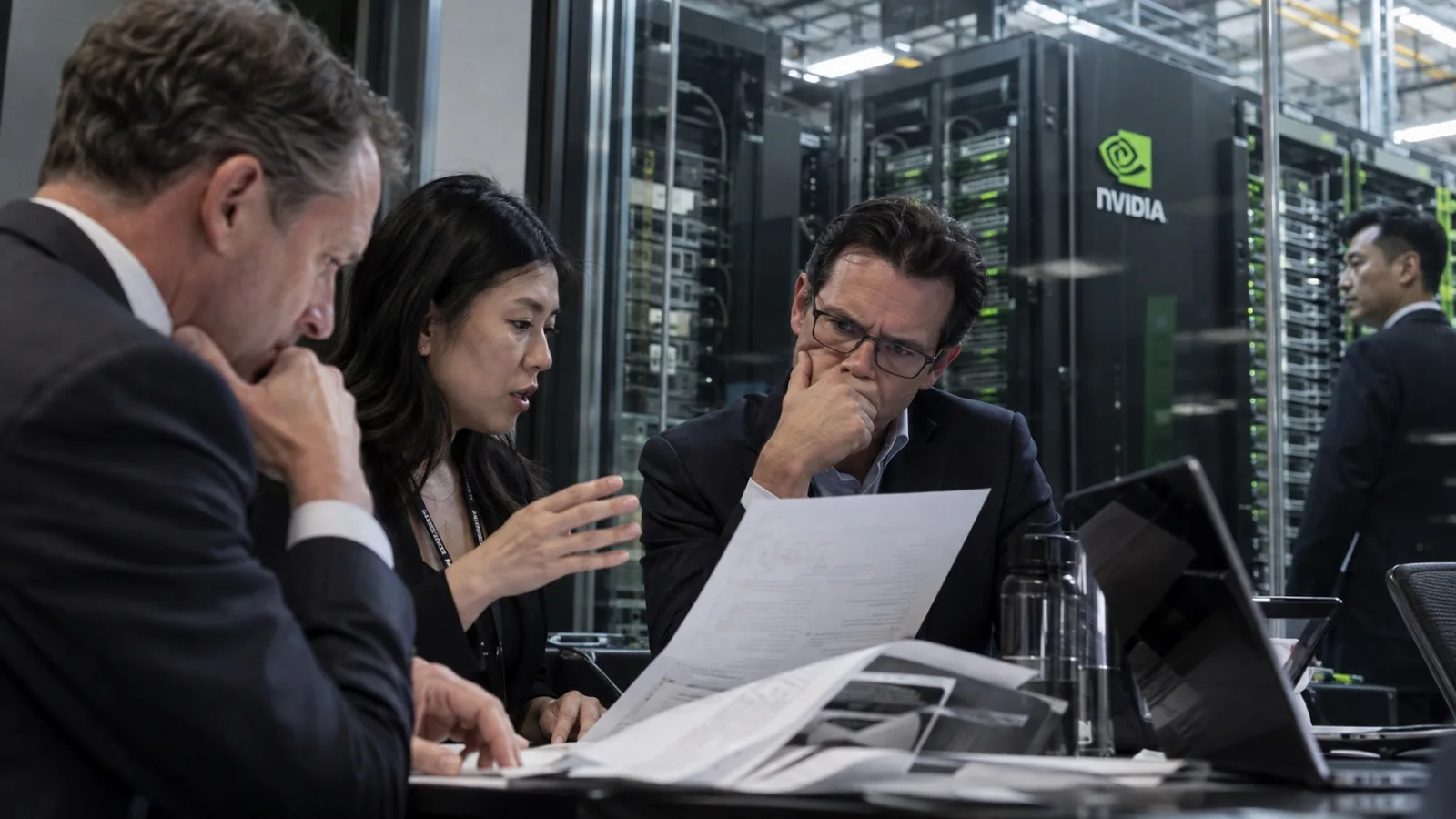
Nvidia is selling more than GPUs
On Aug. 10, Nvidia announced a new AI computing finance platform that brings together the world's largest asset managers and private equity firms. The goal is to channel more than $500 billion of third-party capital into AI data centers and GPU purchases.
Nvidia's argument is clear. A GPU is a productive asset, like factory equipment. It generates revenue and can be transferred or re-leased to other customers, so it can serve as collateral for financial products. Jensen Huang describes this as a new infrastructure asset class, the "AI factory."
The structure works in three steps:
- GPU purchase. An AI cloud provider or startup acquires large Nvidia systems.
- Financing. Banks, private credit funds and insurance capital lend against the GPUs and future computing income.
- Repayment. Cash from GPU rental fees and long-term usage contracts pays principal and interest.
It resembles auto loans or aircraft leasing. The difference is the speed of depreciation. An aircraft can fly for decades. For AI GPUs, the benchmarks for performance and power efficiency shift sharply every few years.
Wall Street is focused on value in year four, not a "10-year life"
According to Reuters, Nvidia stresses that GPUs can generate returns for up to 10 years. Lenders and credit investors are applying a more conservative depreciation of three to four years. Their concern is not whether a GPU still works. It is how much the equipment could be resold or leased for after a default.
That moves the center of gravity in the credit structure from the GPU itself to the end customer's contract. If an investment-grade customer such as Meta commits to buy computing capacity over a long period, financial institutions treat the cash flow from that contract as higher-quality collateral.
| Issue | Nvidia's argument | What Wall Street wants |
|---|---|---|
| GPU lifespan | Long earning life through the CUDA ecosystem and redeployability | Three to four years of depreciation, conservative collateral value reflecting fast generational turnover |
| Repayment source | GPU rental income and computing demand | Long-term contracts and firm cash flow from investment-grade customers |
| Loss protection | An independent financing platform using third-party capital | Higher rates, equity cushions, and added credit support such as guarantees and insurance |
The shift is already in the financial statements
Investors should not miss one point. Nvidia's credit support is not purely a concept. The latest 10-Q and 8-K spell out long-term commitments and guarantees the company has begun to take on to expand AI infrastructure.
- $36B: long-term commitments under AI cloud agreements
- $20B: data center lease commitments slated to be transferred to third parties
- $105B: ceiling on the initial guarantee tied to the Ohio project where OpenAI would be the tenant
Separately, Nvidia has disclosed up to $3.5 billion of guarantee exposure on land, power and building lease obligations of selected AI cloud partners.
The $105 billion Ohio guarantee is not debt that sends cash out immediately. It takes effect conditionally, after facilities are completed in phases and leases begin. Nvidia's payment obligation is triggered only by specific events, such as an OpenAI bankruptcy or payment default.
So treating the $105 billion as current debt overstates the case. But saying Nvidia only connects third-party capital and carries no risk of its own is not accurate either.
Insurance raises the same question
Nvidia is also looking at structures that share GPU financing risk with insurers. The core product is residual value insurance. If GPU prices fall far more than expected by the time a loan matures, insurance absorbs part of the loss. Lenders could then supply money at lower risk.
If this structure takes hold, neoclouds with weaker finances could obtain GPUs more easily. For Nvidia, that is a new customer base. But premiums, guarantee fees and higher interest costs raise the cost of computing. If AI services do not earn enough cash, financial engineering alone cannot create the economics.
Insight Times Editorial Desk