Why Tesla Lined Up $30 Billion in Credit It Says It Won't Use This Year
Tesla's 2026 capex is set to nearly triple. The question is less about debt than about when spending on AI, robotaxis, chips and energy turns into cash flow.
What Tesla bought is time, not cash
Tesla has put in place a new $30 billion unsecured credit facility. It has three parts: a $20 billion delayed-draw term loan with a three-year maturity, an $8 billion revolving credit line with a five-year maturity, and a $2 billion revolver with a 364-day maturity. The old $5 billion revolver was terminated, with nothing drawn at the time.
The $30 billion is not debt on the books. As of Sept. 29, nothing has been drawn on the new facility. The company says it does not plan to draw on it in 2026. Reading the move as "Tesla was short of cash and borrowed $30 billion" is not accurate.
The opposite question matters more. Why would a company with no urgent cash need scrap a $5 billion line and open a financing channel six times larger? The answer lies in how much Tesla expects to invest over the next two to three years.
$25 billion in capex, nearly triple last year
- 2025 capex: $8.53 billion
- 2026 guidance: more than $25 billion
- Increase: more than 2.93x, or at least about 193% above the prior year
Tesla's capex was $8.53 billion in 2025. Guidance for 2026 is above $25 billion. Even at the minimum, that is 2.93 times last year, an increase of roughly 193% or more.
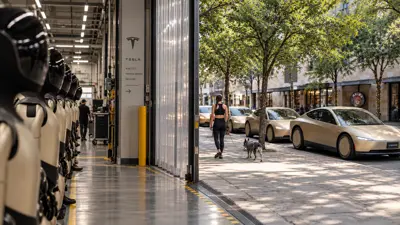
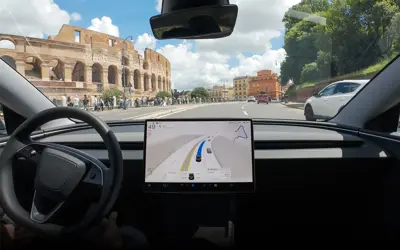
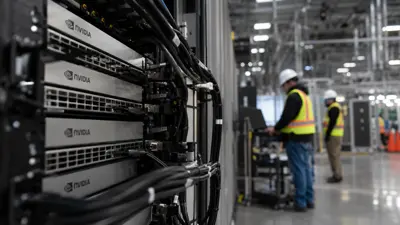
The money is not going mainly into one or two more car plants, as it once would have. AI compute and data centers, Cybercab and Robotaxi operating infrastructure, Optimus production lines, batteries and energy storage, solar cell manufacturing, and chip research and manufacturing all need capital at once. A chip manufacturing project that Tesla is pursuing with SpaceX is part of the same map.
Tesla is shifting from a company that earns cash selling cars and uses it to build more car plants. It is becoming one that uses cash flow from autos and energy to pre-fund AI, robotics, semiconductor and energy infrastructure at the same time.
The issue is free cash flow, not capex
Heavy investment is not bad in itself. It works if it produces more cash flow than it consumes. That makes free cash flow, not EPS, the most important number for Tesla right now.
In the second quarter, Tesla's operating cash flow was $4.7 billion. Capex swelled to $5.79 billion, and free cash flow turned negative at $1.09 billion. First-half capex totaled $8.28 billion, more than double the $3.89 billion a year earlier.
The full-year outlook is heavier. According to LSEG data cited by Reuters, the market expects Tesla's 2026 free cash flow to be a deficit of about $9.78 billion. That is a forecast and could differ from the actual result. If it does play out, this year would be more than a one-quarter investment peak. It would be an annual investment cycle that exceeds internal cash generation.
The chain runs like this: operating cash from autos and energy, then heavy capex, then AI, robotaxis, robots and chips, then recurring cash flow.
If the last link does not open fast enough, the company would either draw down its cash or tap the new credit lines. If returns arrive first, the $30 billion could remain insurance that never gets used.
Why AI5 and AI6 sit at the center of this capital intensity
AI5 and AI6 are not disclosed as direct uses of the credit agreement. They are, however, a key axis of Tesla's in-house chip strategy. In late-2025 materials, Tesla set production targets of 2027 for AI5 and 2028 for AI6, its own inference chips. In 2026 it completed the tape-out of the AI5 design.
The economics go beyond a "faster FSD chip." If higher inference performance in vehicles and Optimus comes with better power efficiency and lower compute cost per unit, the unit economics of both autonomy and robots improve. As volumes grow, the fixed cost of a custom design can also be spread across more products.
Chips also carry heavy execution risk. A good design is not automatically a good business. Yield, packaging, memory supply, foundry capacity, production schedules and actual installed volumes all have to line up. The deeper Tesla goes into manufacturing capability itself, the more control it may gain over its supply chain, but capital intensity and fixed costs rise too.
The $30 billion is neither good news nor bad news
| Scenario | What it would mean |
|---|---|
| Free cash flow deficit widens, no borrowing | Existing liquidity is covering the up-front investment |
| Borrowing starts, Robotaxi and energy revenue grow alongside | Monetization of growth assets and financing proceed together |
| Borrowing rises, auto cash flow weakens | A sign that internal cash alone cannot sustain the investment pace |
| Borrowing rises, Cybercab, Optimus or AI chip timelines slip | Capex payback stretches out and valuation pressure may grow |
Labeling the credit line itself as good or bad therefore means little. What matters more is when, why and how much Tesla first draws. The same $1 billion of borrowing means something very different depending on whether it accompanies expanded capacity in the growth businesses or fills a gap left by weaker auto cash flow.
Insight Times Editorial Desk