Tesla's 546 Robotaxis and Hundreds-a-Week Optimus Bots: What the Numbers Miss
Tesla is scaling two "physical AI" products at once, but registration counts and production counts do not tell investors whether either one is actually making money.
Tesla is now mass-producing two "real world AI" products at the same time
Robotaxi and Optimus look like completely different businesses on the surface. One is a car. The other is a humanoid robot. But from an investment standpoint, they are solving the same problem.
Can AI judge and act on its own in the physical world, and replace human labor at a low enough cost to matter?
Robotaxi replaces driving labor. Optimus targets factories and warehouses now, and a broader range of physical labor over time. So the claim that Tesla is moving from a car company to an AI and robotics company will likely be tested, and proven or disproven, in these two businesses at the same time.
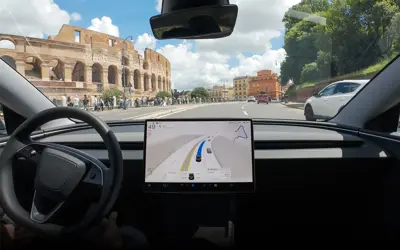
546 — Tesla Robotaxi vehicles registered with the Texas Department of Motor Vehicles (TxDMV) as of September 26
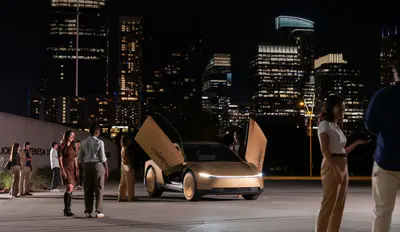
126 — Registered Cybercabs. The other 420 are Model Y
About 10x — Increase in weekly Optimus production from Q2 to August
Robotaxi is already scaling up in registration numbers
According to FSD Database, which tracks TxDMV registration data, 546 vehicles were registered under Tesla Robotaxi as of September 26. That breaks down to 420 Model Ys and 126 Cybercabs. The same data shows 98 additional vehicles registered in the past seven days, and an increase of several hundred over the past 30 days.
The pace of Cybercab additions matters in particular. It shows, in actual registration data, that Tesla is moving from its early robotaxi fleet built on modified Model Ys toward a dedicated vehicle with no steering wheel or pedals.
The regulatory framework is also in place. Texas's SB 2807 requires autonomous vehicles that commercially transport passengers or cargo without a driver to get separate operating authorization from the TxDMV. That means the expansion of registered vehicles is not the same as simply adding more test cars.
That distinction matters. Reading 546 as "546 vehicles earning money" distorts the investment picture.
Optimus has the same problem: production is up, but usefulness is still the bottleneck
The Information reported that Tesla lifted Optimus production from tens of units per week in the second quarter to hundreds per week in August. Management is reportedly targeting an automated line that can continuously produce more than 1,000 units a week by year end.
But ramping up production speed has exposed new problems. The hands and forearms alone contain more than 100 small screws and parts, and much of the assembly still relies on manual labor. Automated equipment has not been able to consistently align the hands, joints and electronics correctly, causing rework, and some touch sensors reportedly are not durable enough yet.
On the AI side, Optimus is reportedly still at a stage where it needs to be trained on specific tasks separately rather than generalizing broadly to new environments. In other words, even as the number of robots produced rises, the economic value stays limited if humans still have to intervene, or if it takes days to teach the robot a new task.
The common thread in both businesses: it's utilization, not inventory
| Category | What's visible on the surface | What investors should actually watch |
|---|---|---|
| Robotaxi | Registered vehicle count, number of cities | Vehicles actually in service, hours of operation per vehicle, paid-ride rate, revenue per mile |
| Cybercab | Production and registration counts | Share of driverless operation, accident rate, maintenance cost, profitability per vehicle |
| Optimus | Weekly production volume | Yield rate, rework rate, human intervention rate, task success rate, uptime |
| Physical AI overall | Fleet and robot scale | The economics of one useful hour of work, or one mile driven |
This framing shows precisely where Robotaxi and Optimus stand today.
Tesla is rapidly building capacity in both businesses. But it has not yet fully proven utilization or unit economics.
Why 126 Cybercabs matter
The Cybercab is aimed more directly at robotaxi economics than the modified Model Y. Without a driver's seat or pedals, and built as a dedicated platform for moving passengers, it has the potential to be more favorable long term on manufacturing cost, space efficiency and maintenance.
But there is a separate hurdle: federal safety regulation. The National Highway Traffic Safety Administration (NHTSA) opened an Audit Query following the September 4 Austin deployment, to check whether Tesla's own safety-standard certification for the Cybercab meets federal motor vehicle safety standards. So a rise in registrations does not mean the regulatory risk has gone away.
The competitive picture is tough too. In the same TxDMV-based dataset, Waymo has more registered vehicles than Tesla does. Tesla is catching up quickly, and its rival still holds a larger registered base. Both things are true at once.
Insight Times Editorial Desk