The People Who Name the Waves: Why Investors Should Watch the Current Instead
Market commentary often explains what already happened, and watching prices too closely can wear investors down. What matters more may be the current under the surface.
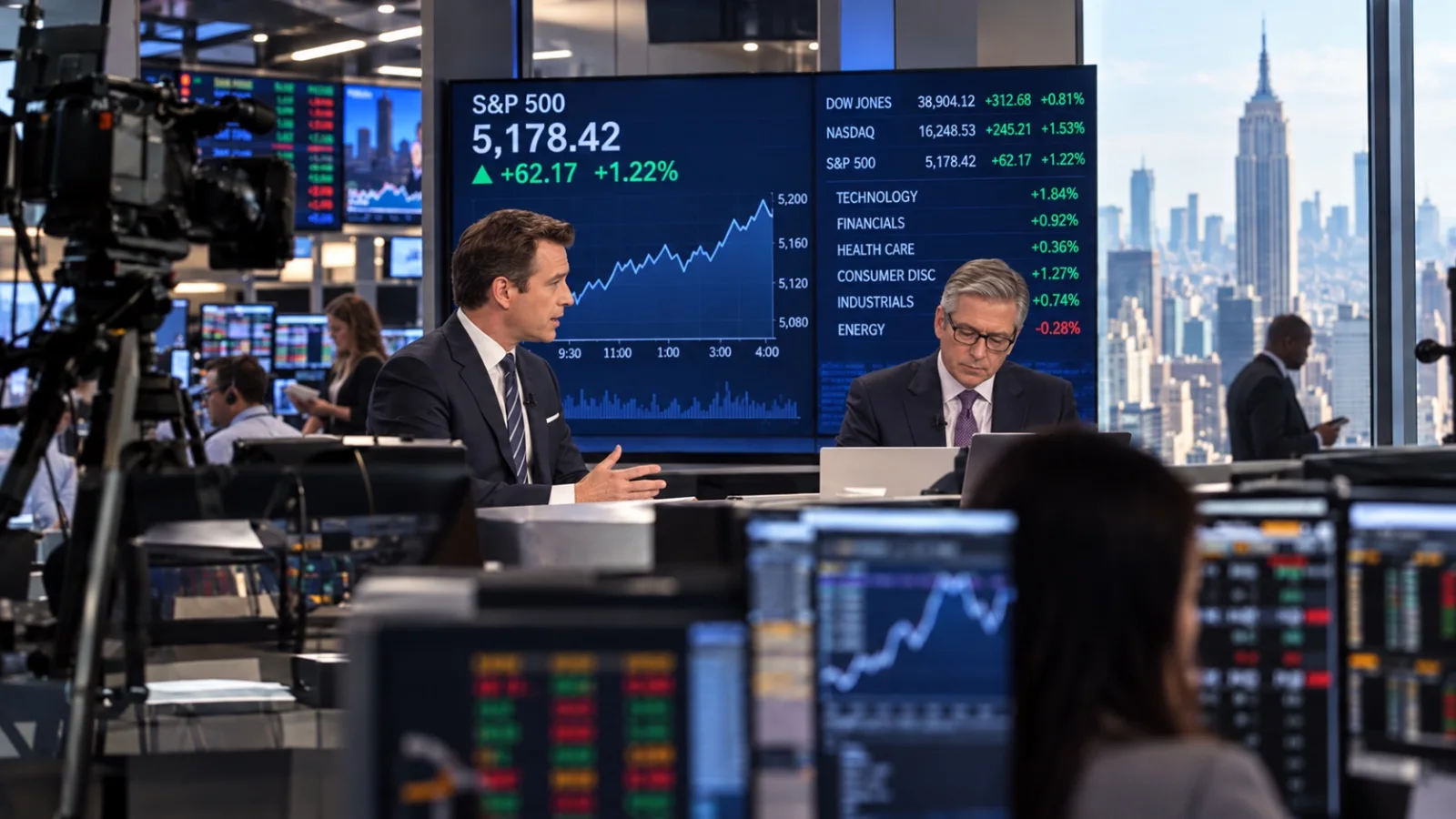
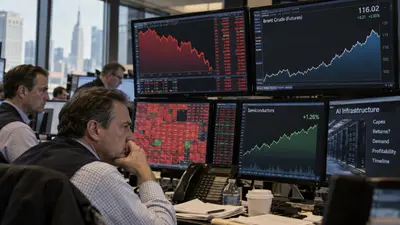
The pundits, 15 minutes before the open
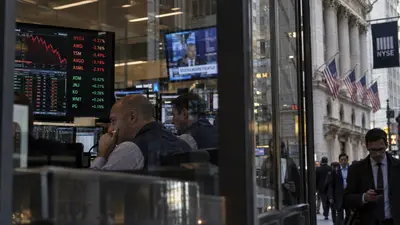
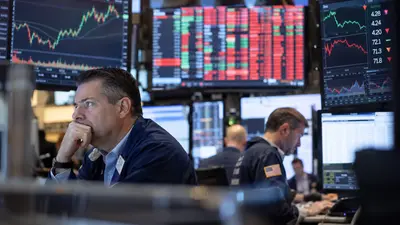
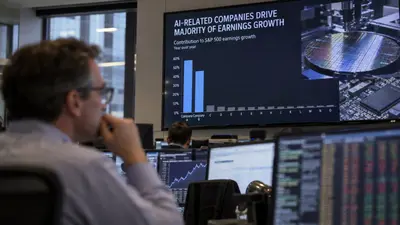
Yesterday, the people on the screen said SpaceX earnings were strong and rates had steadied. That, they said, is why the market rose. Today, 15 minutes before the open, same channel, same seat, they cite tension around Middle East oil facilities and worries that Big Tech will trim AI capital spending. That explains the premarket drop. The expressions are much the same as yesterday. The voices may have dropped half a key.
After a few years of this, a strange feeling sets in. These people did not call today's decline in advance. Yet they explain it with such confidence. Prediction and explanation are different jobs. A forecast can be wrong, but an after-the-fact explanation usually sounds plausible, because material for attaching a cause to something that already happened is always plentiful.
Ancient sailors believed a shipwreck meant Poseidon was angry. The tangled motion of wind and wave was hard to explain, and having no reason seemed harder to bear. Market commentary can look much the same. Today's wave is blamed on the southwest wind. If it breaks the other way tomorrow, it is the east wind pushing back. It is closer to dream interpretation than analysis.
Nassim Taleb's "narrative fallacy" in The Black Swan comes to mind. People build tidy stories of cause and effect even around events woven from chance and complexity. This is not to say every market analysis is nonsense. The problem comes when a plausible after-the-fact explanation is sold as evidence of the ability to predict. Anxious people ask for reasons, and the media supplies a new one every day. The promise to interpret every up and down has become a business model.
Is "gaslighting" too strong a word? It took some hesitation. Deliberately manipulating someone is not the same as a media incentive to hold attention. Still, after enough mornings of "you don't know yet, you need to see this," it is hard to shake the sense that less of the time is spent holding your own judgment in your own hands.
The sin of looking too often
So why does it matter to look away from prices? Peace of mind is only part of it. The way people feel gains and losses is not very kind to long-term investing.
Shlomo Benartzi and Richard Thaler called this "myopic loss aversion." It combines the tendency to feel losses more sharply than gains with the habit of evaluating an account too often, even among long-term investors. The idea grows out of Kahneman and Tversky's prospect theory. The figure most often cited is that a loss weighs about twice as much as a gain, though it varies by person and experimental conditions.
Overlaying the numbers makes the point intuitive. The US large-cap market posted a positive return in 73 of 99 calendar years from 1926 to 2024. In a separate long-run daily sample, the S&P 500 rose on about 53.1% of days. Looking at the same market, the daily screen shows losses far more often. The two statistics cover different periods and are built differently, but it is clear that the interval of observation changes what an investor experiences.
Suppose that out of 100 days you smile about 53 times and cry 47. If the crying days weigh much more, the ledger of the mind can run a deficit regardless of the account's long-term return. This is not a strict expected-return calculation. It is an analogy for loss aversion.
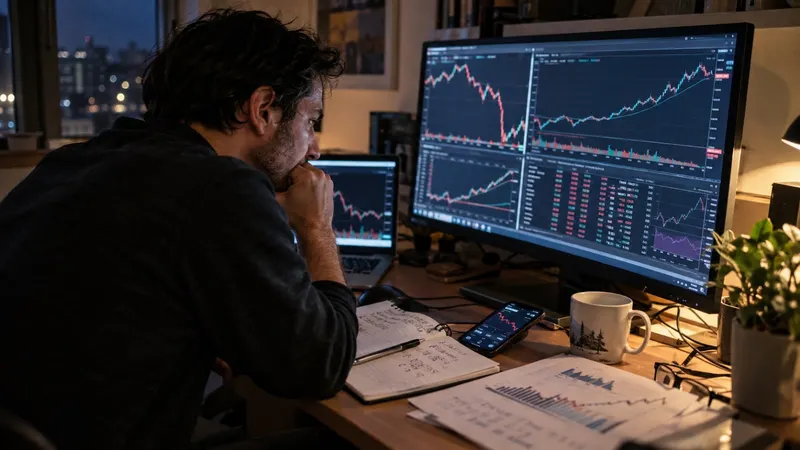
Someone who opens the order book every day keeps checking a short-term direction that is close to a coin flip, and spends emotional energy on every down day. On top of that screen pile real-time push alerts and pre-market briefings. The habit of looking too often can cloud judgment, and that is a problem investors should guard against before they worry about the people explaining the market.
The man tied to the mast
In the Odyssey, Odysseus wanted to hear the Sirens' song, knowing it destroyed the sailors it enchanted. What he did was simple. He had his crew's ears stopped with wax and had himself tied to the mast, so he could not turn the helm however the song sounded. He did not trust his own willpower alone.
Dollar-cost averaging, investing a set amount on set dates, resembles that rope. Instead of the ambition to time prices precisely, it sets rules of behavior first. It admits that emotions can waver, and takes the decision back from crash-and-surge video thumbnails and the mood swings of online forums.
That does not mean DCA always wins on returns. For someone who already holds a lump sum, historically lump-sum investing has beaten staged investing more often. In Vanguard's comparison, lump-sum investing came out ahead in about two-thirds of cases. The strength of DCA is not a magic boost to future returns. It can reduce the odds that fear keeps someone from starting, or that they break the rules midway.
Being tied to the mast also has preconditions: enough cash on hand, volatility you can tolerate, and an asset you have a reason to keep holding. Tie yourself to the wrong ship and holding on to the end is no virtue.
How not to answer Mr. Market
Benjamin Graham's "Mr. Market" shows up every day offering to buy or sell shares. Some days he quotes an absurdly high price. Other days he begs to unload at a bargain. Warren Buffett liked to cite the metaphor. What matters is not joining Mr. Market's mood but judging whether his offer is attractive relative to the value of the business.
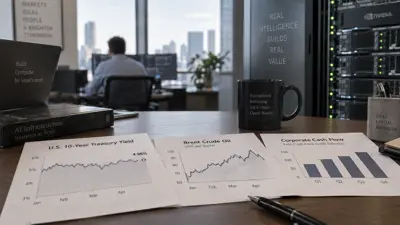
What, then, did Buffett and Charlie Munger hold on to outside the order book? Probably a company's cash generation and capital allocation, the competitive structure of its industry, and a moat that lasts. They did not ignore price entirely. They simply did not put its whims at the center of their judgment.
For anyone invested in AI, autonomous driving, physical robotics or aerospace, the principle matters more. Technology does not grow in a straight line. It swells and deflates, takes longer than expected, and sometimes a promising company never turns a profit. Gartner's hype cycle helps in understanding the swings in expectations, but it is not a guarantee that every technology passes through disillusionment to success.
Some questions deserve more attention than why Tesla fell a few percent today. Are paid usage and engagement for FSD actually growing? Are safety records and the scope of regulatory approval improving? Do utilization rates at the AI data centers Big Tech has built, and customers' spending on fees, support the rise in capital expenditure? Are robot demos turning into repeatable production and per-unit economics? In this transition, what proves a competitive edge?
Twenty-four hours a day is not enough to stack up answers to these questions. Still, believing in the future of a technology is a different matter from believing a particular company's current share price is cheap. Buying a good company at too high a price takes a long time to recover from, and the winners of a technology shift may not be the winners for shareholders.
Closing your eyes versus turning your head
There is a counterargument. If you are not watching the price and the company really collapses, what then? Even if commentary is full of noise, some of it may be real signal. That is fair. Honestly, there is some doubt here.
But not watching the price need not mean not watching the company. Prices change many times a day, while business structure usually changes more slowly. Quarterly results and guidance, operating cash flow, new customers, inventory and debt, and competitors' product launches are things to examine more steadily, not less. For a company whose risk has grown, a check faster than quarterly may be needed.
What the industry sells most easily is price information. Business information is complicated and dull, and it does not sell well. So it is more accurate to say you are not closing your eyes but turning your head: away from real-time quotes, toward a checklist set in advance and the conditions that would break your investment thesis.
The person who reads the current
The crowd often moves the other way around. Digging into technology and companies is dull and hard, so it gets put off. People chase the number in front of them and look for a video that explains why it fell today. When the market flips the next day, they hand their minds to the opposite argument. And the day after that. This loop does not turn only because individuals are weak-willed. There is a structure that earns attention and revenue only if it keeps turning.
Closing the quote screen and opening a technical white paper or an earnings release is not a grand act. It is one unsubscribe button, one tap to turn off notifications. That small motion may be the first snip that makes your judgment yours again.
Waves cannot be tamed. Anyone trying to call every ripple is bound to tire. Someone who reads the current beneath the waves, the direction industries and companies are heading, and checks the course, may go a little farther. Whether that place is the promised continent, no one knows.
Tomorrow morning, again, someone will be naming the day's waves 15 minutes before the open. As the number of days we pass without listening to those names grows by one, perhaps that is when stocks finally start doing their job.