Tesla-SpaceX Merger: Who Gains More? ARK's 24% Premium Math
ARK Invest sketches a 24% premium and $2.7 trillion in 2031 EBIT. The bigger question is where robotaxi cash goes and what each existing share is worth afterward.
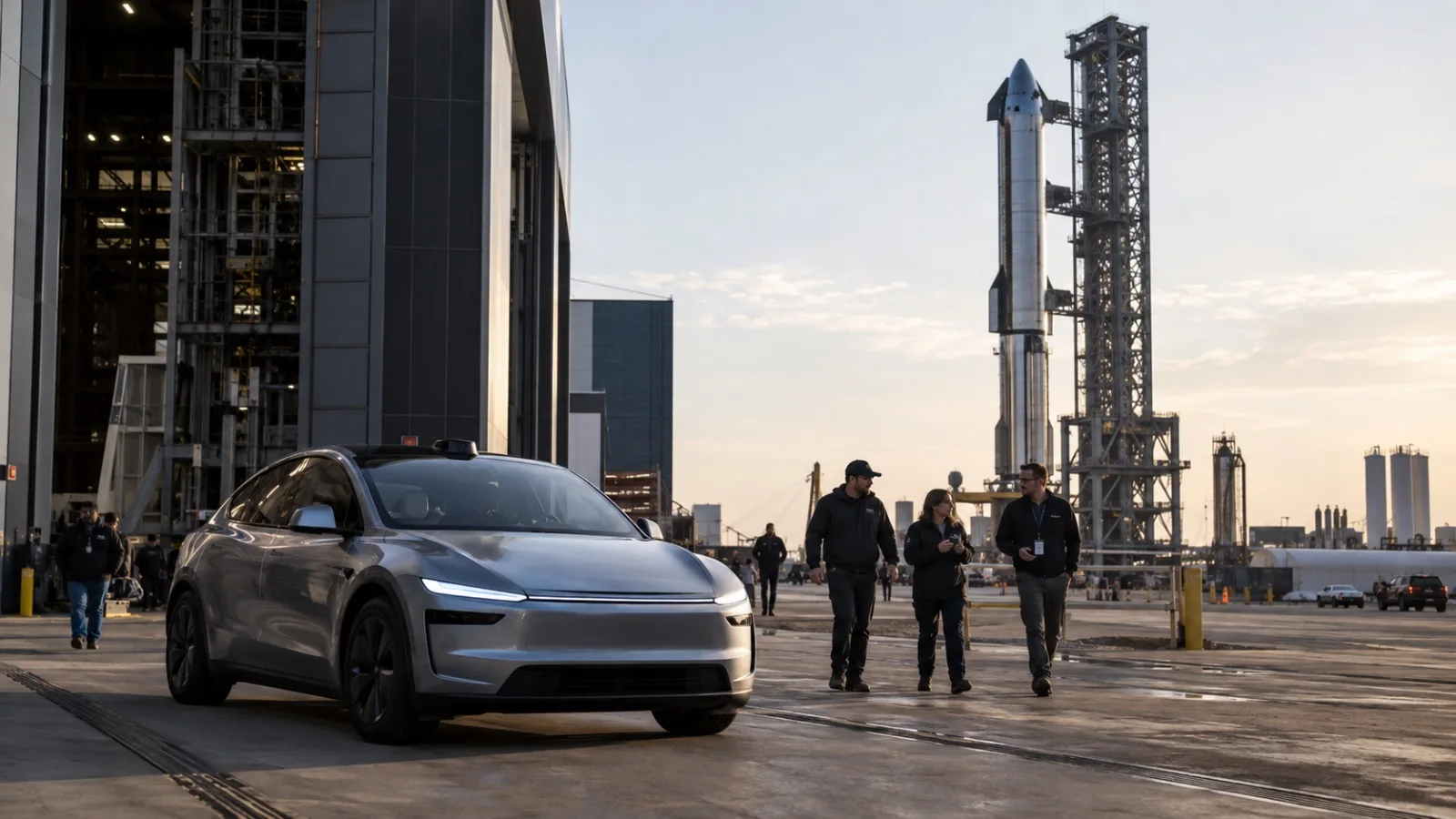
Talks over a Tesla-SpaceX merger are taking shape. The two companies have formed special committees to review a possible combination, but terms and the decision to merge are not final.
ARK Invest says a deal could deliver substantial economic benefits to shareholders on both sides. But the future returns ARK calculated are neither actual deal terms nor guaranteed investment gains.
1. Cash and AI matter more than cars and rockets
ARK's scenario runs like this: robotaxis generate large amounts of cash, and that cash funds ground and space-based AI computing infrastructure. The more capable AI is then used to improve the intelligence of Tesla's Optimus robot.
Tesla robotaxi: operating revenue and cash generation ↓ SpaceX computing: AI infrastructure buildout and model development ↓ Tesla Optimus: wider robot services and new revenue opportunities
This chain is ARK's future investment scenario, not realized business results.
ARK estimates that about 80% of Tesla's enterprise value in 2031 will come from robotaxis. That is not 80% of revenue. It is a valuation of future business value.
2. They can already work together. Why merge?
Tesla and SpaceX already cooperate on Starlink, Grok in vehicles and chip development. The fact that they can collaborate does not by itself prove a merger is needed.
Value created by the merger alone = combined company value − value of operating independently and collaborating − integration costs
A merger could speed up investment decisions and lower financing costs. It could also shift one company's heavy investment burden onto the other company's shareholders.
What matters in the end is not that the total company is bigger, but how much per-share value for existing shareholders improves compared with no merger.
3. What do a 24% premium and a 5.9x gain mean?
ARK built its merger scenario from the two companies' share prices on Oct. 23, 2026 and its own 2031 forecasts.
| ARK figure | What it actually means |
|---|---|
| Tesla 3.8x | Extra multiple on invested capital versus no merger, assuming a no-premium share exchange |
| SpaceX 7.2x | The same measure for SpaceX shareholders under the same conditions |
| About 24% | The hypothetical premium paid by Tesla that equalizes the extra multiple for both sides |
| About 5.9x | The extra multiple both sides would get after the premium adjustment |
| About 42% | Tesla shareholders' expected diluted ownership share in 2031 in this scenario |
The 5.9x does not mean total investment returns of 5.9 times. It is the expected multiple on invested capital in the merger scenario minus the expected multiple in the no-merger scenario. It is not an annualized return either.
The 42% is not the ownership split on the day of a merger. It reflects expected share dilution through 2031. None of these numbers can be read as an actual deal price or a firm return.
4. The biggest risk: when money is earned versus when it is spent
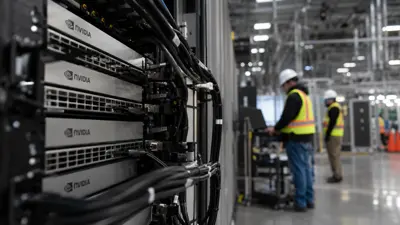
ARK estimates that building a 10 GW NVIDIA Vera Rubin computing system could require more than $400 billion, not counting surrounding data center costs.
The problem is that AI infrastructure spending may start before robotaxis earn that much cash.
Tesla also has to invest in its own autonomous driving, robotics and AI infrastructure. So even if robotaxi operating profit grows, Tesla cannot put all of it into SpaceX.
A merger also does not eliminate outside financing or new share issuance. The combined company could end up carrying a much larger investment burden.
5. Tesla shareholders would own a different kind of business
ARK projects 2031 combined revenue of about $3.8 trillion and EBIT of about $2.7 trillion. EBIT is an operating-profit measure taken before interest and income taxes.
By that math, SpaceX-side businesses would account for about 62% of revenue and about 69% of EBIT.
ARK's 2031 combined company by business (ARK estimates, not reported results)
- Revenue: SpaceX 62% / Tesla 38%
- EBIT: SpaceX 69% / Tesla 31%
If this forecast comes true, Tesla shareholders would be heavily exposed not only to robotaxi growth but also to the profitability of AI computing, infrastructure spending and additional financing.
ARK's 2031 Tesla forecast of about $4,400 per share is a standalone model. A new price target should not be derived by multiplying it by the 24% merger premium or the extra multiples.
Conclusion
ARK's vision is interesting. There is clear logic in an industrial structure where robotaxi earnings expand computing and that technology is applied back to robots.
But the test of a good merger is different.
Not how big the two companies become together, but how much more a single share held by an existing shareholder is worth than it would be without the deal.
The pairing of cars and rockets explains a possible future. The exchange ratio, cash flow and capital allocation decide who benefits from it.
Insight Times Editorial Desk