Tesla's Q3: Operating Profit Down 56%, but the Future Businesses Moved Forward
Operating income fell 56%, auto gross margin hit 18.1% and FSD reached 1.74 million users. Tesla's third quarter split sharply between today's profit and tomorrow's businesses.
Q3 earnings scorecard
Positives
- Non-GAAP EPS of $0.48, slightly above consensus
- Deliveries of 486,532, above expectations
- Free cash flow of +$1.53B when the market expected a large outflow, a big surprise
- Capex spending came in below expectations, and full-year guidance was cut from $25B+ to about $20B
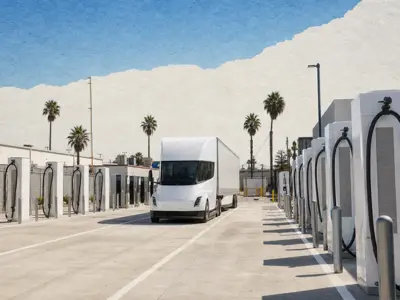
- FSD take rate on new North American deliveries topped 75%, the vehicle order backlog hit a four-year high, and Semi volume production began
Negatives the market weighed more heavily
- Operating income and margin fell sharply: operating income of $718M (down 56% year over year), operating margin of 2.6% (5.8% a year earlier)
- GAAP net income of $787M, down 43% year over year
- Revenue essentially flat from a year earlier (-0.2%), a sign of stalled growth
- Battery supply is still the production bottleneck: demand is there, but supply cannot keep up
- Fewer regulatory credits and pricing pressure keep squeezing auto profitability
- Robotaxi, Optimus and AI are still "future" stories, and the market sees them reaching the income statement more slowly than hoped
1. Two Teslas in one quarter
Tesla reported third-quarter revenue of $28.046 billion on Oct. 21, down 0.2% from a year earlier. Non-GAAP EPS was $0.48, above the consensus estimate of $0.45.
GAAP operating income, however, fell 56% to $718 million. Operating margin dropped from 5.8% to 2.6%. Spending on R&D, AI and robotics weighed on the profit the auto business generates.
Gross profit is the interesting line. Revenue was flat, yet gross profit rose 9% from a year earlier. Total gross margin climbed from 18.0% to 19.6%.
Q3 2026 key financials
| Metric | Q3 | YoY |
|---|---|---|
| Revenue | $28.05B | -0.2% |
| Gross profit | $5.49B | +9% |
| Operating income | $718M | -56% |
| GAAP net income | $787M | -43% |
| Non-GAAP EPS | $0.48 | -4% |
| Free cash flow | $1.53B | -62% |
| Cash and short-term investments | $45.45B | +9% |
Source: Tesla Q3 2026 Shareholder Update.
2. A $6 billion free cash flow surprise: is it really good news?
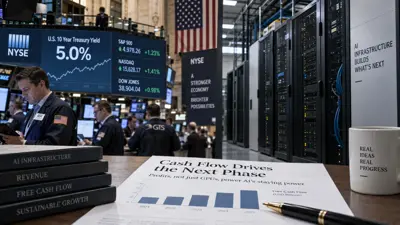
The biggest surprise in the numbers was free cash flow (FCF). The consensus forecast was negative $4.506 billion. The actual figure was positive $1.531 billion, a gap of $6.037 billion.
Cash generation was clearly better than expected. Operating cash flow was $6.263 billion, roughly flat from a year earlier, and cash remained after $4.732 billion in capital spending.
But beating expectations by a wide margin is not the same as the business improving on last year. FCF in the same quarter a year ago was $3.99 billion.
Capital spending this quarter was also about $3.04 billion below the consensus estimate of $7.771 billion. Tesla also cut its 2026 full-year capex outlook from more than $25 billion to about $20 billion.
- Consensus FCF: -$4.51B
- Actual FCF: +$1.53B
- Versus expectations: +$6.04B
3. Autos: margin rose even as prices fell
Q3 deliveries were 486,532 vehicles, down about 2% from a year earlier. Production was 464,391, up 4%. With deliveries running ahead of production, days of inventory fell from 15 in the prior quarter to 11. Tesla said its passenger-car order backlog is the highest in four years.
Auto gross margin excluding regulatory credits was 18.1%, above 16.3% in the prior quarter and 15.4% a year earlier. Costs fell faster than average selling prices.
Tesla named battery supply as a main constraint on higher vehicle output. But a battery shortage alone does not show that demand exceeds supply in every region. The durability of the order backlog and actual factory utilization both need to be watched.
4. FSD at 1.74 million: revenue after the car is sold
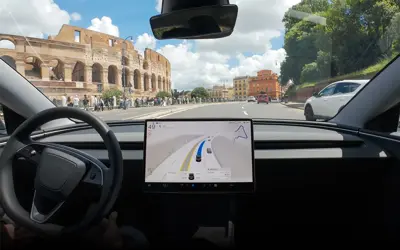
Paid FSD users reached 1.74 million, up about 67% from 1.04 million a year earlier. More than 75% of new vehicles delivered in North America included FSD. Tesla also expanded FSD (Supervised) to nine countries in Europe, where more than 100,000 users have driven over 160 million km in total.
If software fees continue after the hardware sale, lifetime revenue per vehicle changes. But the 1.74 million does not mean monthly subscribers only. It includes one-time purchasers and excludes free trials.
The roughly $1 billion in annual recurring revenue is likewise not a confirmed result from multiplying users by a monthly fee. It should be read as an annualized estimate confirmed by management. FSD (Supervised) still requires driver supervision, and it is not the same as unsupervised robotaxi operation.
5. Robotaxi: the key is now economics per mile
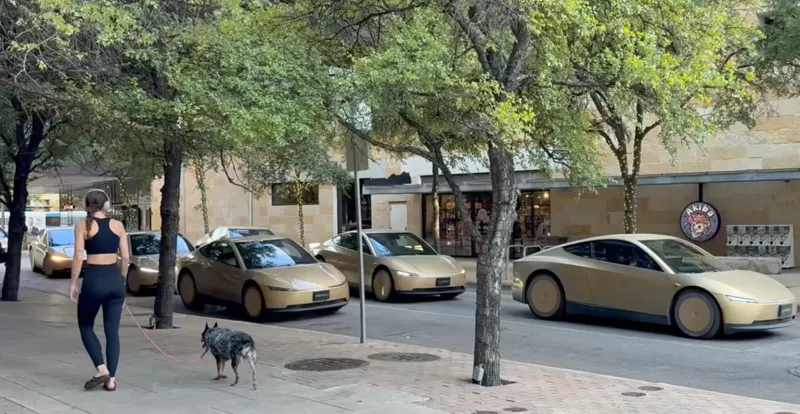
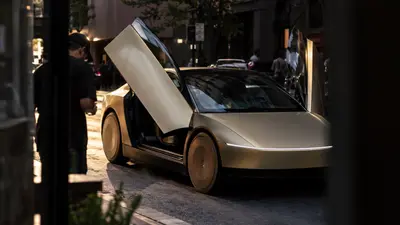
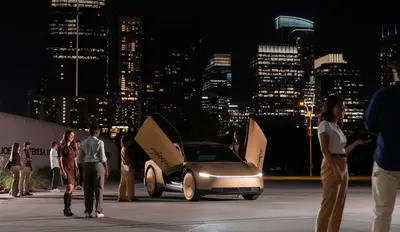
Tesla put the Cybercab into robotaxi service in Austin on Sept. 3. Cumulative unsupervised robotaxi miles approached 2 million by quarter-end, eight times the prior quarter.
The next things to check are paid revenue miles, hours of operation per vehicle, rider utilization, and total cost per mile including insurance and remote support. Tesla has set a cost target of 30 cents per mile, but has not yet reached it.
Another question is whether Tesla sells production vehicles to customers or keeps them to run as robotaxis. A sale books revenue immediately. A company-owned robotaxi ties up capital in the vehicle but generates ride revenue over several years. Which is better depends on lifetime operating profit after depreciation, insurance, maintenance and cost of capital.
6. Optimus and Terafab: bigger expectations, bigger investment burden
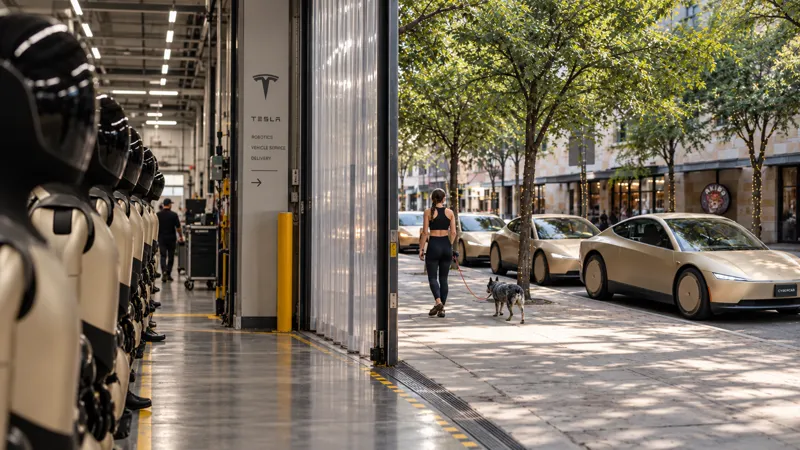
Optimus has begun early production on a Fremont line. Building first-production-quality robots is technical progress. But the design target of about 1 million units a year should not be mistaken for actual output.
Tesla targets deliveries to outside customers by the end of 2027. Hand durability, real task success rates, operating hours and manufacturing cost are the key variables for commercialization.
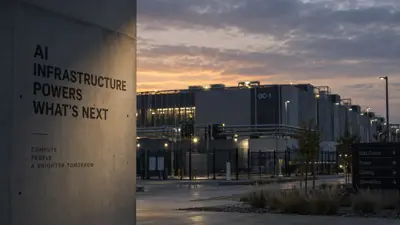
Tesla maintains its goal of raising AI training compute capacity to 400MW by year-end and is pursuing its own chip fab in Austin. Long-term investment plans for Terafab are cited at more than $100 billion, far above the current $45.447 billion in cash and short-term investments.
That Tesla could succeed at making its own chips is one question. Whether making them is cheaper than buying them is another.
7. Energy and services: changes outside autos
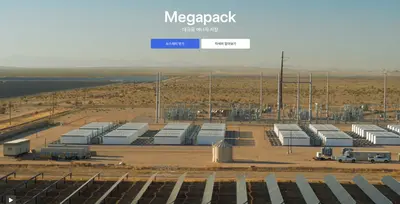
Energy storage deployments were 13.7GWh, up about 10%, but energy revenue fell 16% to $2.881 billion.
Services and other revenue, by contrast, grew 33% to $4.605 billion. Charging, insurance and parts contributed, and gross profit hit a record $734 million.
Energy has data-center power demand as a long-term growth driver, but this quarter's revenue decline is hard to dismiss. It is also worth separating whether the improved gross margin includes one-time items such as tariff refunds.
Three layers for valuing Tesla
| Layer | Business | What to check |
|---|---|---|
| Current earnings | Autos, energy, services | Margins and cash flow |
| Early commercialization | FSD, robotaxi | Paid usage, unit economics |
| Future investment | Optimus, Terafab | Yield, cost, return on capital |
Current profit shrank. The future businesses moved forward. How quickly that future turns into profit is still being tested.
For long-term investors, the task is not to swing between hope and disappointment with each earnings report. It is to keep checking how fast the technical goals Tesla has set turn into commercial metrics.
This article is analysis based on company filings and management commentary. It is not a recommendation to buy or sell any stock.
Insight Times Editorial Desk