Samsung Posts 107 Trillion Won Profit, TSMC Sales Jump 50%. Why Did the Shares Fall?
The AI chip supercycle has not ended. But the market's question has changed: not how fast earnings grow, but how long today's enormous margins can last.
- Results are still explosive. Samsung Electronics reported third-quarter preliminary operating profit of 107.4 trillion won, up 782.5% from a year earlier. TSMC revenue rose about 50%. Both are evidence that AI spending is turning into real chip output and profit.
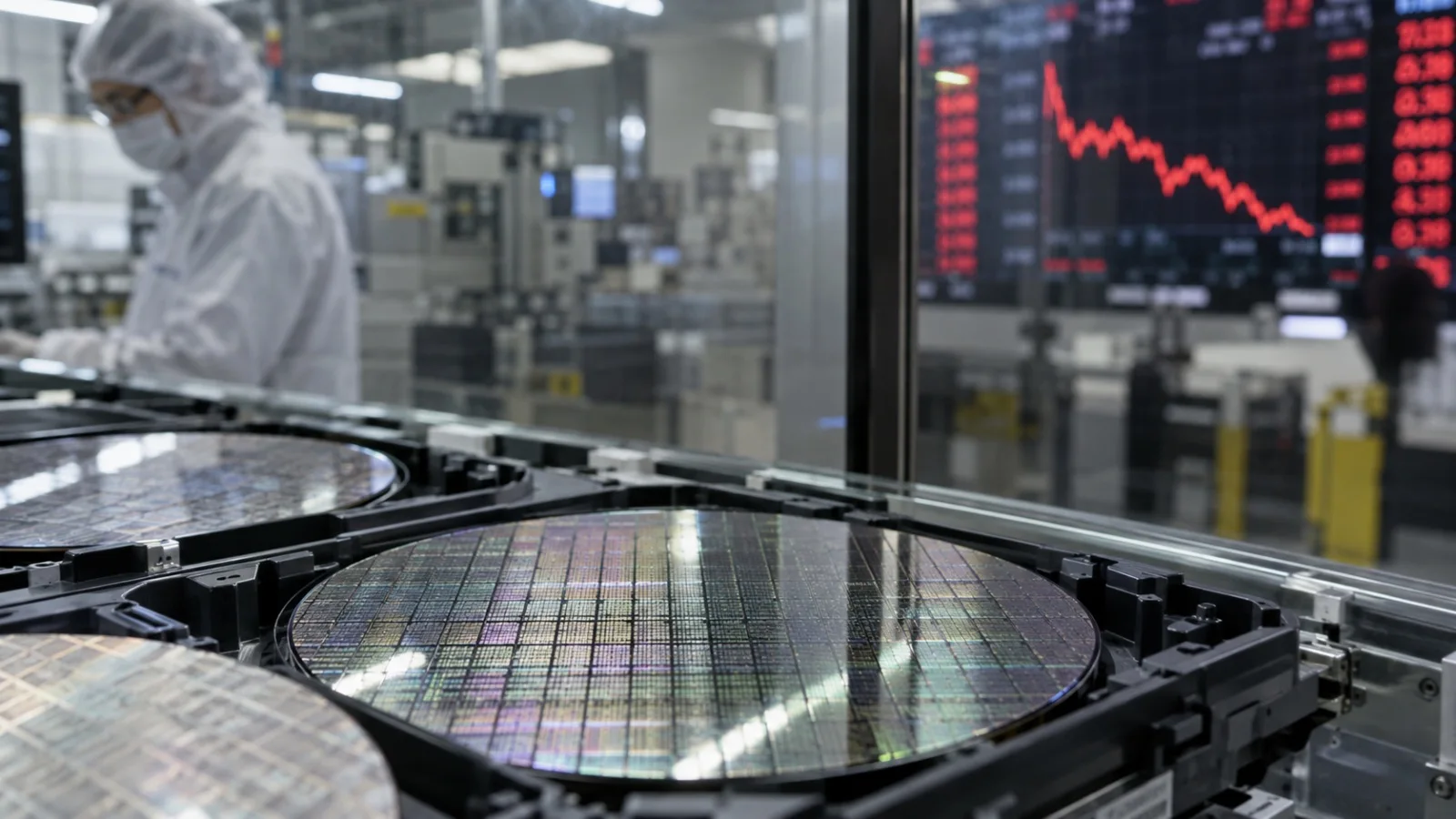
- Yet the shares fell. Samsung dropped 2.42% and TSMC's Taiwan-listed shares fell 1.35%. Good results alone struggled to meet elevated expectations. Rising rates and doubts about how long AI investment can last also weighed.
- The next test is how long margins last. For Samsung, that means memory prices and profit by division. For TSMC, it means the cost of its 2nm buildout and gross margin. Earnings quality and cash flow, not growth rates, are likely to decide the stocks.
What the two companies showed on the same day
On Oct. 8, two rare numbers arrived from the global chip industry.
Samsung Electronics topped 100 trillion won in quarterly operating profit for the first time. That is roughly $80.2 billion, about 8.8 times the same quarter a year earlier. On 195 trillion won of sales, the operating margin was 55.1%. For a manufacturer, that is an unusual level of profitability.
TSMC also posted record third-quarter revenue of about 1.49 trillion Taiwan dollars, or roughly $46.7 billion. That was up about 50% from a year earlier and above the roughly 1.46 trillion Taiwan dollars expected by 19 analysts in an LSEG poll.
| Company | Metric | YoY | Detail |
|---|---|---|---|
| Samsung Electronics | Operating profit | +782.5% | Q3 preliminary operating profit of 107.4 trillion won |
| TSMC | Revenue | About +50% | Q3 revenue of about $46.7 billion |
Third quarter of 2026. Samsung's figure is preliminary consolidated operating profit; TSMC's is the sum of monthly revenue. The two are different measures.
The two numbers show different points in the AI investment cycle.
TSMC's revenue is evidence that chip designs from customers such as Nvidia and Apple are becoming actual wafer production and sales. Samsung's profit shows how much supply shortages and rising prices can lift a manufacturer's profitability.
Orders became output, and shortages became profit. That is the most important change confirmed in these results.
Why record results do not guarantee higher shares
Samsung closed at 262,000 won, down 2.42%. TSMC's Taiwan-listed shares fell 1.35%, but that move came in trading before the revenue release. It is hard to read either decline as a direct reaction to the results.
How Samsung's results are judged also depends on which estimate is used. Operating profit slightly beat the LSEG estimate of 106.1 trillion won, but revenue fell short of some market forecasts. One reading is that high expectations were already in the price.
On top of that came higher oil prices, high US Treasury yields and concern about AI infrastructure spending funded with borrowed money.
A one-day drop does not prove the chip cycle has peaked. Macro factors and flows on the day also move prices.
One change is clear, though.
Rising AI demand used to be the investment case in itself. Now that demand has to prove it can keep producing high margins.
Same boom, different risks
| Samsung Electronics | TSMC | |
|---|---|---|
| Confirmed strength | Profit surge from higher memory prices | Strong demand for advanced-node production |
| Key risk | Normalization of DRAM and NAND prices | 2nm investment costs and depreciation |
| Still to check | Profit by division, HBM share | Gross margin, fourth-quarter outlook |
| Investment question | Whether current margins can be sustained | Whether revenue growth turns into cash generation |
For Samsung, brokerages estimate memory operating profit at around 110 trillion won. Smartphones and home appliances, by contrast, face higher costs because memory components are getting more expensive. Official divisional results have not yet been released.
TSMC is different. Capacity expansion and the shift to 2nm drive its growth, but heavy capital spending and early depreciation can pressure returns. Second-quarter gross margin was 67.7%, and third-quarter company guidance was 65% to 67%.
Even if revenue beats expectations, a lower margin can limit the profit growth shareholders hoped for.
Insight Times Editorial Desk