AMD's Lisa Su Confirms Dual HBM4 Sourcing in Seoul. No Samsung Foundry Deal Yet
AMD's HBM4 supply chain now includes both Samsung and SK hynix. Samsung keeps its priority-supplier status, but a foundry contract has not been announced.
AMD confirmed a wider supplier base in Seoul, not exclusivity
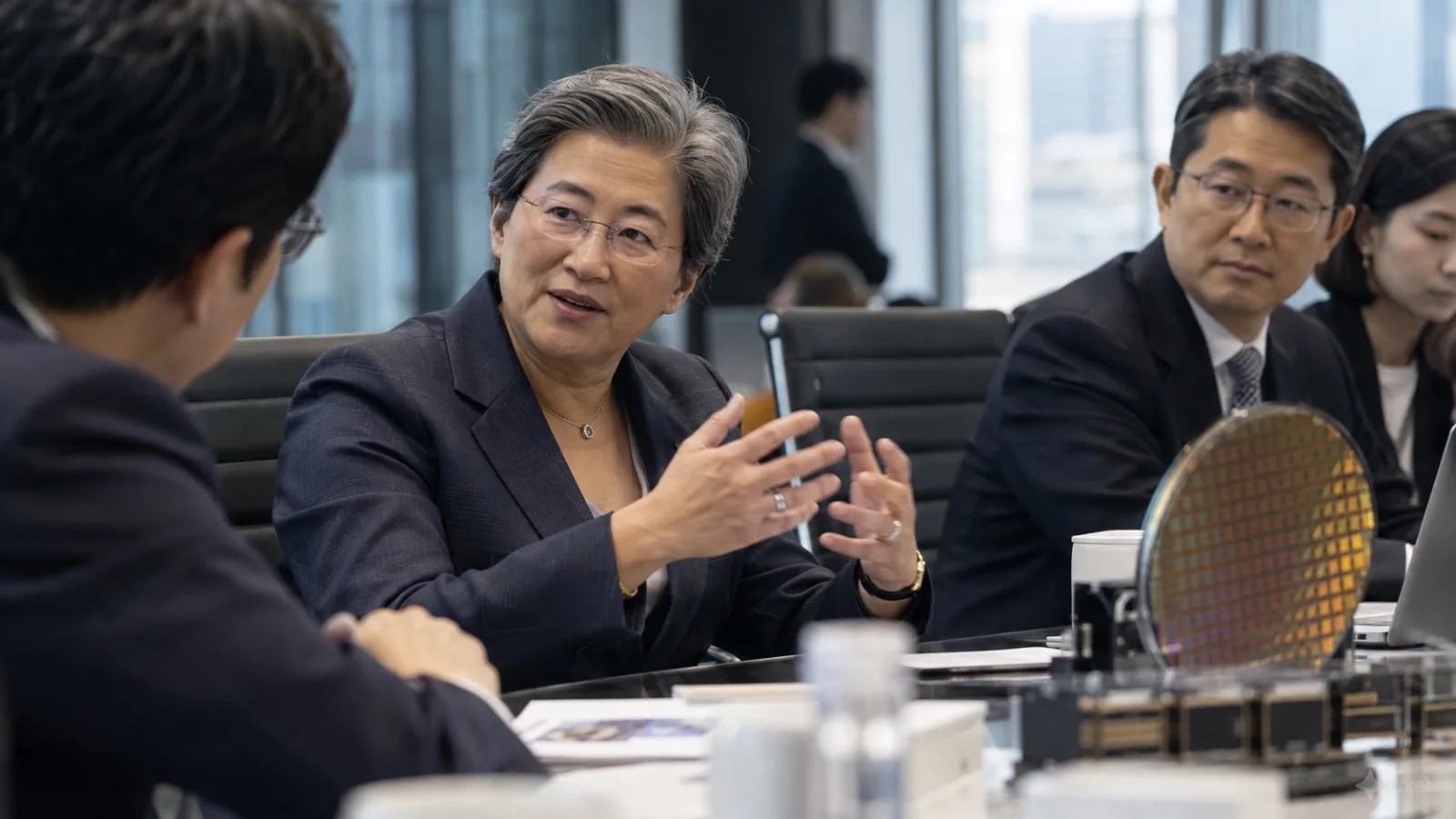
AMD CEO Lisa Su visited South Korea on Oct. 7 for the first time in seven months. She met Samsung Electronics' chip division head Jun Young-hyun and SK hynix CEO Kwak Noh-jung separately. No separate meeting with Samsung Chairman Lee Jae-yong was confirmed.
The focus was HBM4. Su said AMD has begun shipping its next-generation AI accelerator MI455 and its Helios system with HBM4, supported by both Samsung and SK hynix. She said she is satisfied with HBM4 performance and that production is being expanded.
The statement matters because of what happened in March. On March 18, AMD named Samsung the lead supplier of HBM4 for the MI455X. A priority supplier is not an exclusive one. This time, it was publicly confirmed that SK hynix is also part of the supply chain behind AMD's next AI systems.
Samsung's position has not vanished. The real scope of a supply chain that had been described as Samsung-centered is now clearer.
Still, how many units each company supplies, their shares and the value of firm purchase commitments have not been disclosed.
Why AMD wants both suppliers
HBM, or high-bandwidth memory, feeds data quickly to AI accelerators. Even a strong GPU cannot ship in AI servers if the HBM it needs is not available.
For AMD, two suppliers beat one. Capacity, resilience to disruptions and price negotiations all give it more options.
Su said she has pushed memory makers to expand production as fast as possible, and that AMD's supply planning looks three to five years or more ahead, not just one or two.
Two forces pull in different directions here. The tighter memory supply gets, the stronger Samsung's and SK hynix's pricing power may become. But with two suppliers, AMD also has more freedom in how it allocates volume.
Rising demand for Korean memory makers is one thing. How much of it they convert into profit is another.
Samsung and SK hynix: the same good news, different meanings
| Company | Confirmed change | Still to check |
|---|---|---|
| Samsung Electronics | Multi-generation relationship reaffirmed, following the March HBM4 priority-supply deal | Priority volume, pricing, memory profitability |
| SK hynix | Participation in the HBM4 supply chain for AMD's next AI systems confirmed | Size of AMD-related sales, capacity allocation versus existing customers |
| AMD | Multiple HBM sources and a base for long-term cooperation | Pace of actual production expansion, HBM sourcing costs |
For SK hynix, the key change is customer diversification. Its HBM strength had been judged mostly through Nvidia. AMD adds another large AI accelerator customer.
Samsung's math is more complicated. Its priority-supplier strength remains, but it is now clear AMD also works with SK hynix. Supply volume and share within a customer cannot be treated as the same thing.
Another earnings opportunity is server DDR5. If AI agents spread and server CPU demand grows, demand could rise not only for GPU-attached HBM but also for high-capacity general-purpose memory in server systems. In its March announcement, AMD and Samsung already specified cooperation on next-generation DRAM for EPYC processors.
Why foundry is a separate question
The question that raised the biggest hopes for Samsung was foundry. If AMD handed Samsung contract chip manufacturing as well as memory, Samsung could offer memory, logic production and advanced packaging as a bundle.
But the official message from the visit was only that the two sides continue to explore cooperation. Reuters also reported that AMD is reviewing memory and foundry cooperation opportunities with Samsung.
No process node, wafer volume or production contract has been disclosed. The March joint announcement likewise said only that the companies would discuss advanced foundry cooperation, not that an order was set.
Using this meeting as evidence of an early return to profit for Samsung's foundry business is a stretch. Many steps remain between technical possibility and a contract, mass production, revenue and profit.
Why the stocks told a different story
| Stock | Move | Price |
|---|---|---|
| AMD, Oct. 6 US session | +2.8% | $649.42 |
| Samsung Electronics, Oct. 8 Korean session | -2.42% | 262,000 won |
These are moves on different dates in different markets. The comparison does not prove a stock effect from the visit.
AMD's strong gain came the day before the visit, not the day after.
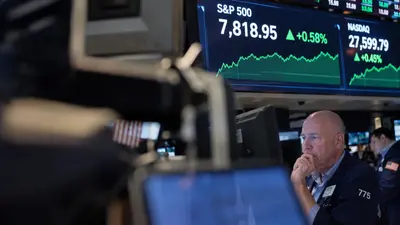
On Oct. 6 in New York, AMD rose 2.8% to $649.42. Citi analyst Atif Malik raised his price target to $800 from $575. His core argument was not the Samsung HBM deal. It was expected growth in server CPU demand after the launch of Meta's AI agent, Muse.
Samsung, by contrast, fell about 2.4% on Oct. 8 even after reporting record preliminary third-quarter operating profit of 107.4 trillion won. That was about 8.8 times the 12.17 trillion won of a year earlier, but the market had already priced in substantial earnings improvement.
That is another signal from this event. Strong AI chip demand alone does not lift every related stock at once. For AMD, the expected expansion of the CPU market is being priced in. For Korean memory stocks, already elevated earnings expectations and future margins are being weighed differently.
Insight Times Editorial Desk