AI Agents Are Getting Wallets. Who Controls the Transaction?
Meta and Sierra's draft Personal Agent Protocol asks who verifies identity, grants authority and controls the deal when AI shops for consumers. Merchants that hold the products and orders are likely to keep leverage.
On Oct. 6, 2026, Meta and AI company Sierra announced they are developing PAP (Personal Agent Protocol), a new open standard. Shopify, Stripe, Walmart, Genesys, Rocket and Instinct are also taking part. The first technical specification, v0.1, is due in October. It is not yet a commercial standard.
The key point is not that AI can shop. It is this: when an AI approaches a business on a consumer's behalf, who verifies identity, grants authority and controls the transaction? The question is who holds the new gateway to the online economy.
What goes wrong when an AI assistant shops
A user asks an AI:
"Book the cheapest refundable flight to Tokyo next week."
So far, AI has worked the way a person does: opening a website, finding the search box, clicking buttons. It fails easily when a page changes or a login gets complicated. Businesses, for their part, struggle to tell whether a visitor is a real customer or an AI the customer has authorized.
PAP does not propose giving AI unlimited access. It proposes an official access path within limits that both the business and the consumer agree to.
The flow, simplified from the design direction Sierra has published:
- Consumer: delegates the task to the AI and approves its authority.
- Personal AI agent: sends the request to the business and opens an authenticated session.
- PAP (permissions and connection procedure): OAuth-based authentication, with read and write permissions.
- Business endpoint: a website, a company API or the company's own AI.
The actual implementation may change with the technical specification.
The design has three permission tiers. Anonymous access covers product information and return policies. Read access covers order history. Write access covers actions such as changing an order. Businesses can choose which route to offer: website, API or their own AI.
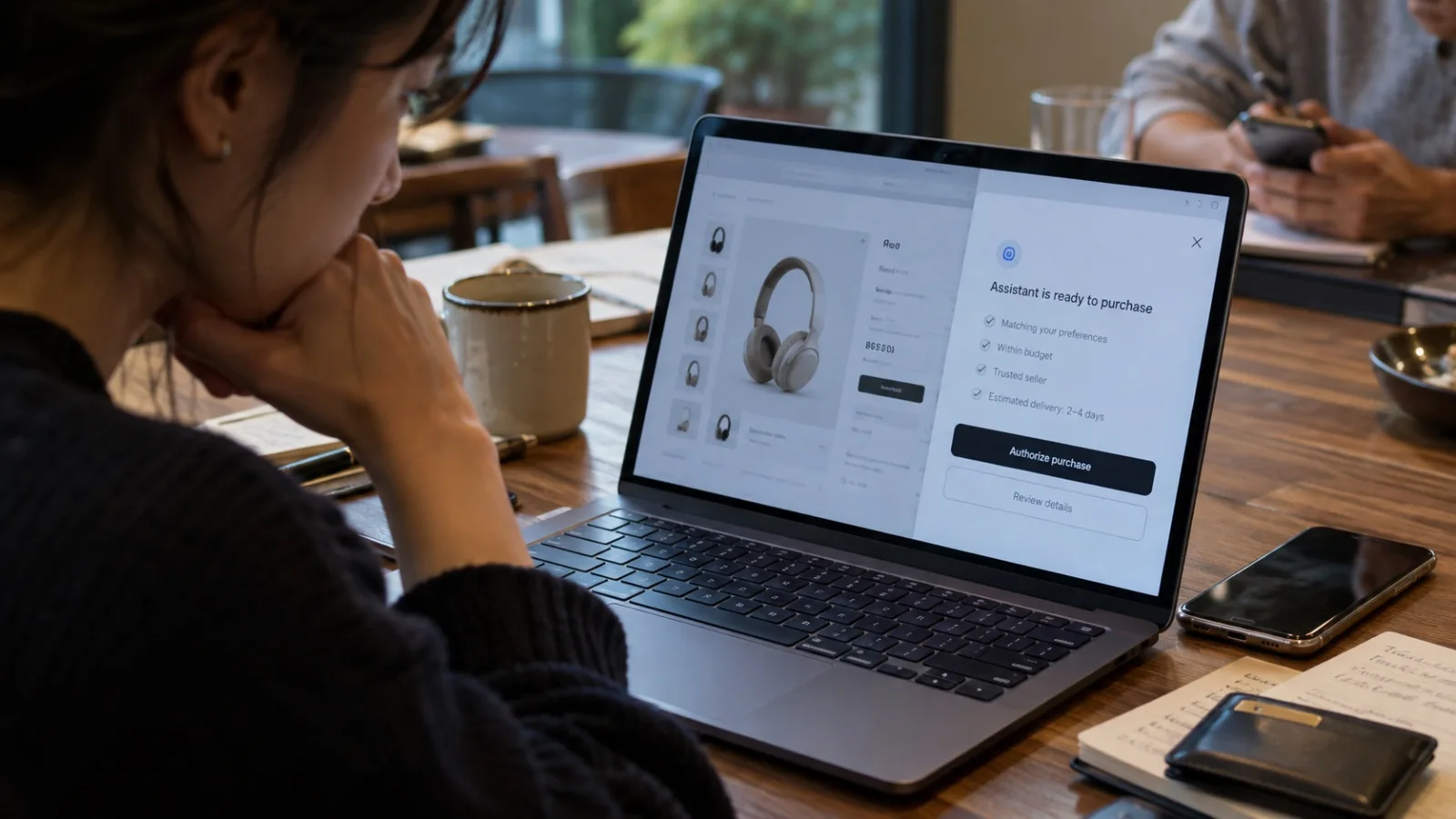
Write permission does not mean payment approval. Completing a purchase without exposing payment details is described as a possible future extension.
The real contest: who owns the customer
In the past, consumers saw search results and ads, then went to a store's site. If an AI compares products and places the order, a consumer may never open a store page at all.
Opposing forces are at work. Companies that provide AI assistants learn a customer's intent first. Retailers and brands hold prices, inventory, shipping, refunds and the actual transaction data.
PAP connects the two sides, but it does not automatically hand the customer relationship to either one. Consumers set access permissions, and businesses decide which functions to allow.
That is an important counterpoint to the view that AI companies will monopolize every transaction. Companies that supply products and fulfill orders keep bargaining power.
Who gains, who is squeezed
| Industry / company | Opportunity | Burden |
|---|---|---|
| Meta and AI platforms | Wider consumer reach, stronger agent ecosystem | Earning user trust, converting to real transactions |
| Shopify, Walmart | Turning AI-driven traffic into sales, keeping customer relationships | Changes to advertising, search and visitor-traffic structure |
| Payment companies such as Stripe | Agent payment infrastructure and authentication demand | Payment liability and fraud-prevention costs |
| Sierra, Genesys | Demand for connecting and managing enterprise agents | Standards competition, proving returns to customers |
| Search ads and intermediary platforms | Supplying data for AI recommendations, offering transaction services | Pressure on existing ad exposure and intermediary revenue |
The gains and losses by company are the editors' scenario analysis based on business structure, not official earnings forecasts.
It is hard to conclude that PAP alone will cut Google's search ad revenue or the income of existing e-commerce intermediaries. Where AI gets the products it picks and the information it trusts could let incumbent platforms keep their influence in a different form.
The 2027 contest will not turn only on how smart AI becomes. It turns on who gives AI the authority to act, who is responsible when something goes wrong, and who captures the economic value of the transaction. That is the question PAP raises.
Insight Times Editorial Desk