OpenAI's Dots Fights Back: Where the 24-Hour AI Worker War Will Be Decided
OpenAI's Dots, Meta's Muse and xAI's Grok Bot all keep working after the user leaves. Each is aiming at a different seat: the control plane of work, personal life context, or the AI org chart.
AI has moved from "answering" to "working"
Traditional chatbots move when a person asks a question. Always-on agents work the other way. They receive a goal and permissions, then look up material, move between apps, update results and call a human back only when a judgment is needed.
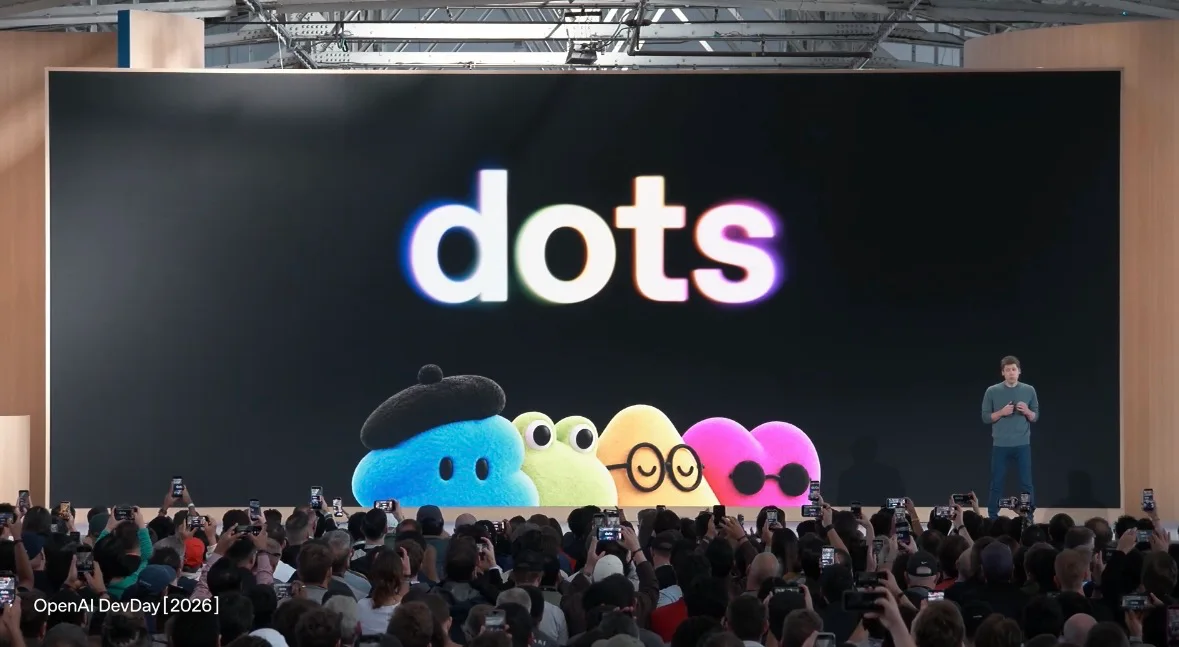
That is why OpenAI's Dots is symbolic. OpenAI says Dots has its own cloud computer and browser, runs 24 hours a day, and can connect to more than 4,000 apps through a plugin ecosystem. Users can talk to the same Dots in ChatGPT, Slack and Teams, and can check its work through an Activity View.
The important change is not whether documents get written faster. The state of the work keeps updating while the person is away. Research, customer support, bug investigation, proposal revisions and content production once demanded a person's continuous attention. For the first time, they are starting to become software's standing responsibility.
| Metric | Figure | What it means |
|---|---|---|
| OpenAI Dots: connectable apps | 4,000+ | A strategy to direct a wide range of work tools from one ChatGPT interface |
| GPT-6.1 Sol: price vs. GPT-6 Astra | 1/5 | Standard input and output token price. A key variable in the economics of always-on agents |
| Frontier firms | 8.3x | By OpenAI's measure, how many times more output tokens per active user the top 10% of companies generate than typical firms. A proxy for depth of use, not productivity itself |
They look alike, but each targets a different seat
| OpenAI Dots | Meta Muse | xAI Grok Bot | |
|---|---|---|---|
| Core position | Control plane for knowledge work and team tasks | Always-on agent that understands personal life and relationships | Digital team that bundles AI workers in several roles |
| Main touchpoints | ChatGPT, Slack, Teams, work apps | Muse app, WhatsApp, future AI glasses | Desktop and mobile, work apps, browser, X |
| Differentiator | ChatGPT context, 4,000+ apps, professional work and coding | Life data and messaging, mobile and wearable reach | Parallel multi-bot execution, bot-to-bot messaging, workflows learned from demonstrations |
| Biggest challenge | Enterprise security, approvals, auditability | Trust in the use of personal data | Separating permissions across bots and containing the spread of errors |
Dots' weapon is ChatGPT, not the "smartest assistant"
The real differentiator for Dots is less the performance of a single agent than the fact that ChatGPT has already become the starting point for work. Users can run an always-on agent on top of existing conversations, projects, files and app connections, without learning a separate automation product.
OpenAI is not stopping at personal Dots. It has also previewed "specialist dots," to which organizations can give separate identities, credentials and system access. It is also pursuing integration with Microsoft Agent 365. The path from personal assistant to role-based AI employee for companies is already visible.
Still, it is too early to say Dots has completed a multi-agent organization. OpenAI has pointed to a future in which several Dots collaborate. xAI, however, already puts front and center a structure in which several bots run in parallel, message one another and hand off tasks.
Meta is after "your day," not "your work"
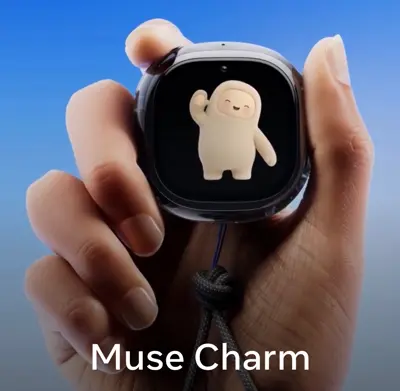
Muse runs in Muse Secure VM, a dedicated secure virtual machine, and can also be used in WhatsApp. One example Meta showed turns a saved Instagram cooking video into a shopping list, then remembers friends' dietary restrictions and carries on to a dinner menu and invitations.
That is where Meta's potential lies. It cannot yet be said that Meta automatically feeds its entire social graph into Muse. But Meta's messaging, social, mobile and AI-glasses touchpoints are hard for others to copy. If Muse extends to AI glasses, the agent's input would go beyond keyboard and screen to the user's field of view and the physical world.
xAI builds an "AI org chart" instead of one assistant
Of the three products, Grok Bot has the clearest organizational model. Users can create bots by role, such as researcher, sales, cost control and bug fixer, and run them at the same time. Bots message each other, share context in group chats, and can hand work to another bot.
Another feature is that a person shows a task once and the bot saves it as a repeatable skill. In effect, browser work can be automated by "demonstration," without complex API integration. That is powerful for non-developers. But as bots multiply, so do the paths through which permissions and errors can spread. That is why audit logs, network controls and approval structures matter as much as performance in the enterprise market.
As the price of intelligence falls, agents work more
Always-on agents consume far more compute than ordinary chatbots. They must read documents, browse the web, plan, use tools and retry when they fail. Model unit prices are therefore a direct variable in how big the market gets.
OpenAI says GPT-6.1 Sol delivers performance close to GPT-6 Astra in agentic coding, computer use and professional work, at one-fifth of Astra's standard input and output token price. If that price decline continues, companies could attach AI not as an aid for executives or developers but to standing processes such as customer support, research, finance operations, sales support and testing.
Insight Times Editorial Desk