Marvell's $115 Billion Lumentum Deal: Is AI's Next Bottleneck Light, Not Chips?
Marvell's purchase of Lumentum points to a contest beyond GPU speed, in data transfer and power efficiency. Whether the price is right is not yet confirmed.
The 20-second read
Does connecting more GPUs make AI proportionally faster?
Diagram: GPU (compute) <-> network (data movement) <-> GPU (compute). Overall AI system performance depends on the balance between computing and data movement. Optical links do not replace every copper connection.
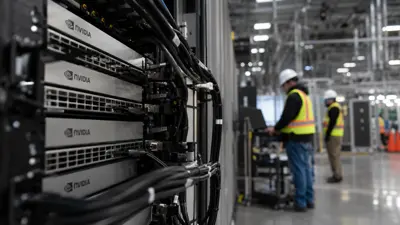
Think of an AI data center as a giant factory.
GPUs are the production equipment that does the computing. But when thousands of GPUs train a single AI model, they must exchange data constantly. However fast the machines are, output does not rise if the aisles that carry parts are jammed.
The same holds in a data center. If a GPU that has finished its calculation waits longer for the next batch of data, expensive chips go underused.
That is why AI infrastructure competition is widening from raising GPU performance to how fast and efficiently GPUs are linked together.
Copper-based connections have advantages in price and power efficiency over short distances. As speeds and distances grow, though, signal loss and power problems get harder to manage.
Optical communication converts electrical signals to light to carry large volumes of data. It is an important technology for expanding communication capacity in large GPU clusters.
What is Marvell buying for $115 billion?
- Enterprise value including debt: $115 billion
- Acquisition premium: 23.9%
- Lumentum holders' stake in the combined company: about 33%
- Expected closing: first half of 2028
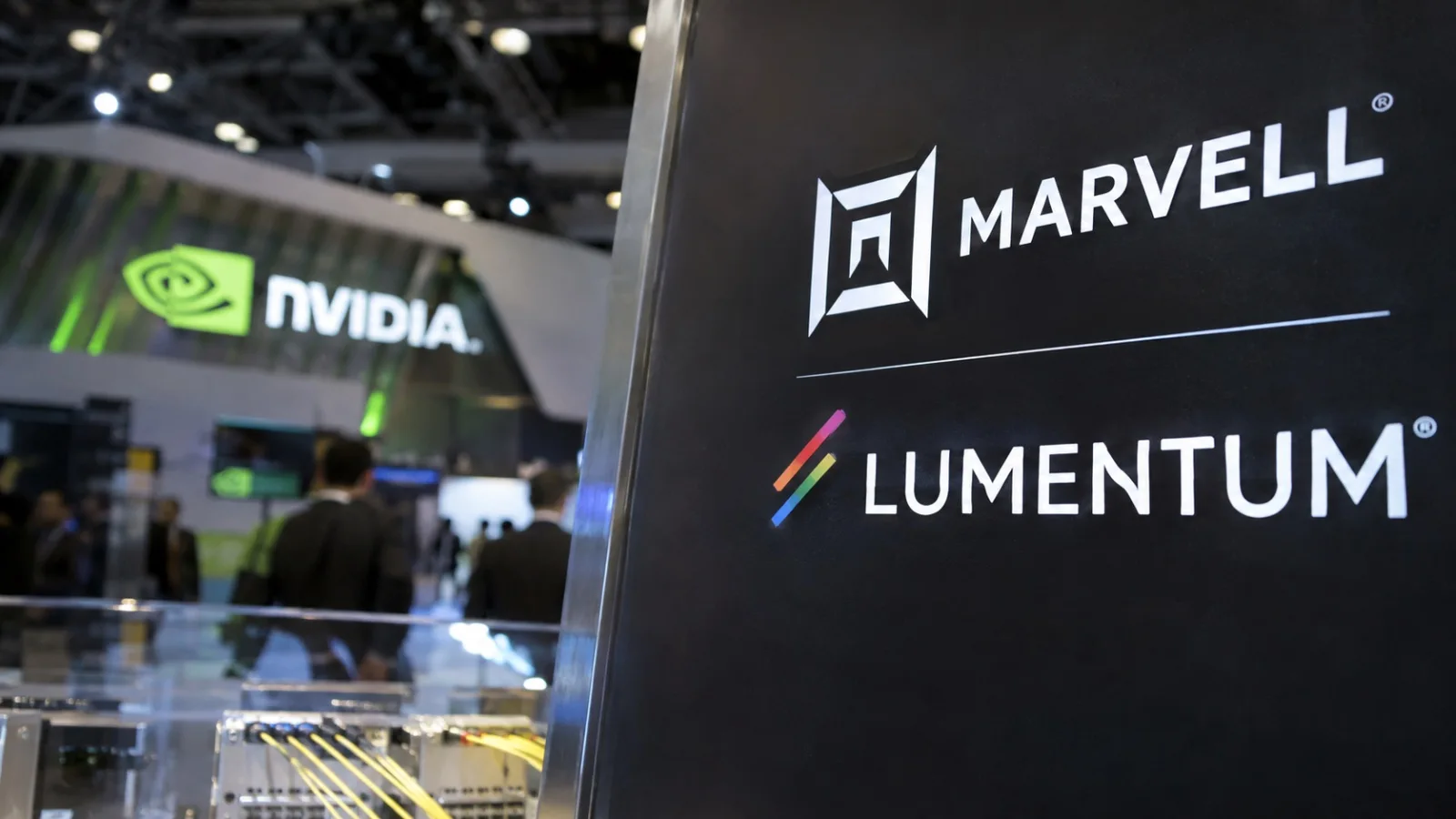
On Nov. 2, Marvell and Lumentum announced an all-stock acquisition agreement.
Lumentum shareholders will receive 4.5 Marvell shares for each Lumentum share they hold. The $115 billion figure is Lumentum's enterprise value including debt, not the sum of the two companies' values. Its equity value is about $102.5 billion.
Marvell has custom AI chips, networking chips, and electrical and optical interconnect technology. Lumentum is strong in lasers, optical transceivers, optical circuit switching and specialty semiconductor manufacturing.
The logic for combining is clear: to design and supply together the chips that process data and the components that carry it as light.
Marvell bought optical connectivity company Celestial AI in February. The Lumentum deal looks less like entry into a separate business than a larger extension of its existing optical strategy.
Why did Nvidia invest in both companies?
Nvidia invested $2 billion each in Marvell and Lumentum in 2026, $4 billion in total.
That suggests building good GPUs alone is not enough to complete a competitive AI system.
For Nvidia, the more GPUs customers install, the more the networking and optical technology that makes those GPUs work properly matters.
If the combination improves the performance and supply of optical components, Nvidia's AI system ecosystem could benefit. That does not mean Nvidia led the merger or has an exclusive supply relationship.
Marvell, meanwhile, faces a larger rival in Broadcom, which holds a strong position in custom AI chips and networking.
What Marvell is after is not one more optical part. It is a platform that integrates everything from chip design to optical connectivity for customers.
Why did Wall Street not welcome the deal?
Chart: enterprise value to expected core operating profit. Lumentum deal price: 33x. Peer median: 16x. Source: Reuters / LSEG, based on forward 12-month estimates.
The problem is price.
By Reuters' calculation using LSEG data, Lumentum's acquisition valuation is about 33 times expected core operating profit over the next 12 months. The peer median is about 16 times.
Paying more than peers does not by itself mean failure. But for the deal to succeed, results must show not only Lumentum's growth but also cost savings after integration, stronger products and higher cash flow.
The companies expect more than $1 billion a year in cost synergies and a rise in non-GAAP EPS in the first year after closing. Both are management targets, not current results.
On Nov. 2, Marvell shares fell more than 12% and Lumentum fell more than 15%. More important than one day's move is the question the market raised.
Even if AI optical networking grows strongly, can profits grow by more than the price being paid now?
- Not in every segment. Copper has cost and power-efficiency advantages over short distances.
- How fast optical networking expands depends on connection distance, bandwidth requirements, and technology cost.
- Marvell is a partner of Nvidia and also a competitor in some areas.
- Advances in optical networking can be an opportunity for both Nvidia GPUs and other companies' AI chips.
- The Lumentum acquisition helps Marvell expand its optical technology and product portfolio.
- But it will need sustained results in winning customers, design competitiveness, production capacity, and profitability.
- Even a company in a growing industry can see lower investment returns from a high acquisition price and the share dilution caused by issuing stock.
- It makes more sense to evaluate post-integration cash flow per share and valuation together, rather than the stock price alone.
- Optical networking demand grows, but competition pushes down selling prices and profit margins.
- Expected synergies are delayed, or deal approval and integration costs increase.
What to watch
Insight Times Editorial Desk