AI Is Changing the World. Why Can Investors Still Lose Money?
Anthropic offers a lens on AI investing. Beyond model rankings, investors need to weigh pricing power, control of the workflow and cash flow.

The forecast that AI will change the world is not the same as the forecast that AI investors will earn high returns. Technology can advance faster than expected while the profits of the companies selling it fall short. As competition intensifies, better products are supplied at lower prices, and the benefits of innovation can flow to customers rather than suppliers.
That is the core point in Noah Smith's analysis of Anthropic. Beyond how good Claude is, what matters is how long Anthropic can keep the value its intelligence creates as its own profit. The decisive variable in AI investing is not only the speed of technological progress but value capture: the share of the economic value created that a company actually keeps.
Seen this way, investors need to look at different things. They should weigh not just model performance rankings but also customer switching costs, control of the workflow, profitability after compute costs, and the stock price that reflects all of those expectations.
1. Between AI's success and AI stocks' success are three doors
AI investing has three distinct stages.
- Value creation: Does AI create real economic value?
- Value capture: Does a particular company turn that value into revenue and profit?
- Valuation: Do investors buy that company at a reasonable price?
The first can be right while the second and third are wrong. That is why Smith compares AI with solar power and airlines. A socially useful industry with strong demand does not guarantee that its suppliers keep high excess profits.
Suppose AI cuts a company's operating costs by 10 billion won a year. If the AI vendor charges 1 billion won in fees, both customer and vendor gain. But if a rival offers a similar service for 300 million won, the picture changes. The economic value of the AI is unchanged, yet the vendor's share shrinks.
2. A system that is hard to replace may matter more than the smartest model
The weakness of AI model companies is rivals' fast catch-up and relatively easy product switching. Having the best model today does not guarantee customers stay tomorrow.
But switching a model and switching a work system are different things. Changing the AI an employee uses to draft documents is easy. Replacing an AI wired into internal search, access permissions, review procedures, customer service and record-keeping is harder. It requires reassessing security and accuracy and testing that the work still functions.
- Is it easy to swap the model itself for another product?
- Is it easy to swap the entire work system that contains the model?
If customers can replace the model while keeping the work system, the party with strong bargaining power may be the operator of the work system, not the model supplier. What model companies, Anthropic included, will be judged on over the long run is whether they secure the environment where customers actually work.
3. Claude Code means more than coding well
Smith presents Claude Code as an important driver of Anthropic's growth and describes improving revenue efficiency relative to compute costs. But a single product's profitability should not be extended straight to the whole company's earnings.
The more important change is that a code-suggestion tool can evolve into an environment that performs actual work. Once it extends to planning, editing, testing and review, the standard customers apply changes. It shifts from "how impressive is the answer" to "how well does the job get finished."
Cheaply generated code has poor economics if people must keep fixing it for a long time. Conversely, even a high model fee can be the cheaper choice for a customer if it sharply cuts review and rework.
4. Is falling AI pricing good or bad?
Competition can push down AI prices and margins. But a price drop alone does not show that the business has become less profitable. Investors need to look at price, usage and unit cost together.
| Hypothetical scenario | Revenue result | What else to check |
|---|---|---|
| Price cut 50%, usage doubles | Revenue unchanged | How much unit cost falls |
| Price cut 50%, usage triples | Revenue rises | Profit contribution of the extra usage |
| Price held, compute per task surges | Revenue alone cannot tell | Cost per task and margin |
The key is not how fast AI gets cheaper but how fast the profit structure improves. A product that handles complex work can consume more compute per task even if the customer count does not grow. The evidence Anthropic needs is not just rising usage but proof that it is controlling the cost of delivery while improving customer outcomes.
5. The gap between revenue and compute cost is not the company's profit
Even if revenue minus compute cost for one product grows, that does not prove profitability for the whole company. The scope of costs has to widen.
- Service economics: what is left after serving customers
- Operating economics: what is left after R&D, labor, and sales and administrative costs
- Cash economics: what is left after the required investment and cash outlays
When valuing an AI company over the long term, the important question is how much it must keep investing to stay competitive. If next-generation model development costs keep rising and competition prevents it from reflecting those gains in price, the cash left for shareholders may be smaller than expected. If revenue per customer and efficiency improve together, the quality of growth changes.
6. Low corporate AI spending is a starting point, not a conclusion
That AI makes up a small share of large companies' total costs can be a clue to room for growth. But total costs include items AI can hardly replace directly. A low spending share alone makes it hard to predict a sharp expansion.
- How large is the body of work AI can actually be applied to?
- Does that work produce verified cost savings or revenue gains?
- How much of the gain will customers pay the AI vendor?
- Do usage and spending grow together after adoption?
If customers keep a large portion of the costs AI saves, adoption can grow quickly while vendor revenue rises relatively slowly. Low penetration is not the conclusion of the bull case. It is the starting point for testing the path to actual spending growth.
7. For intelligence itself to be a moat, rivals need a reason they can't catch up
Smith raises the hypothesis that intelligence itself can be a competitive advantage. Good AI helps research and product improvement, the improved product adds customers and revenue, and those resources go back into building better AI.
There is a counterargument. If competitors can use similar AI, the whole industry's pace of development may quicken while any one company's relative edge does not last.
So investors need to separate whether AI raises productivity from whether the improvement is consistently larger than rivals'. Proving the latter requires further evidence, such as proprietary training signals, distinctive execution ability and customer relationships.
8. Shareholders buy not just the growth rate but the lifespan of the advantage
Two companies earning the same profit are worth different amounts if rivals erode their profits at different times. High valuations for AI companies usually embed two expectations: the size of future profit and how long it can be defended.
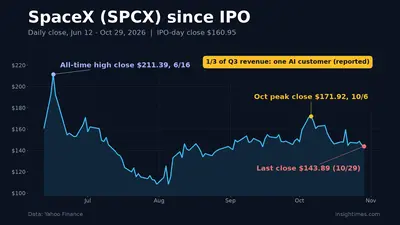
That is why investment returns can disappoint even as earnings grow. If near-term revenue rises as expected but intensifying competition weakens confidence in long-term profitability, the price the market allows can fall.
Investors therefore need to look beyond revenue growth to evidence such as customer retention, contract expansion, unit economics and cash generation.
9. Look for where profits accumulate, not for the size of the AI market
The AI industry looks less like one growth market than like a structure in which many participants split customers' spending. Even with the same spread of AI, more profit may stay with players that have something hard to replace right away.
| Area | Condition for securing profit | Risk to watch |
|---|---|---|
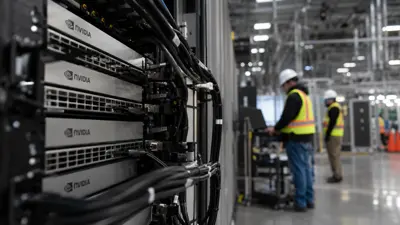
| Compute infrastructure | Hard-to-replace resources and supply capacity | Overinvestment and lower utilization |
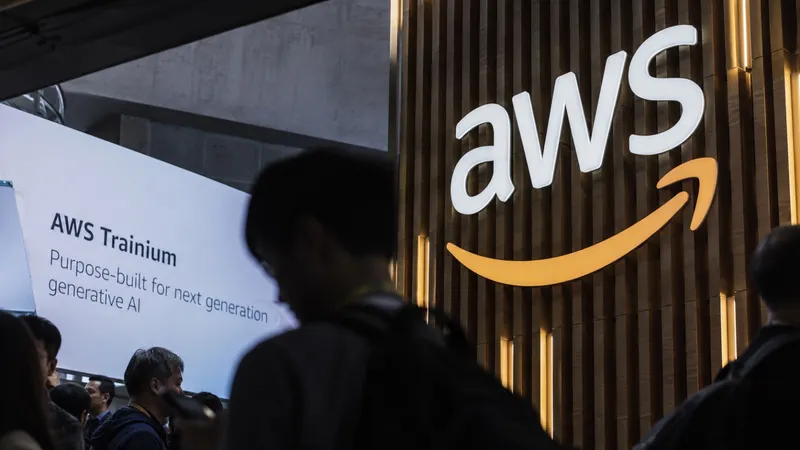
| Models | Differentiated performance, efficiency, reliability | Fast catch-up and price competition |
| Work products | Real workflows and customer relationships | Bargaining power shifting when models are swapped |
| Companies using AI | Converting productivity gains into their own profit | Rivals gaining the same productivity |
When models become commonplace, the bargaining power of work-product operators can grow. Conversely, if the value of work only a specific model can do rises, model suppliers can gain the advantage. What matters is not only industry growth but where bargaining power is moving.
Investors buy the future of cash that comes back to them, not the future of technology
AI raising productivity across the economy and a given company's shareholders earning high returns follow different paths. Technical excellence is the entry ticket. But once rivals catch up and customers negotiate, the gains are redistributed between the company that built the technology and the companies that use it.
Investors should therefore not stop at finding the best model. They should check who captures the value added by that model, how much, and for how long. Finally, they should examine the price that already reflects those expectations.
Five questions investors should keep
- Do customers choose it for a temporary performance edge or for lasting work value?
- Does the model company own the reason customers find it hard to leave, or does someone else?
- Does rising usage translate into more cash after compute costs, R&D and required investment?
- How much of the productivity gain AI creates does the vendor keep as profit?
- How long does the current price assume all these conditions will last?
The illusion to guard against in AI investing is moving straight from optimism about the technology to confidence in corporate profits, and then to confidence in a stock's expected return.
A good model is the starting point. Next comes a structure in which the company takes on work that matters to customers, gets paid for it despite competition, and leaves cash after the required investment. And investors need to take part at a price below the value of that structure.
Insight Times Editorial Desk