Amazon Goes After Nvidia's Strongest Moat, and It Is Software, Not GPUs
Amazon's open-source TorchNeuron aims to let existing AI code run on its Trainium chips. The contest comes down to the total cost of AI compute and the return on Amazon's $220 billion in annual capital spending.
Nvidia's real strength is not only its GPUs
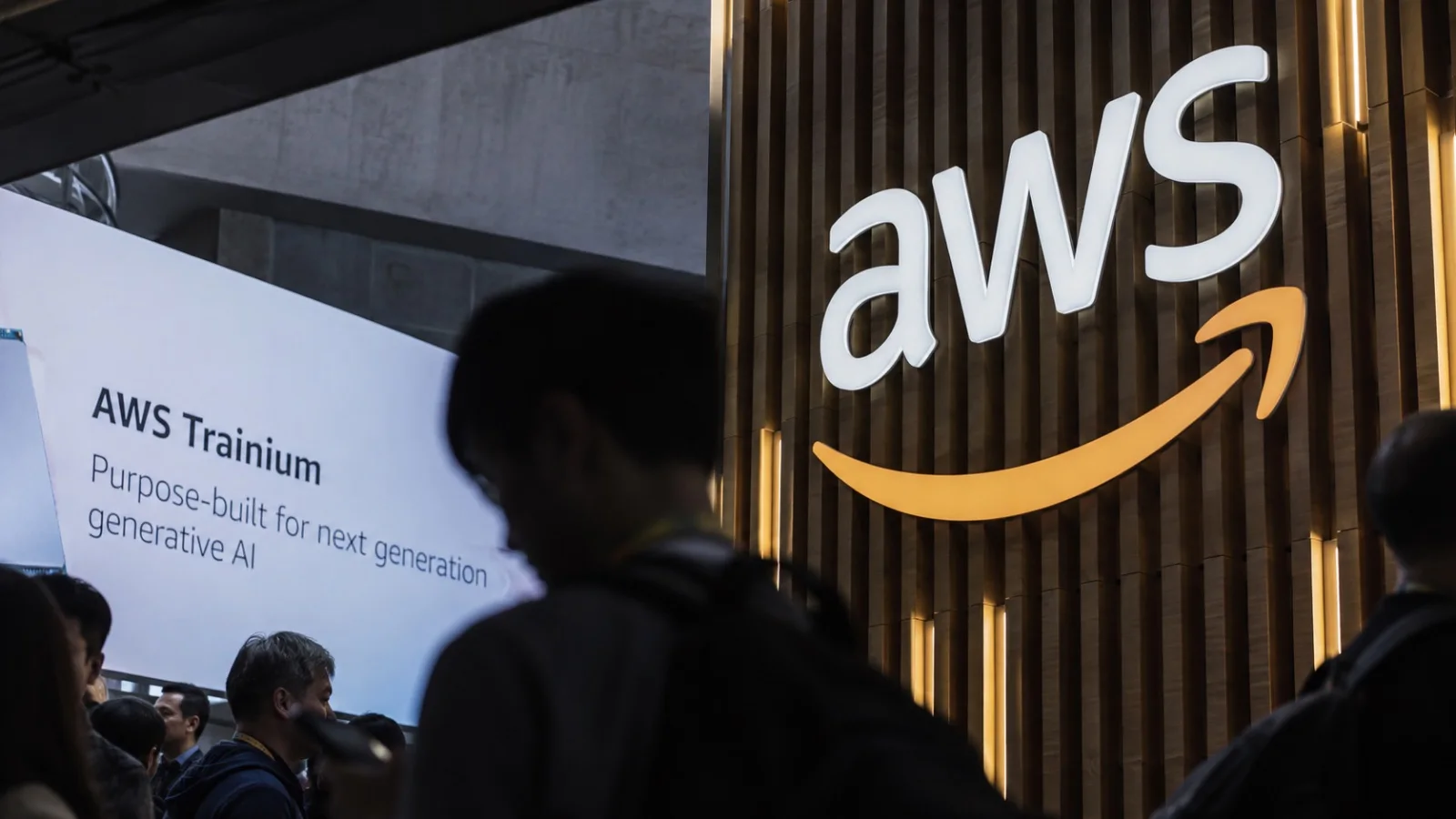
On Oct. 19, 2026, Amazon announced TorchNeuron, an open-source software package. On the surface, it is one more developer tool. Behind it sits the most important competitive structure in the AI chip market.
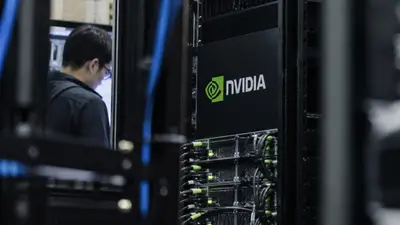
Nvidia's edge is not limited to GPU performance. It is built around CUDA, its parallel computing platform, where developers have long accumulated code, libraries and optimization tools that work together.
For a developer, a cheaper chip is hard to adopt. The software has to be modified, errors fixed and real performance validated again.
That is switching cost. Nvidia has sold more than chips. It has sold the ability to stay in an environment developers already know.
Amazon wants to lower that barrier. TorchNeuron uses a standard PyTorch extension mechanism so that Trainium shows up as a single compute device. For a typical PyTorch model, migration can be as simple as changing the target device from cuda to neuron.
According to the official documentation, TorchNeuron supports Eager Mode, torch.compile and distributed training. A public beta under the Apache 2.0 license begins Oct. 20.
What changes if switching gets easier
Existing structure (high software switching cost): PyTorch model → CUDA optimization → Nvidia GPU
With TorchNeuron (lower migration burden for some models): PyTorch model → TorchNeuron → AWS Trainium
Conceptual diagram. TorchNeuron lowers the cost of moving a development environment, but it does not guarantee full compatibility with CUDA-specific kernels or every operation.
If developers can run the same model on both chips with little effort, other factors weigh more in the buying decision: GPU price, power consumption, job throughput, and development and operating labor.
A chip that is 20% cheaper can lose its advantage if the same job takes twice as long. If performance is similar and operating costs are lower, customers have a stronger reason to move.
The key metric, then, is not a chip's theoretical compute. It is the total cost of ownership of completing one real AI job.
Early cost improvements have appeared
Amazon said more than 30 early adopters are using TorchNeuron, in areas such as voice AI, robotics, autonomous driving and world models.
A test by voice AI company Deepgram stands out. In an AWS technical case study, Trainium2 processed 11% to 70% more audio per dollar than the computing environment Deepgram had been using, on some of its offline batch workloads.
That result should not be extended to every AI model. Deepgram applied pre-built kernels and optimized the runtime environment as well. Ease of software migration and final cost competitiveness are separate questions.
Is this all bad for Nvidia?
No.
Nvidia supplies not just CUDA but GPU hardware, high-speed networking, integrated systems and optimized libraries. The fact that some PyTorch code runs on another chip does not erase that combined strength.
If the AI market keeps expanding, demand for a variety of chips could rise together. Even if Nvidia's share of the total market falls, revenue growth can continue if the market grows faster.
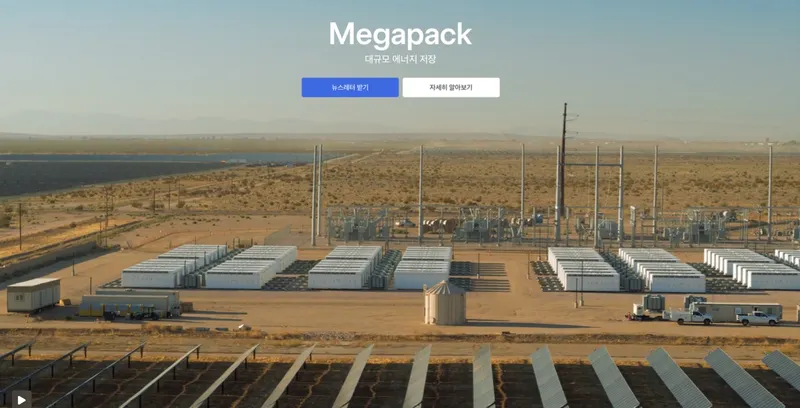
Amazon's Trainium is also less a full replacement for Nvidia GPUs than an option for AWS customers.
So the question now is not whether CUDA is about to collapse. It is how much extra customers will keep paying for the convenience and performance lead CUDA offers.
Amazon has its own problem: recouping the investment
- 2026 annual capital spending plan: $220B, company-wide
- AWS Q2 revenue growth: +37% year over year
- AWS Q2 operating margin: 39.3% ($16.6B on $42.2B)
- Companywide trailing 12-month free cash flow: -$7.6B
Source: Amazon Q2 2026 results and AP. Metrics cover different periods and accounting scopes and are shown separately.
AWS posted second-quarter 2026 revenue of $42.2 billion and operating income of $16.6 billion. But Amazon's companywide trailing 12-month free cash flow fell from positive $18.2 billion a year earlier to negative $7.6 billion.
AWS quarterly operating profit and companywide annual cash flow are different measures. Still, the picture is clear: high profitability and heavy up-front investment are showing up at the same time.
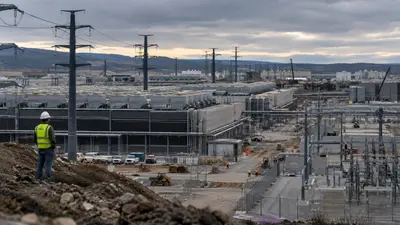
Amazon's annual capital spending plan is about $220 billion. That figure covers not only AI but also logistics, robotics and other infrastructure. AI servers in particular are expensive, and their technology cycles can be short. If demand does not grow enough, the payback period lengthens.
This is where TorchNeuron's strategic value grows. If more customers use Amazon's own chips, AWS can reduce its reliance on outside GPUs and improve its cost structure. Whether the price cut passed to customers or the profit AWS keeps is larger needs to be checked separately.
Why institutions are split on Amazon
On Oct. 19, Morgan Stanley named Amazon its top pick in internet. It cited AWS growth potential, Bedrock, and possible efficiency gains in e-commerce and robotics.
Some analysts, by contrast, warn that massive capital spending could weigh on free cash flow for a long time. Agreeing that AWS revenue growth is strong is a different matter from judging that the current investment scale is right.
| View | Bull case | Cautious case |
|---|---|---|
| AWS growth | AI demand and expanding supply | Risk of falling short of high expectations |
| Trainium | Lower chip cost and switching cost | Limits on general compatibility and optimization |
| Capital spending | Long-term competitiveness and barriers to entry | Depreciation and payback burden |
| Cash flow | Recovery from economies of scale | Losses could last longer with more spending |
In the end, this contest is likely to be decided not by chip price tags but by what customers pay for AI compute and by the cash flow suppliers keep.
Insight Times Editorial Desk