CoreWeave's Bond Slide Is the First AI Warning, and It Came From Credit, Not Stocks
CoreWeave's 2032 notes fell below 80 cents on the dollar, with yields near 15%. Why is the bond market flashing a warning at a company swamped with AI demand?
The 20-second brief
- Bond market warning: CoreWeave's unsecured notes due 2032 traded below 80% of face value. Yield to maturity was about 15%, raising credit-risk concerns.
- Growth versus cash: The company reports a backlog above $100 billion, but it also carries heavy capital spending and debt. How fast contracts turn into cash is the central question.
- What investors should check: Growth alone is not enough. Funding costs, free cash flow and the ability to refinance all need testing.
1. Bonds flagged the risk before stocks did
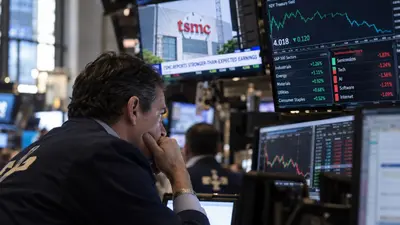
On Oct. 14, shares of AI cloud company CoreWeave fell about 15%. But the more important number was not the stock's decline. It was the yield on the company's bonds.
According to TRACE trading data cited by Bloomberg, the unsecured notes due 2032 traded below $80 per $100 of face value. Some intraday trades dropped to about $77. Yields to maturity on the 2031 and 2032 notes reached about 14.8% to 14.9%.
- 2032 notes, price: below $80 (per $100 face value)
- 2031 notes, yield: about 14.9% (market yield to maturity)
- 2032 notes, yield: about 14.8% (market yield to maturity)
A price below $80 does not mean the bonds lost 20% in a single day. It is the market price measured against face value. Nor does the coupon on existing fixed-rate bonds suddenly become 15%.
The issue is what comes next. When the company raises new money or refinances existing debt, it may be asked to pay more than before.
2. Demand is overflowing. Why are bondholders nervous?
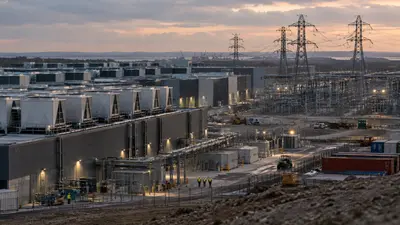
CoreWeave secures GPUs and data centers and rents computing power to AI companies. As demand grows, it needs more equipment, and buying that equipment takes a large outlay up front. Payment for capital spending often comes before the revenue from customers.
First-half 2026 cash flow
- Operating cash flow: +$3.66 billion
- Purchases of property and equipment: -$14.12 billion
- Simple free cash flow: -$10.45 billion
Net cash inflow from financing over the same period was about $13.99 billion. The company generated cash from operations, but its investment was far larger.
The debt figures also need to be separated by definition. Total borrowings in SEC filings were about $35.6 billion at the end of June 2026. The $50 billion to $52 billion figures in some outlets come from a broader measure that includes lease liabilities and other items. They are not the same thing.
The bond market is re-evaluating whether this growth model is sustainable.
3. Why a $100 billion backlog is not a comfort
CoreWeave's management points to a backlog of about $104 billion as evidence of long-term demand. Long-term contracts can improve revenue visibility and support financing. But a backlog is not cash in a bank account.
Data centers must be completed, GPUs installed, power secured, services delivered and payments collected. All of that takes time. Meanwhile the company keeps paying interest and capital costs.
GPUs are also not assets that can be rented at the same price forever. If new chip launches push down rents on existing GPUs, or customers scale back renewals, the cash flow outlook suffers.
4. Could CoreWeave's problem spread across the AI industry?
Companies such as Microsoft, Alphabet and Amazon generate large amounts of cash from existing businesses and can fund much of their AI capital spending internally. Neocloud companies that lean heavily on outside borrowing are more sensitive to changes in interest rates and credit markets.
If funding costs rise or GPU rental rates fall, the gap between margins and cash flow can widen. The risk repricing has spread to related companies such as Nebius and Oracle. But their debt structures and cash generation differ, so they should not be lumped together as carrying the same default risk.
INSIGHT TIMES VIEW: The first crack in the AI bubble may appear in finance, not demand
Even as AI services grow and data center orders rise, some companies' shares can fall sharply. Business growth and growth in the economic value that reaches shareholders are separate matters.
High interest expense, additional equity issuance and costly refinancing terms can eat away the fruits of growth. Even so, it would be premature to declare an AI-wide bubble burst from CoreWeave's bond prices alone. What the data confirms for now is a repricing of credit risk at a specific, highly leveraged company.
The variable that separates the next AI winners may be less how many GPUs a company has secured than how much cash those GPUs generate after financing costs.
5. Four things for investors to watch
| Indicator | Positive change | Warning sign |
|---|---|---|
| Bond yields and CDS | Credit risk premium narrows | High yields near 15% persist |
| Operating cash flow and capex | Cash inflow improves relative to investment | Cash shortfall widens |
| New borrowing and refinancing | Lower funding rates, staggered maturities | Worse terms, delayed funding |
| GPU utilization and rental rates | High utilization, stable pricing | Falling rents, delayed contracts |
The open question is whether the rise in bond yields is temporary fear or whether it also worsens the terms of actual new financing. If it is the latter, the problem moves beyond market sentiment and into the company's ability to grow.
The question CoreWeave put to the market
The question is simpler than it looks. It is not whether AI will make money. It is how much financing cost a company must bear until it does. The bond market is now rewriting that bill.
Insight Times Editorial Desk