The U.S. Stock Market Selloff: What Investors Should Protect—and What They Should Change
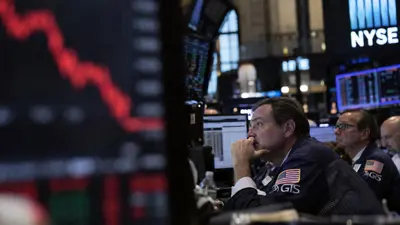
The latest U.S. stock market decline is better understood as a simultaneous reassessment of inflation, interest rates, and the profitability and financing assumptions behind AI investment—not simply as panic selling.
20초 핵심
At the same time, there is not enough evidence to conclude that AI’s long-term growth story is over. The important question is not just whether AI will grow, but which companies will generate cash from that growth and which can withstand the investment costs and debt burden.
Investors’ immediate priority should be survival, not calling the bottom. That does not mean selling every stock. It means structuring your portfolio so that further declines do not jeopardize essential spending or your investment plan—and so that you retain control over when you sell.
1. This Selloff Reflects a Collision Between Growth Expectations and Financial Reality
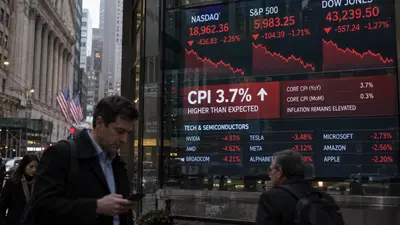
September U.S. consumer prices rose 3.7% year over year, while core consumer prices rose 2.6%, both exceeding market expectations. Interest-rate concerns and the risks facing debt-dependent AI infrastructure companies subsequently came into sharper focus.
The chain investors need to understand is:
Higher inflation → persistent interest-rate pressure → lower present value of future earnings → higher financing costs → closer scrutiny of whether massive AI investments will pay off.
For growth stocks, revenue growth alone is not enough. Investors also need to know when that revenue will become earnings and cash flow—and how the company will finance itself until then.
In this environment, AI companies should be evaluated differently depending on their financial structure. A company that can fund investment from its own cash flow should not be grouped under the same investment thesis as one that must continually raise outside capital.
2. Strong ASML Results and Falling AI Stocks Are Not a Contradiction
ASML reported third-quarter 2026 revenue of €11.7 billion and net income of approximately €5.0 billion. That is evidence that semiconductor equipment demand is translating into actual financial results. However, net income included approximately €500 million from an increase in the valuation of its investment in Mistral AI, making earnings quality an important distinction.
Higher sales for equipment suppliers do not necessarily mean that the companies buying the equipment will earn adequate returns.
The AI industry should be analyzed in three layers:
| Segment | What investors should ask |
|---|---|
| Semiconductor and equipment suppliers | Will customers sustain capital spending, and will orders translate into profits? |
| Data centers and neocloud providers | Is cash left over after financing costs, capital expenditure, and depreciation? |
| AI service providers and users | Does AI spending translate into higher revenue or lower costs? |
The first layer can report strong results while the second remains financially vulnerable. If financing becomes more difficult for the second layer, equipment orders may eventually be affected as well.
Investors should therefore separate the industry outlook—“AI demand is strong”—from the investment decision—“this company is attractive at today’s price.”
3. What Investors Should Take From CoreWeave and Gartner’s Warning
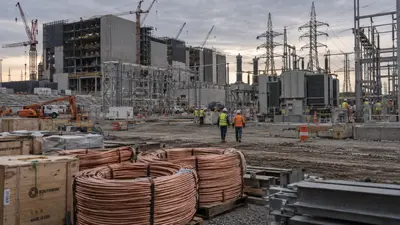
The sharp declines in CoreWeave and other AI infrastructure companies brought concerns about borrowing costs and capital-intensive business models into focus.
Gartner also warned that more than $3.5 trillion in AI infrastructure spending could be exposed to impairment by the end of 2030 if the current pace of capital spending continues. This is a conditional projection, not a loss that has already occurred or a confirmed amount of future write-downs.
The central message is not that AI has no value. It is that even if AI grows, not every dollar invested will earn an adequate return.
When analyzing an AI infrastructure company, investors should examine:
- When contracted revenue will convert into actual cash receipts.
- Free cash flow after capital expenditure.
- Debt maturities and refinancing terms.
- The economic life of GPUs and other equipment, including replacement costs.
- The sustainability of utilization rates and service pricing.
- Customer concentration and the risk of contract changes.
A falling share price does not eliminate financing risk. Investors need to determine whether the lower price offers a sufficient margin of safety—or is merely catching up with a deterioration in business value.
4. U.S. Investors Should Examine Their Account Structure Before Their Holdings
Margin accounts: Reduce the risk of forced selling before a recovery
If you are using borrowed money, first review your collateral cushion, margin-call requirements, liquidation provisions, and interest costs.
The most important question is not, “Will this company eventually recover?”
Could I be forced to sell before the recovery occurs?
Requirements differ by account and broker, so decisions should be based on your own account terms and notices. Repeatedly using living expenses or emergency savings to meet margin requirements can turn an investment loss into a household liquidity problem.
Leveraged ETFs: Do not apply a long-term stock thesis unchanged
Leveraged ETFs such as TQQQ and SOXL generally target a multiple of daily returns. Their cumulative performance over multiple days can differ from a simple multiple of the underlying index’s cumulative return, with greater volatility potentially widening that difference.
Believing that technology stocks will grow over the long term does not, by itself, resolve the risks of holding a leveraged ETF for an extended period.
Separate long-term core holdings from tactical positions, and establish maximum position sizes and loss limits. Avoid increasing leverage or committing more capital simply to recover losses.
Options: Review time as well as direction
An options position should not be managed solely on the assumption that a stock will “eventually recover.” The contract’s expiration and terms matter too.
Review:
- Whether the contract’s expiration aligns with the timeframe of the investment thesis.
- Whether potential funding needs or contractual obligations are fully understood.
- Whether the position is being repeatedly expanded to make up for losses.
- Whether the combined exposure across stocks, ETFs, and options is manageable.
Without knowing the structure of the contracts, a blanket recommendation to “hold on” would be inappropriate.
5. Long-Term Dollar-Cost Averaging and Buying the Dip Are Different Decisions
If you have a sufficiently long investment horizon, stable cash flow, and a plan to invest a fixed amount into a diversified, unleveraged portfolio, a sharp decline alone is not a strong reason to abandon that plan.
But these two actions should be distinguished:
| Action | Decision criteria |
|---|---|
| Continuing scheduled contributions | Are the investment horizon, income, emergency savings, and target asset allocation still intact? |
| Making additional purchases because prices have fallen | Do current valuations and business prospects justify taking more risk? |
Regular investment in a broad market portfolio also differs from repeatedly buying a particular AI company. If a company’s investment thesis has deteriorated, lowering the average purchase price is not sufficient justification for continuing to buy.
Long-term accounts with clearly defined purposes, such as retirement savings, should also be separated from money allocated to short-term rebound trades. An asset allocation designed for a long-term goal should not become a tool for recovering short-term losses.
6. Diversification Depends on Shared Risks, Not the Number of Holdings
Owning several stocks and ETFs can still leave a portfolio exposed to the same shock.
A portfolio combining individual Big Tech stocks, a Nasdaq ETF, a semiconductor ETF, and AI infrastructure companies may have many different names but remain heavily dependent on interest rates and AI capital spending.
Ask:
- How exposed is the portfolio if interest rates remain elevated longer than expected?
- Would slower AI capital spending hurt several holdings simultaneously?
- Is the portfolio overly dependent on one customer or one industry assumption?
- Can planned expenses still be covered if the entire account declines further?
A cash buffer should also be based on upcoming spending, income stability, borrowing, and portfolio volatility—not a universal percentage.
7. Treat PPI and a Post-Election Rally as Scenarios
September U.S. PPI is scheduled for release on October 15 at 8:30 a.m. Eastern Time.
Rather than focusing only on the immediate stock-price reaction, examine the combination of:
- Whether inflation pressure is stronger than expected.
- Whether U.S. Treasury yields continue rising.
- Whether credit concerns surrounding AI companies ease.
- Whether a technology-stock rebound holds through the close.
- Whether subsequent earnings reports show improving cash flow and investment returns.
One favorable PPI report will not resolve AI financing concerns. Conversely, if markets stop falling despite an unfavorable report, investors can reassess how much bad news has already been priced in.
A post-election rally should likewise be treated as one possible scenario, not a guaranteed timetable. A more useful question than “Can I hold until the election?” is, “Can I handle it if the market still does not recover afterward?”
8. Manage Emotions Through Rules, Not Willpower Alone
Anxiety during a selloff is natural. But investors should distinguish between fear of market volatility and the discomfort of carrying a position that is too large.
Keep the rules simple:
- Write down the reason for each trade in one sentence.
Examples include “reduce margin risk,” “cash-flow outlook has deteriorated,” or “a predefined entry condition has been met.” If the only reason is “I want to get back to breakeven,” reconsider. - Translate further losses into actual dollar amounts.
Assess what another 10% or 20% decline in the account would mean for daily life and decision-making. This is a stress test, not a forecast. - Do not set a deadline for recovering losses.
Evaluate compliance with risk limits and the investment thesis rather than demanding a recovery “by the end of this month.” - Separate price checking from risk monitoring.
A long-term cash account should not be monitored in the same way as a margin or options account. - Reduce exposure to a manageable level if necessary.
The purpose of reducing some risk is not to give up on a rebound. It is to create enough room to keep following a coherent plan.
Immediate Priorities
Take the following steps today:
- Review forced-liquidation risks and potential funding requirements across margin, leveraged, and options positions.
- Separate living expenses, emergency savings, and planned spending from investment capital.
- Calculate overlapping exposure to Big Tech, semiconductors, and AI infrastructure.
- Distinguish between holdings whose prices have fallen and holdings whose business or financial assumptions have deteriorated.
- Manage scheduled contributions and new dip-buying decisions separately.
- Monitor changes in interest rates, credit conditions, and cash flow following PPI and subsequent earnings reports.
What needs protecting is not your original purchase price or a particular rebound date. It is adequate liquidity, a valid investment thesis, and a manageable position size. If those three remain intact, waiting can be a strategy. If they do not, the account structure should change first.
- September consumer prices rose 3.7% year over year, and core prices rose 2.6%. Both were above market expectations.
- That put interest-rate worries and the debt risks of AI infrastructure companies in sharper focus. The article ties the selloff to those two concerns.
- Not necessarily. ASML reported third-quarter 2026 revenue of €11.7 billion and net income of about €5.0 billion.
- About €500 million of that income came from a higher valuation of its Mistral AI stake. Equipment sellers can do well even when their customers earn weaker returns.
- Gartner said more than $3.5 trillion in AI infrastructure spending could be exposed to impairment by the end of 2030. That assumes the current pace of capital spending continues.
- It is a conditional projection. It is not a loss that has already happened.
- They are different decisions. Scheduled contributions depend on your time horizon, income, emergency savings and target allocation.
- Extra purchases after a drop depend on valuation and the company's business prospects. Lowering your average price alone may not justify buying more.
- Margin users can review their collateral cushion, margin-call terms, liquidation provisions and interest costs. The key question is whether they could be forced to sell before a recovery.
- Leveraged ETFs such as TQQQ and SOXL generally target a multiple of daily returns. Over many days the result can differ from a simple multiple of the index's return.
체크 포인트
Insight Times Editorial Desk