The AI Correction Is Not a Buy-the-Dip Signal. It's a Profitability Screen
As AI stocks wobble, the question isn't whether the theme survives. It's where bottlenecks still convert into real orders, pricing power and yield. Memory is at the center of that question right now.

The AI correction is about profitability, not growth rates
On September 14, AI-related stocks worldwide sold off sharply. The Philadelphia Semiconductor Index fell 5.2% in a single session. Yet just over a week later, on September 22, the Nasdaq climbed back to record territory. It's hard to read that swing as the collapse of the AI growth story.
A more accurate read: the market's question has shifted. Investors have moved from "are you doing AI?" to "is AI spending actually converting into real revenue and cash flow?" That question only gets sharper as the dollar amounts grow. Reuters reported a Morgan Stanley estimate that off-balance-sheet commitments and guarantees tied to US hyperscalers, Nvidia and Broadcom now exceed $3 trillion. When the cost of capital rises, the odds of actually recouping that investment matter more than the headline growth rate.
Why chip earnings are easier to see through right now
The long-term growth case for AI software remains large. But monetization varies enormously from product to product. Paid-conversion rates, revenue per seat, usage, net revenue retention, inference costs and operating margin all need to be weighed together, because better-performing models can still coincide with falling prices and intensifying competition.
Semiconductors and infrastructure work differently. When a hyperscaler builds a data center, that generates direct orders for accelerators, HBM, server DRAM, SSDs, networking gear, and power and cooling equipment. The revenue chain is comparatively direct. That doesn't mean every chip name benefits equally. Even where demand is strong, components with weak supply constraints and limited pricing power still see limited earnings leverage.
| Semiconductors | Software | |
|---|---|---|
| Confirming AI demand | Orders, shipment volume, ASPs, lead times, utilization rates | Customer adoption, paid conversion, usage, retention |
| Monetization visibility | Often directly linked to AI capex | Wide variance depending on product competitiveness and pricing |
| Key question | Does the supply shortage and price increase persist? | Do AI features actually lift revenue and margin? |
| Key risk | Capex slowdown, capacity additions, supply normalization | Rising competition, pricing pressure, weaker differentiation |
The real memory investment case is bigger than HBM shipment volume
The core of this memory cycle is that AI servers require far more memory than before. It doesn't end with HBM. As GPU servers and AI clusters scale up, server DRAM and enterprise SSDs rise alongside HBM.
What matters more is where production capacity gets allocated. When memory makers prioritize limited wafer capacity and back-end packaging resources for HBM, server DRAM, DDR5 and enterprise SSDs, supply of commodity memory tightens as a byproduct. TrendForce said as of late September that AI and cloud demand, combined with priority allocation to HBM and server DRAM, should keep DRAM and NAND contract prices rising in the fourth quarter. At the same time, consumer demand remains weak, widening the gap between product categories.
Samsung and SK hynix: the question is no longer "will HBM4 qualify"
As of September 2026, treating Samsung's and SK hynix's HBM4 as still awaiting qualification is out of date. Samsung announced HBM4 mass production and commercial shipments in February, and SK hynix began HBM4 mass-production shipments in the second quarter. What investors need to track now isn't whether the product exists, but shipment ramp, yield, customer mix, and the speed of transition to the next generation.
| Samsung Electronics | SK hynix | |
|---|---|---|
| Nature of the investment | Combination of commodity memory upcycle, HBM share recovery, and non-memory improvement | More directly exposed to the HBM and AI-memory supply-demand imbalance |
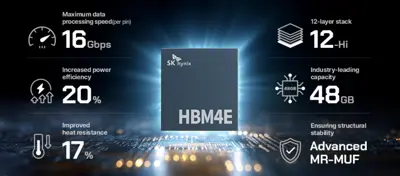
| Current checkpoints | HBM4 shipment ramp, yield, customer mix, foundry recovery | HBM4 ramp, long-term contracts, HBM4E transition, NAND/enterprise SSD profitability |
| Upside drivers | Growing share of high-value memory and HBM share recovery | Higher AI-memory mix and expanding supply contracts |
| Key risk | Slower-than-expected ramp of high-value products delaying re-rating | High expectations, expanding supply, slower price-growth rate |
What matters more than record profit is the direction of estimates
Memory stocks are less sensitive to the absolute size of "record profit" than to whether that number beats consensus, and whether next-quarter and next-year earnings estimates keep getting revised upward. Recent third-quarter profit forecasts for Korean memory makers remain very high, but some consensus figures have actually come down from three months ago, evidence that profit levels and stock direction don't always move together.
The current investment frame is straightforward: investors aren't buying today's earnings, they're buying a structure where earnings estimates can keep rising. If that structure breaks, the first warning is unlikely to come from HBM demand itself. It's more likely to show up in a capex slowdown, pre-purchased inventory buildup, a supply surge from yield improvements, or a slowdown in commodity DRAM and NAND price growth.
Insight Times Editorial Desk