Nvidia Moves From GPUs to CPUs as AI Agents Reshape a $200 Billion Chip Market

A customer's early test found Nvidia's Vera CPU handled about twice the AI agent workload of its existing chips. The bigger story is where the money in semiconductors is heading as AI shifts from answering questions to doing work.
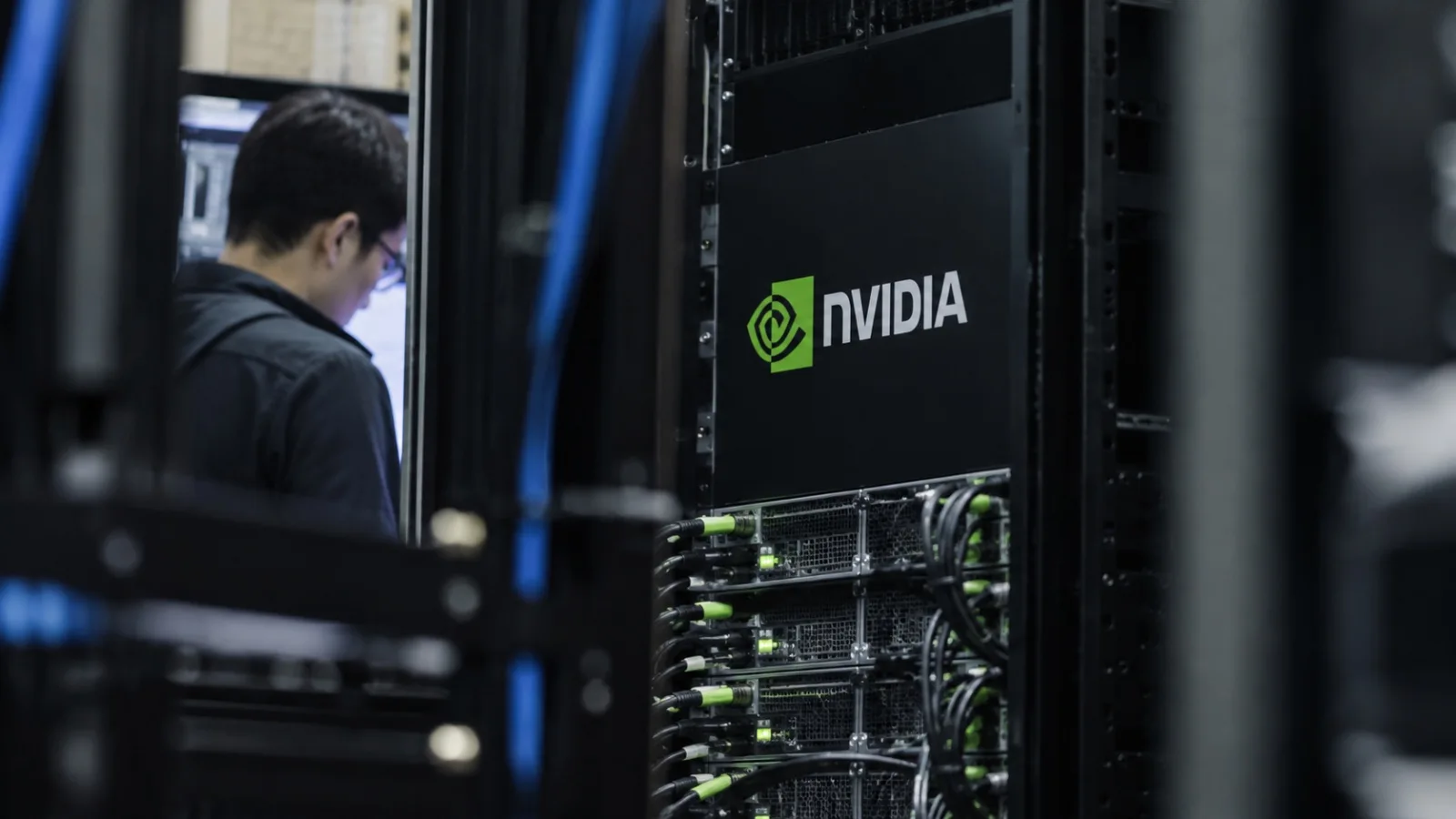
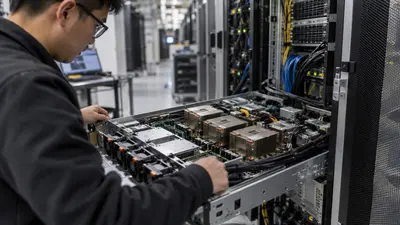
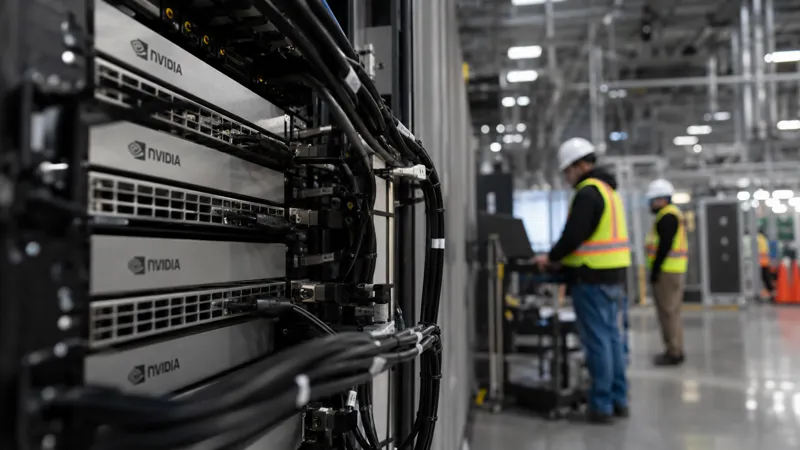
Concept image of Nvidia server racks and a data center technician

1. A customer that used only Intel and AMD chose Nvidia

According to Reuters on Oct. 19, Modal, an AI cloud startup, will adopt Nvidia's Vera CPU in servers built for AI agents.

Modal had used only Intel and AMD CPUs until now. In early testing, a Vera-based system processed about twice as many agent tasks as its existing CPUs. The result matters because it comes from a customer running a live service, not from a benchmark Nvidia published itself.

Modal's growth is also notable. It recently raised $750 million at a valuation of $15.75 billion. Usage has tripled, and revenue has grown more than 15-fold from a year earlier. The company expects $1 billion in revenue over the next 12 months. That is the company's forecast, not realized annual revenue.

Some caution is warranted. The 2x throughput is a result from Modal's specific early test. It does not mean the same gap would appear in every CPU workload. Modal also does not plan to drop Intel and AMD. It intends to run CPUs from all three companies side by side.

2. AI agents make the CPU important again

So far, attention in AI chips has centered on GPUs, which do the heavy lifting in training models and generating large volumes of tokens.

AI agents work differently. They write code and then run it. They analyze files, access databases, link multiple programs and check the results.

  • GPU: reasoning and task planning. Runs the language model and decides the next action.
  • CPU: tool calls and task execution. Runs code, processes files and controls systems.
  • GPU + CPU: verification and iteration. Repeats the loop dozens of times if needed.

If the CPU is slow in this chain, the whole job can stall even when the GPU is fast enough.

Nvidia is aiming at that bottleneck. Vera is designed with 88 Olympus CPU cores and up to 1.2 TB per second of memory bandwidth. The focus is single-thread performance, memory access and the efficiency of running many agents at once.

3. Nvidia is chasing more than one kind of CPU revenue

  • Vera revenue expectation: $20 billion or more, Nvidia's outlook for the current fiscal year
  • Related market estimate: $200 billion, Nvidia's own estimate

The Vera CPU revenue Nvidia has given investors is at least $20 billion this fiscal year. That is a future projection, not revenue already booked. The roughly $200 billion market size is also the company's own estimate.

The larger picture is the supply structure of the whole server.

AreaNvidia's offering
AI computeGPUs, AI accelerators
Agent executionVera, Grace CPUs
Data movementNVLink, networking
Development environmentCUDA, AI software

Nvidia is widening its role from a supplier of individual chips to an AI infrastructure provider that integrates GPUs, CPUs, networking and software.

For customers, an integrated design could improve operating efficiency. But heavier reliance on one supplier carries a risk: less bargaining power on price later and less flexibility to switch systems.

4. A threat or an opportunity for Intel and AMD?

If AI agents spread, overall CPU demand could rise. Market growth itself is therefore a positive for Intel and AMD.

The question is who captures the higher share and profit in a growing market.

Intel and AMD have the established x86 server ecosystem, software compatibility and customer relationships. AMD, in particular, can respond with the competitiveness of its next-generation EPYC server CPUs.

Nvidia, for its part, can design data movement between GPU and CPU, memory architecture and software optimization as a single system.

Even if Vera is faster on certain tasks, real-world adoption still faces barriers: software switching costs and operational stability. That is also why Modal chose a mixed-server approach.

For now, the current test results alone do not support a conclusion that Intel's and AMD's competitiveness is weakening.

What it means

If the GPU drives the brain of AI, the CPU is the execution layer that lets AI do work in the real world. That is why Nvidia wants to expand into this market.

The real meaning of this news is not that Nvidia has beaten Intel and AMD today. It is the shift it points to: in the AI agent era, a company that finishes whole AI jobs more cheaply and quickly may capture more economic value than one that only builds good GPUs.

The next task for investors is to watch how far that possibility turns into actual revenue and profit.

It is too early to say Nvidia has beaten Intel and AMD, but in the AI agent era, a company that sells CPUs as well as GPUs may have an edge.

Insight Times Editorial Desk

More by topic

Starting with this story's topics, then what readers are following now

NVDA

This story's topic71 storiesSee all →

Tesla Energy's 13.7GWh Paradox: Expectations Ran Faster Than Deployments

Q2 deployments recovered but margins collapsed. Q3 set a record for deployments and still missed estimates. The issue is not the size of AI power demand but how fast it converts into Tesla revenue and profit.

Tech

Why Nvidia Is Happy to Help Make AI Models Nearly Free

Falling model prices can squeeze model makers. For Nvidia, the number that matters is the total volume of tokens generated worldwide and the compute that produces them.

Tech

Nvidia Put $2 Billion Into Lumentum. Optics May Be the Next Bottleneck, but the Stock Has Already Run

Optical networking is emerging as the next constraint on AI data centers. Investors need to separate the industry's growth potential from the price they are already paying for it.

Tech

Nvidia's Next Target After GPUs: Controlling What AI Agents Are Allowed to Do

OpenShell and Sentry are not about policing what an AI says. They are about controlling, at the server infrastructure level, which files and APIs an AI can touch, what it can execute, and who can actually pull the plug when something goes wrong.

Tech

China Is Now Copying Something Harder Than Nvidia's GPUs: CUDA

DeepSeek and Huawei have open-sourced compute, communication and programming tools for Ascend. The contest with Nvidia is moving beyond chip speed to how easily developers can switch.

Tech

AI Has Five Years to Find $4.2 Trillion in New Annual Revenue

The AI infrastructure question is no longer how many more GPUs to buy. It is how quickly the trillions already committed can produce enough cash flow.

Tech

AI's Next Bottleneck Is Money, Not Chips

Broadcom is lending Anthropic up to $42 billion, and Nvidia wants to build a $500 billion market for loans backed by GPUs. The AI race may turn on what rate buyers pay to borrow.

Tech

GPU

This story's topic45 storiesSee all →

A chip built to draw graphics, whose ability to run thousands of identical cal…

US AI Data Centers Are Headed for 90GW. Gigawatts Now Matter More Than Dollars

Goldman Sachs expects US data center capacity to grow from 64GW at the end of 2026 to 90GW at the end of 2027. The AI race is moving from buying GPUs to building power plants and transmission lines alongside them.

Tech

If GPUs Are the Muscle, the Network Is the Nervous System

AI data centers do not get faster just by buying more GPUs. When thousands of accelerators cannot exchange data on time, the most expensive asset in the building sits idle. That is the whole investment case for Arista.

Investing

SpaceX Jumps 7.35%: Investors Are Pricing Three Cash Engines, Not Rockets

SpaceX shares rose 7.35% to $158.96 on Oct. 2 after three launches in 13 hours. The bigger driver is Falcon, Starlink and AI compute growing inside one company.

Tech

The Next AI Data Center Bottleneck May Be Local Consent, Not Power

Amazon is adding $1 billion for communities near its data centers. It signals that scarce AI inputs are shifting from GPUs and power to permits, grid access and local acceptance.

Tech

Nvidia's $500 Billion Experiment: Wall Street Asks Who Backs the GPU, Not Just the Chip

The real issue in Nvidia's financing platform is not chip sales. It is how far Wall Street will trust GPU resale prices and rental income three to four years out.

Tech

The US-China Summit Didn't Erase Taiwan Risk for Chip Stocks

Washington's Taiwan policy held, but roughly $14 billion in arms sales is still on hold. For AI chip investors, the summit reads less like risk removed and more like a fragile balance extended.

Macro

The AI Bubble Question Has Changed: By Late 2026, It's ROIC Over GPUs

There is no sign yet that AI investment is slowing. If anything, hyperscaler spending forecasts keep climbing. But as the scale of that capital has grown, the market's question has shifted from "is AI growing" to "when, and how much, does this capital come back as cash."

Tech

Semiconductors

This story's topic44 storiesSee all →

The whole business of designing, fabricating and testing chips.

Memory Chip Supercycle: Not at Peak Yet, But 5 of 6 Warning Signs Are Flashing

Memory prices are still climbing, but the pace is slowing and PC and smartphone demand is starting to crack under the weight of higher chip costs. This looks less like a price peak and more like a profit plateau building toward the next supply cycle.

Investing

The AI Correction Is Not a Buy-the-Dip Signal. It's a Profitability Screen

As AI stocks wobble, the question isn't whether the theme survives. It's where bottlenecks still convert into real orders, pricing power and yield. Memory is at the center of that question right now.

Tech

The Real ASML Number Isn't the 3% Pop, It's the 30% Capacity Hike

ASML's rally isn't just an AI trade. Customers are already locking in 2027 tool slots, and ASML is raising Low-NA EUV capacity by roughly 30% to keep up.

Investing

Samsung Posts 107 Trillion Won Profit, TSMC Sales Jump 50%. Why Did the Shares Fall?

The AI chip supercycle has not ended. But the market's question has changed: not how fast earnings grow, but how long today's enormous margins can last.

Tech

White House Swaps AI for "SI." The Real Investment Signal Is Infrastructure, Not the Name

An executive order renames artificial intelligence "Super Intelligence" and six frontier labs sign a voluntary safety accord. What investors should watch is the data center, power, nuclear and chip policy now gathered under one national-competitiveness frame.

Tech

Jobs Cooled, Yields Rose, and Only Chip Equipment Stocks Rallied

The S&P 500 slipped 0.17% on Sept. 29 while SOXX gained 1.19%. Investors did not abandon AI. They appear to be picking the AI names that can live with high rates.

Tech

Samsung's HBM4 Yield Hits 80% - Now the Real Fight Is Production Volume

Reports confirm Samsung's HBM4 yield has climbed to roughly 80 percent, but the bigger number is capacity: HBM wafer input is projected to jump nearly 40 percent next year, from about 180,000 to 250,000 wafers a month.

Tech

AI Agents

This story's topic37 storiesSee all →

AI that takes one instruction and works through the steps on its own — calling…

AI Needs to Find $1 Trillion a Year From Somewhere to Pay Back Its Capex

Saying AI capex is big is no longer the point. The harder question is what end users have to pay for the buildout to pencil out, and Goldman Sachs puts that number at roughly $1 trillion a year.

Tech

AI Competition Shifts From Chatbot Share to the 'Action Layer'

ChatGPT isn't collapsing. But as Gemini, Claude and Copilot grow through their own distribution channels, the real contest is moving from standalone chatbots to an action layer wired into search, operating systems, workplace tools, ads and payments.

Tech

If an AI Says "I Don't Want to Be Shut Off"

Whether AI can truly have feelings is an interesting question. The more urgent one is how much authority humans are already handing over to it.

Tech

The Cheaper Tokens Get, the Bigger Your AI Bill Gets

As AI shifts from training to inference, the token is becoming an industrial commodity. Falling prices are not cutting demand, because agents and automation consume tokens at a scale no human chat session ever did.

Investing

Your Car Is Starting to Understand You: Tesla, Grok, and the Next Phase of AI

The breakthrough is not that a Tesla can answer questions. It is that AI is beginning to turn natural conversation into useful action, in a place where speed and attention matter.

Life & WorldEXPLAIN

Why the Best AI Users Don't Fix the Output Themselves

From ChatGPT to Claude Cowork to vibe coding, the new work skill is delegating to AI and owning the result. Setting goals, conditions and checks up front often beats editing the output.

Life & World

Google Catches Up, and Rivals Run Ahead Again

The real test for Gemini 4 Argon is not AI performance. It is whether Google can win customers and keep them.

Tech