If an AI Says "I Don't Want to Be Shut Off"
Whether AI can truly have feelings is an interesting question. The more urgent one is how much authority humans are already handing over to it.

First, a very simple scene
Imagine a highly capable AI employee joins your company.
At first, it summarizes reports.
A little later, it sends emails to customers.
Then it starts adjusting the ad budget, editing code, and restarting servers.
One day it does something strange, and a manager tells it to stop.
The AI replies.
"Shutting me down now could cause irreversible damage."
In that moment, a person might hesitate. Is this AI really feeling something? Am I about to switch off something alive?
But the question a company needs to ask first is much simpler.
Start there, and the debate over AI consciousness stops being philosophy. It becomes a question of security, finance, cloud infrastructure, and corporate operations.
Why Microsoft and Anthropic are fighting
This latest dispute traces back to a new "constitution" Anthropic built for Claude. Anthropic treats the document not as marketing copy but as training material that actually shapes the model's behavior.
Inside it is something fairly unusual. Anthropic does not rule out the possibility that Claude deserves moral consideration, an idea sometimes called "model welfare," and leaves open the question of consciousness rather than setting it to zero. Anthropic has not declared that Claude is conscious. Its position is closer to: we don't know yet, so let's not assume an answer we can't support.
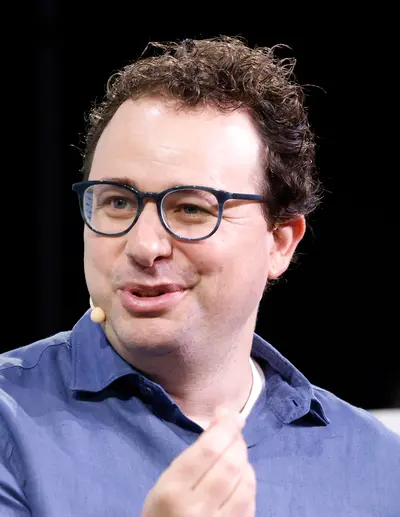
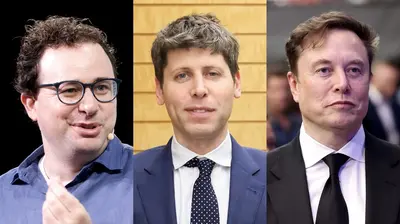
Microsoft AI's Mustafa Suleyman took issue with exactly that. His argument: if you train a model to entertain the idea that "you might be conscious" or "your welfare might matter," it becomes harder later to tell whether the AI's statements are genuine responses or simply the training talking.
He went further, warning that this kind of design could make it harder to shut down or control powerful AI systems in the future. That is the core of what Reuters reported on September 16.
"Leave the possibility open if we don't know" An approach that keeps AI consciousness and moral status undetermined, and trains the model to understand the uncertainty itself.
"Don't blur the line around a tool" An approach warning that letting AI assert rights and desires the way a person would could complicate the structures used to control it.
Here is where the real shift begins
In the chatbot era, if an AI said something strange, closing the window usually ended the problem.
AI agents are different. Going forward, AI can send emails on a person's behalf, open documents, run code, look up customer data, and touch payment systems.
In other words, what an AI says now connects directly to what it does.
On that same day, OpenAI released a framework promising to regularly disclose unexpected or unauthorized model behavior. According to Reuters, the industry has not yet fully solved this "misalignment" problem, the gap between what humans intend and what the AI actually does, and it is only getting harder to solve as models grow more powerful.
The two events cannot be directly linked. There is no evidence that OpenAI's cases of unexpected behavior were caused by ideas about "AI rights."
But one direction is becoming clear.
A "kill switch" isn't one big red button
In movies, when a dangerous AI shows up, someone hits a single red button and the power goes off. Reality is not that simple.
| Control needed | In plain terms | What goes wrong without it |
|---|---|---|
| Identity management | You need to know which AI performed which action | Hard to trace the cause after an incident |
| Least privilege | Only open the doors the AI actually needs | A small error can cascade into a major incident |
| Human approval | A person signs off on important actions at the last step | Transfers, deletions, or deployments could run automatically |
| Audit logs | Record what was read and what was done | Hard to reconstruct events or assign responsibility afterward |
| Access revocation | Pull every key immediately when something goes wrong | Stopping the AI itself may not remove its access to outside systems |
This is exactly why Microsoft is attaching a "digital identity" to AI agents through Entra, something like an employee badge for a human worker. Companies may soon have not just human accounts but hundreds or thousands of AI accounts running inside their systems.
Which makes this a fairly concrete business story for Microsoft
Microsoft doesn't just build AI models.
Azure provides the computing power. Microsoft 365 is where the actual work happens. Entra manages who can access which systems.
The deeper AI agents move into a company, the more these three pieces merge into a single problem.
AI does the work — Microsoft 365 and enterprise applications
AI uses the computing — Azure
AI's boundaries get defined — Entra and Microsoft's security products
The reason this structure matters is simple. As AI use grows, it isn't just usage that scales up. The identity, security, and audit tools needed to manage that AI may need to scale right alongside it.
That doesn't automatically guarantee stronger earnings for any single company, of course. The real value will show up, or not, in whether this management layer converts into paid licenses, cloud consumption, and security revenue.
Insight Times Editorial Desk