Chip Stocks Slide After Midterms. Is AI Spending Really in Trouble?
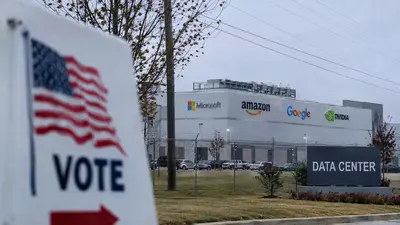
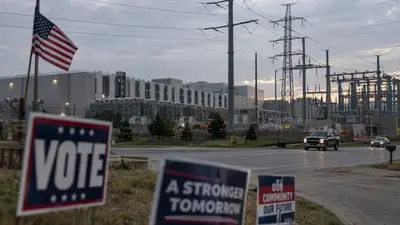
Democrats took both chambers of Congress and won the Texas and Georgia governorships. Markets quickly began to worry about tighter rules on AI data centers.
The 20-second read
1. After the election, AI stocks split into two camps
On Nov. 4, Microsoft rose 6.7% and Amazon gained 6.1%. Nvidia fell 3.2%, CoreWeave dropped 9.9%, and Modine, a maker of data center cooling equipment, lost 21.4%.
| Company | Nov. 4 move |
|---|---|
| Microsoft | +6.7% |
| Amazon | +6.1% |
| Nvidia | -3.2% |
| CoreWeave | -9.9% |
| Vertiv | -12.9% |
| Modine | -21.4% |
Based on regular-session closes. Rounded to one decimal place. Compiled by StockTitan.
One hypothesis explains the gap.
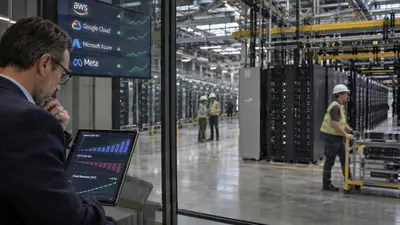
Large platforms that already have data centers and customers look relatively well placed. Companies that need to build data centers or supply equipment to grow revenue are more sensitive to new permitting rules.
Still, one day of trading cannot be pinned entirely on the election. The profitability of AI capital spending, debt burdens and growth expectations already in share prices may also have played a part.
2. Texas's data center rules are not just talk
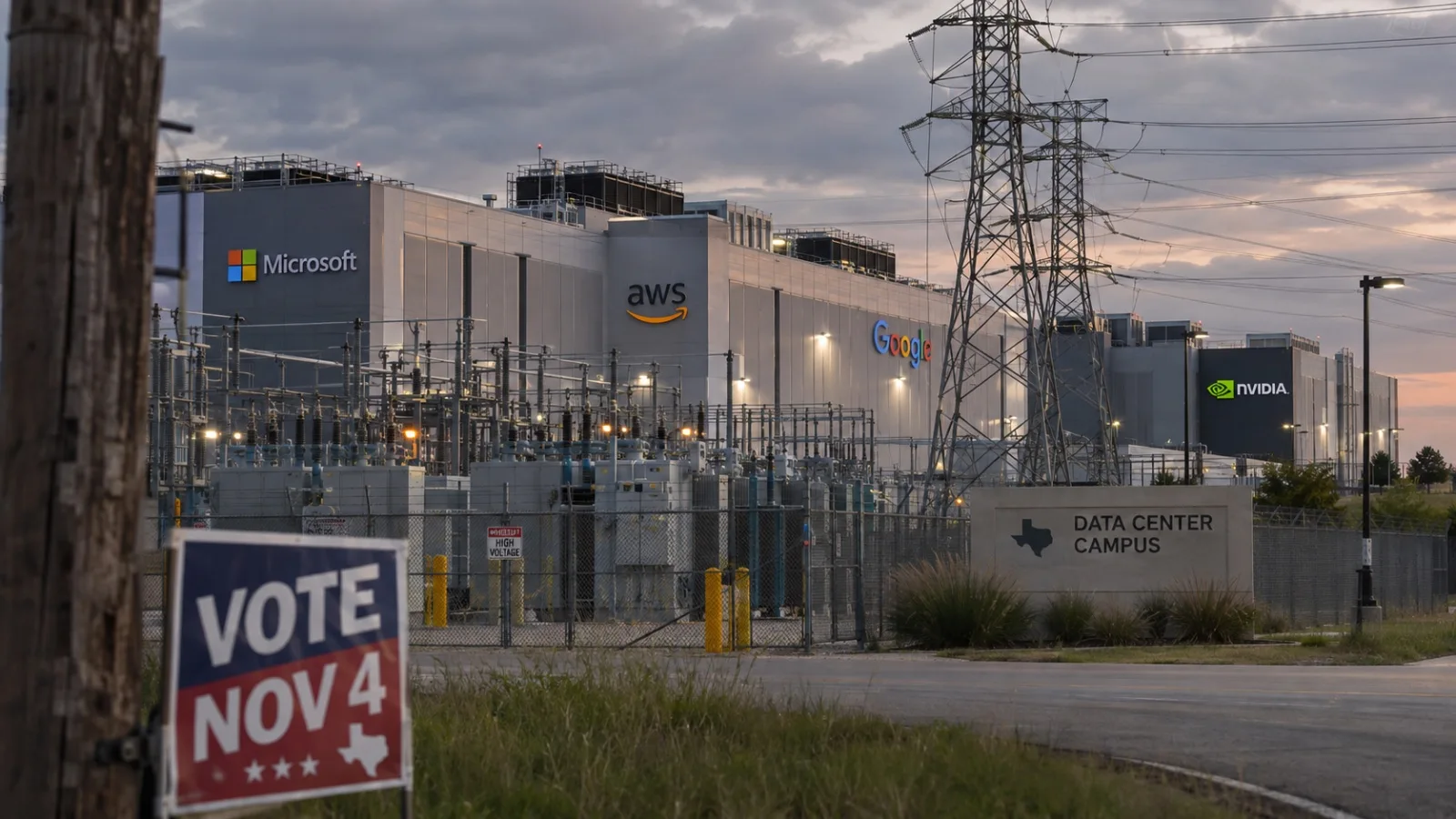
Gina Hinojosa, the Democratic governor-elect of Texas, has promised a moratorium on approvals of new data centers. She says she will put new legal protections in place so communities do not bear the cost of higher power bills and water use.
The push to regulate did not begin with the Democratic win.
Republican Gov. Greg Abbott was already restricting data center grid connections and environmental permits, and was investigating how they operate. Residents' electricity bills and water scarcity have become political pressure that crosses party lines.
So the key variable after the election is not whether data centers are banned for good. It is how long a halt in approvals lasts, and on what terms construction resumes.
3. 2027 and 2028 are very different stories
2027, top 20 states: 75%. Share of planned capacity already under construction.
2028, entire US: 62.2 GW. Projected net new power capacity, a large part of it not yet started.
The 75% figure for 2027 is based on 33.8 GW of planned capacity in the top 20 states. The 62.2 GW figure for 2028 is a projection of net new capacity for the whole US, so the denominators differ. Source: SemiAnalysis.
These numbers are at the heart of the debate.
Projects already under construction are harder to cancel than new ones. A political shift is therefore relatively unlikely to knock out 2027 AI infrastructure supply right away.
Many of the projects planned for 2028, by contrast, have no firm permits, power connections or construction schedules. If regulation drags on, delays and higher costs could pile up.
Even if AI demand holds, orders for chips and servers could slip if the facilities to run them are not finished on time.
4. Who stands to gain, and who to lose?
| Type of company | Likely impact and key variable |
|---|---|
| Big Tech with existing data centers | Existing capacity could become scarcer and more valuable. But their own expansions also face regulatory burdens |
| Neoclouds and new data center developers | Relatively vulnerable to permitting delays and interest on debt |
| Nvidia and memory chips | Long-term demand does not vanish, but new server orders could be delayed |
| Power, cooling and construction equipment makers | Risk that revenue recognition shifts as projects start later |
| AI software | Little direct effect from construction rules, but costs could rise if computing supply runs short |
There is another paradox here.
If data center supply is limited, the value of facilities already running could rise. At the same time, growth expectations for the GPUs and cooling equipment that will be supplied later could fall.
Big Tech is not an automatic winner, though. Microsoft and Amazon also need new capacity. The loss from delayed expansion could outweigh the benefit of scarcer existing capacity.
The bottom line
The election looks less like a signal of the end of the AI industry than the moment the market began to reassess how fast, and at what cost, AI infrastructure can actually be switched on.
Stocks moved sharply in a day, but data centers take years to finish. For long-term investors, the timetable to watch may be on construction sites rather than on price charts.
- A nationwide halt would require separate legislation and an enforcement process. The more direct risk right now is permitting and grid connection limits set by state and local governments.
- They are in a relatively better position than new plans, but they are not completely safe. Delays in power connections, additional environmental permits, and rising construction costs are still possible.
- If it is a short-term sell-off explained only by the regulatory shock, a rebound is possible. But if earnings forecasts and valuations are both revised down at the same time, the case for buying the dip weakens.
What to watch
Insight Times Editorial Desk