Why Residents Push Back on AI Data Centers, and What OpenAI Is Promising

OpenAI has unveiled a community compact for its future campuses. For investors, the timing of power hookups and approvals may matter more than the size of the build.
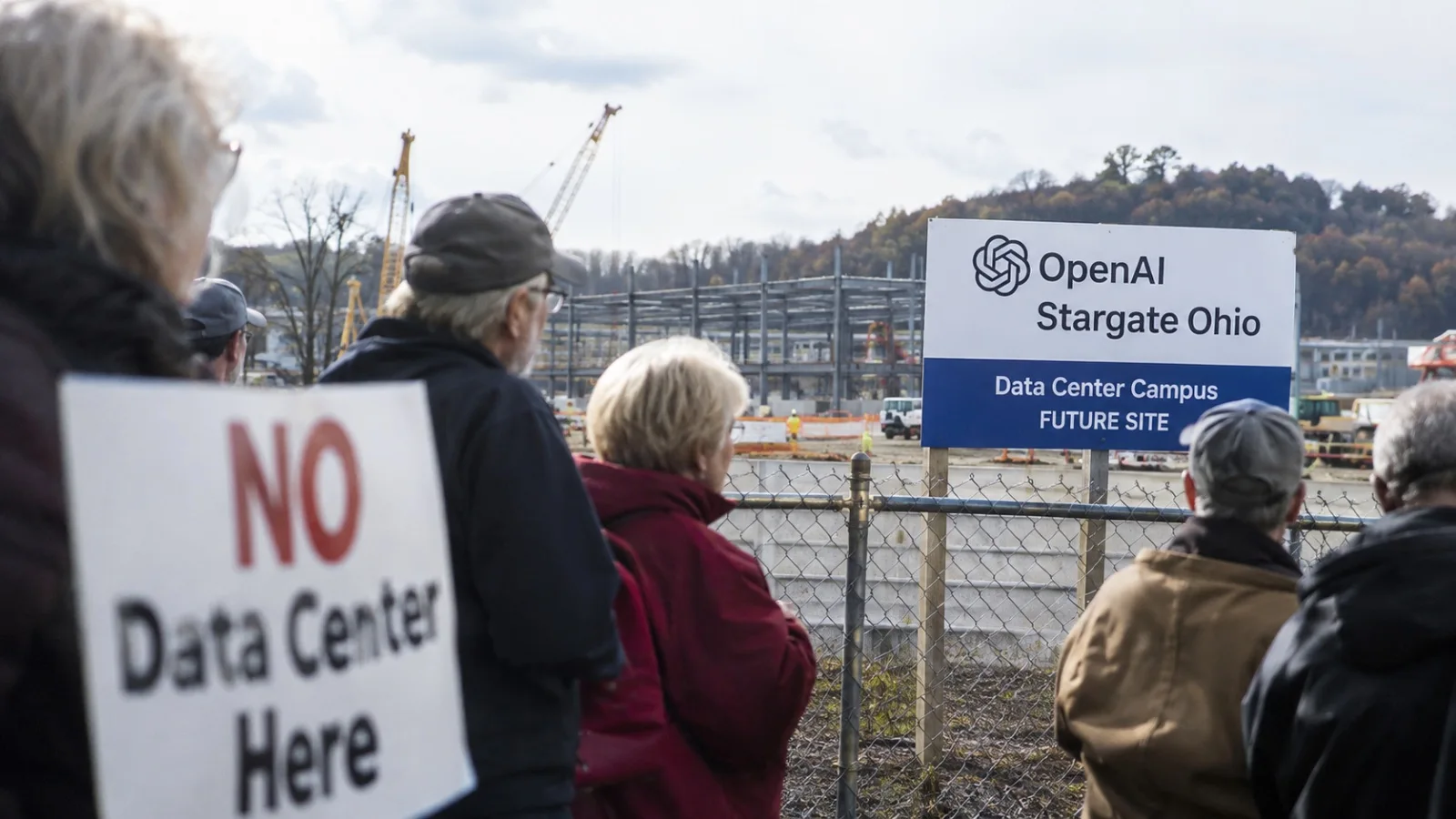
The 20-second read

1
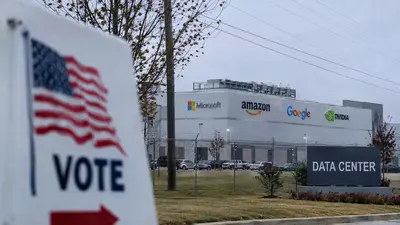
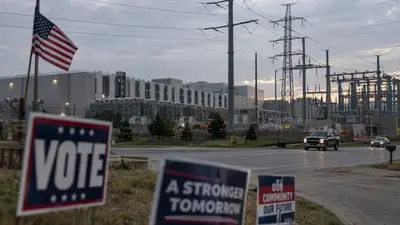
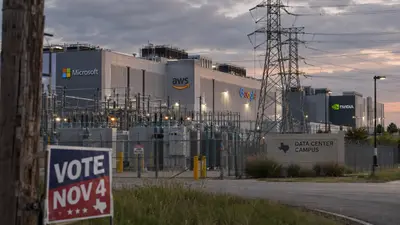
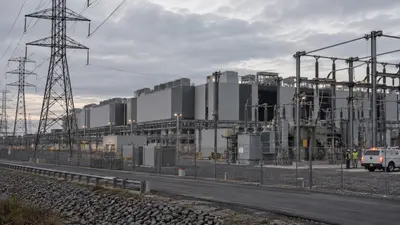
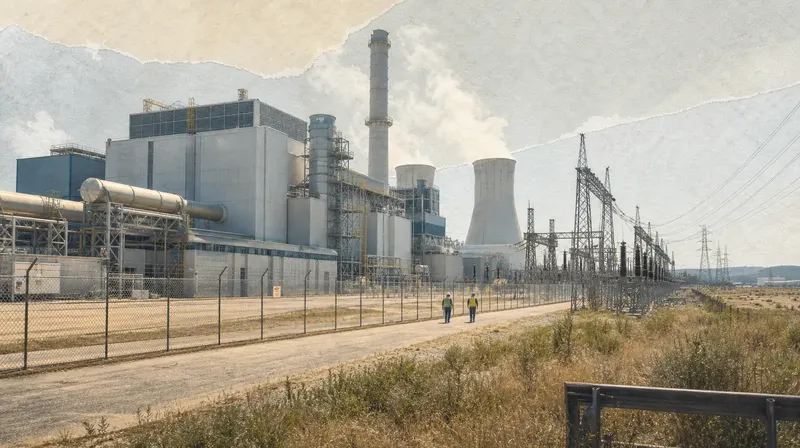
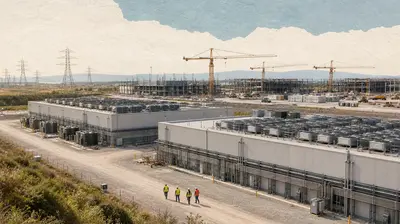
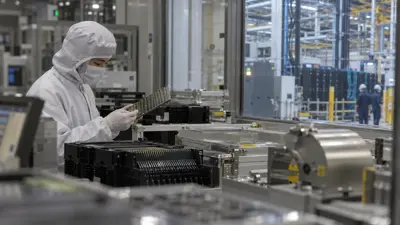
A data center can't be built on just any empty lot. It needs large amounts of power, cooling facilities and communications networks, and the burden of those needs falls on the surrounding area.
2
OpenAI promised transparency in its negotiations with local governments, covering the cost of power, disclosure of water use and noise, and reporting on local jobs.
3
Permitting delays could affect not only OpenAI's expansion of computing capacity but also infrastructure providers such as Oracle, in getting facilities running and recovering their investment.

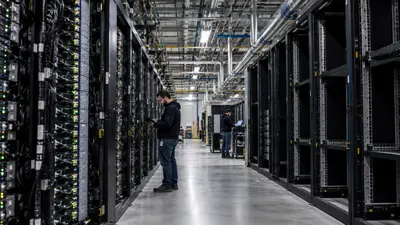
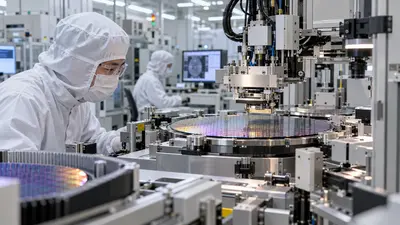
A data center is not a warehouse that only needs a big plot of land. It needs a stable supply of enormous amounts of electricity, plus high-speed fiber and cooling systems.

1. The US has so much land. Why our town?

The US power grid is not spread evenly. Cheap land may lack power lines, and places with plenty of power may already have been claimed by other companies.

So companies prefer sites close to existing substations, transmission lines and fiber networks. People already live in those places. However large the country is, land where a data center can be built economically is limited.

2. What are residents unhappy about?

The biggest issue is the imbalance between costs and benefits.

  • Electricity bills: the chance that residents share the cost of new transmission lines and generation.
  • Cooling water: strain on local water supplies, and worries about who gets priority in a drought.
  • Noise and environment: the effect of cooling fans, backup generators, night lighting and construction traffic on daily life.
  • Jobs and taxes: doubts over whether long-term hiring is enough given large tax breaks and construction spending.

The power bill concern is not just vague anxiety. A 2026 study by MIT researchers estimated that a data center's arrival raised average residential electricity rates for that utility's customers by about 2.1%. That is an average estimate that depends on the study's sample and method. In regions with spare grid capacity, a large new customer could even reduce the burden on bills.

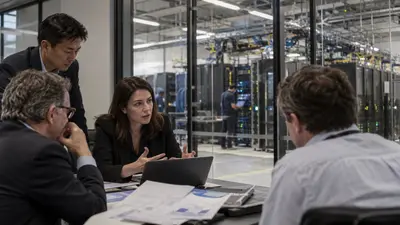
What residents really want to know is simple. While a company invests billions of dollars and profits, what does the town keep, and what does it have to pay for?

3. What has OpenAI promised?

OpenAI's new National Community Compact covers data center campuses it will own and operate directly in the future.

It says it will generally avoid nondisclosure agreements, while leaving legitimate exceptions such as security and trade secrets. The company plans to pay for the power it consumes and the infrastructure it needs. It also plans to provide financial guarantees so that other power customers do not bear the costs if a project is halted.

It also plans to disclose each facility's power and water use, results of independent noise studies, and expected jobs against actual hiring.

What matters is follow-through, more than the promise itself. If greater transparency wins over residents, permitting disputes could ease. On the other hand, disclosure alone does not settle cost burdens or environmental concerns.

4. 2,500 jobs: how big a benefit for the local economy?

  • 2,500 jobs: based on OpenAI's business plan.
  • $80,000: average annual pay, a projection and not a confirmed payroll figure.

OpenAI expects 2,500 long-term operating jobs at its Pike County, Ohio project, with projected average annual pay of $80,000. Executives said server equipment must be replaced every three to five years, which could create ongoing work.

That is an attractive offer for a local economy. But not all equipment replacement work turns into permanent hiring. Outside specialist contractors could do it, and the number of jobs that actually go to local residents may differ.

Investors and residents alike should separate the headcount a company projects from the number of permanent staff it actually employs.

5. For investors, completion timing matters more than construction cost

AI data center profits generally come not from announcing a build, but from receiving power and running servers.

The key chain in the data center business

  1. Securing the site and talking with residents
  2. Permits and power connection
  3. Completing the data center and installing servers
  4. Starting customer service and generating revenue
  5. Recovering operating costs and the cost of capital

Conceptual diagram. Actual revenue recognition and contractual payment timing can differ by company.

Infrastructure partners such as Oracle, which build or operate data centers to meet OpenAI's computing demand, can be exposed to project delays. Money goes into equipment and land first, so a late start can lengthen the time needed to recover the investment.

Microsoft, as a major AI infrastructure investor, is also affected by the power grid and permitting environment. Ownership structures, customer contracts and capital burdens differ by project, however, so the risks at the three companies cannot be treated as the same.

The US debate over AI data centers comes down to one question. How will the enormous economic value AI creates be shared with the communities that host the facilities?

Companies that answer it convincingly may build data centers faster and, over time, could earn better returns on their investment.

The US has plenty of desert. Why not just build there?
  • Some projects can do that, but developers also have to consider transmission lines, communications networks, water supply, cooling efficiency and construction costs.
  • Having a lot of empty land is a different matter from being able to run a data center economically.
Do electricity bills always go up when a data center arrives?
  • Not necessarily. It depends on spare capacity in power plants and the grid, rate regulation, and how the cost of new facilities is shared.
  • If the existing grid is used efficiently, the local area could even benefit.
If residents object, does all construction stop?
  • No. Local votes include both legally binding bans and advisory votes.
  • Opposition in some areas should not be stretched into a nationwide ban on data center construction in the US.
Should investors in Oracle or Microsoft lower their outlook for AI growth?
  • Resident opposition alone doesn't make it easy to conclude that demand for AI services has weakened.
  • What matters is the effect on individual project schedules, higher capital costs, and actual revenue and cash flow.

What to watch

Local permits and referendumsMore approval delays or restrictions would weigh on data center supply schedules.
Timing of power hookupsWhen electricity can be supplied to a finished building is the key to when it actually starts running.
Sharing of grid investment costsCheck how much of the cost of new power facilities the developer bears.
Actual jobs and local contributionCompare the announced job forecasts with hiring after operations begin.
Cash flow at infrastructure firms such as OracleCheck how quickly contract revenue and cash collection follow the increase in construction spending.
Data center profits likely hinge on local buy-in and power connections, not on announcements.

Insight Times Editorial Desk
More by topic

Starting with this story's topics, then what readers are following now

Investor psychology, decision-making and books on investing

Data Centers

This story's topic99 storiesSee all →

A building that houses servers and networking gear and supplies them with powe…

Nvidia and Palantir Put AI Inside the Supply Chain - The Real Shift Is That It's Learning Judgment

A single Vera Rubin rack holds 1.3 million parts. The real breakthrough in Nvidia and Palantir's new supply chain AI isn't automating that complexity, it's capturing the judgment calls that used to live only in planners' heads.

Tech

Why the White House Swapped "AI" for "Super Intelligence"

Executive Order 14434 renames AI across the federal government without defining a new technology. The real story is about roughly $700 billion in capex, free cash flow and electricity.

Tech

US AI Data Centers Are Headed for 90GW. Gigawatts Now Matter More Than Dollars

Goldman Sachs expects US data center capacity to grow from 64GW at the end of 2026 to 90GW at the end of 2027. The AI race is moving from buying GPUs to building power plants and transmission lines alongside them.

Tech

2027 Investing Needs Alignment, Not Prediction

A new investing book argues the hard part was never picking the next winner. It's staying aligned with where value and bottlenecks are moving while keeping old human weaknesses in check.

Investor Mind

AMD Crossed $1 Trillion, and the Market Started Looking at CPUs Again

AMD's stock topped a $1 trillion market cap for the first time. The rally isn't just about being an Nvidia alternative. It reflects a reassessment of AMD as a full-stack AI infrastructure vendor, one that bundles CPUs, GPUs and networking, as AI shifts from chatbots to agents and reignites data center demand for CPUs.</deck> <parameter name="oneline">As AI moves from chatbots to agents, the market has started counting the CPU sitting next to the GPU again.

Tech

Why Nebius Is Keeping Some 2027 AI Capacity Off the Shelf

Nebius mixes long-term contracts, short-term premiums and auctions. Holding back capacity pays only if the servers stay busy, and it is not yet clear the pricing will last.

Tech

DeepSeek's $15 Billion Raise: Model Makers May Feel It Before Nvidia Does

China's DeepSeek is closing a round about twice its original target. For US investors, the question is less the size of the check than where the money goes and whose profits it could erode.

Tech

MSFT

This story's topic22 storiesSee all →

The Cheaper Tokens Get, the Bigger Your AI Bill Gets

As AI shifts from training to inference, the token is becoming an industrial commodity. Falling prices are not cutting demand, because agents and automation consume tokens at a scale no human chat session ever did.

Investing

Tesla Semi Waited 9 Years. Now It's Rolling Off a Real Factory Line

The Tesla Semi, unveiled back in 2017, has finally reached full-scale production at a dedicated Nevada plant. The number investors should watch isn't the 50,000-unit annual capacity, though. It's what the truck actually saves per mile.

Tech

Why Microsoft Rebuilt Copilot: AI Billing Shifts From Seats to Workload

The redesign is less about new features than about Microsoft expanding its enterprise AI revenue model beyond the per-seat subscription into task delegation and agent execution.

Tech

AI Was Supposed to Live in the Cloud. Apple Is Bringing It Back to the Desktop.

Four Mac Studios running a trillion-parameter model matters less than the economics behind it: heavy, repeated AI use can make owning compute cheaper than renting it by the token.

Tech

The industry wins, the shareholder loses: AI's most awkward scenario

The biggest risk in AI is not that the technology fails. It is that AI works, spreads through the economy, and still destroys returns because too much capacity gets built. The internet succeeded. Plenty of dot-com investors did not.

Investing

Trust the Model, Never Fully: Nadella's Rule for the Superintelligence Era

The next AI contest is not only about how smart models are. It is about what permissions they get, how they are monitored and when they can be stopped.

Tech

Burry's AI Bubble Warning Moves From Prices to the Balance Sheet

Michael Burry's case has shifted from expensive stocks to debt, long-term commitments and private credit. New BIS data supports part of it. Microsoft's results complicate the rest.

Investing

HBM

75 storiesSee all →

Memory stacked next to the GPU.

AI Chip Peak Check: Demand Still Rising, Risk Building in 2027-2029 Supply and Funding

DRAM and NAND contract prices are still climbing and HBM suppliers hold the edge. Power shortages, AI financing costs and simultaneous memory expansion are the risks for later years.

Investing

Has Memory Peaked? Prices Are Cooling, but the Shortage Looks Set to Run to 2028

Price growth has slowed and consumer demand is already breaking. Server and HBM supply remains short, and Micron says more than 75% of its 2027 volume is already committed to customers.

Tech

The Real ASML Number Isn't the 3% Pop, It's the 30% Capacity Hike

ASML's rally isn't just an AI trade. Customers are already locking in 2027 tool slots, and ASML is raising Low-NA EUV capacity by roughly 30% to keep up.

Investing

2027 Isn't the End: Citi's Case for a Memory Supercycle Running to 2031

Citi says the memory shortage timeline is stretching again. If AI shifts from "train once" models to continual learning, HBM, server DRAM and enterprise SSDs could all fall short at the same time.

Tech

AI Chips Haven't Peaked. The Real Risk Sits in 2028 Supply

HBM and server DRAM shortages are now spreading into enterprise SSDs. The question isn't today's strength, it's how much new capacity these prices are pulling in and when it lands.

Investing

The Next AI Chip Race Is About How Chips Connect

Applied Materials will lift its stake in Dutch equipment maker BESI from about 9% to 20%. The bet is less about control than about a new way to link chips.

Tech

AI's Peak Isn't Next Year: How to Invest for 2029 Now

Growth in AI infrastructure spending may slow, but the money is likely to move from memory and power toward enterprise AI, data, security and robotics. Investors may do better to track the order in which profits shift than to guess when AI ends.

Investing

NVDA

92 storiesSee all →

Amazon Goes After Nvidia's Strongest Moat, and It Is Software, Not GPUs

Amazon's open-source TorchNeuron aims to let existing AI code run on its Trainium chips. The contest comes down to the total cost of AI compute and the return on Amazon's $220 billion in annual capital spending.

Tech

AI's Next Bottleneck Is Money, Not Chips

Broadcom is lending Anthropic up to $42 billion, and Nvidia wants to build a $500 billion market for loans backed by GPUs. The AI race may turn on what rate buyers pay to borrow.

Tech

China's AI Labs Went Open Source Because They Had to, Not Because They Wanted To

A GPU shortfall pushed Chinese AI labs toward efficiency and open weights, and that constraint is now reshaping the global competition over who controls AI's basic infrastructure.

Tech

Nvidia's Next Target After GPUs: Controlling What AI Agents Are Allowed to Do

OpenShell and Sentry are not about policing what an AI says. They are about controlling, at the server infrastructure level, which files and APIs an AI can touch, what it can execute, and who can actually pull the plug when something goes wrong.

Tech

The US-China Summit Didn't Erase Taiwan Risk for Chip Stocks

Washington's Taiwan policy held, but roughly $14 billion in arms sales is still on hold. For AI chip investors, the summit reads less like risk removed and more like a fragile balance extended.

Macro

ASML Is Discussing 2030 Orders. How Long Can the AI Chip Supercycle Last?

Despite bubble worries, ASML sees equipment shortages through 2028. Investors should watch future production capacity, not just today's orders.

Tech

Tesla Energy's 13.7GWh Paradox: Expectations Ran Faster Than Deployments

Q2 deployments recovered but margins collapsed. Q3 set a record for deployments and still missed estimates. The issue is not the size of AI power demand but how fast it converts into Tesla revenue and profit.

Tech