SoftBank Bet $64.6 Billion on AI. Why Is the Market Pricing Default Risk?

Believing in AI's future is not the same as backing a company that can survive until it arrives. SoftBank's credit spike raises that question for long-term investors.
The 20-second read

1
Warning from the credit market: On November 6, SoftBank shares fell 10.8%, and its 5-year CDS spread rose to 466bp, the highest level since October 2022.
2
A $64.6 billion investment: SoftBank secured about a 13% stake in OpenAI, but it will take time to recover the large sums tied up in unlisted assets.
3
A new question for long-term investors: It is not enough to ask whether AI will succeed. Investors also need to check whether the companies they invest in can manage their debt and cash flow until they reap the rewards of that success.

It bet on AI's future, and the market is worried about the debt

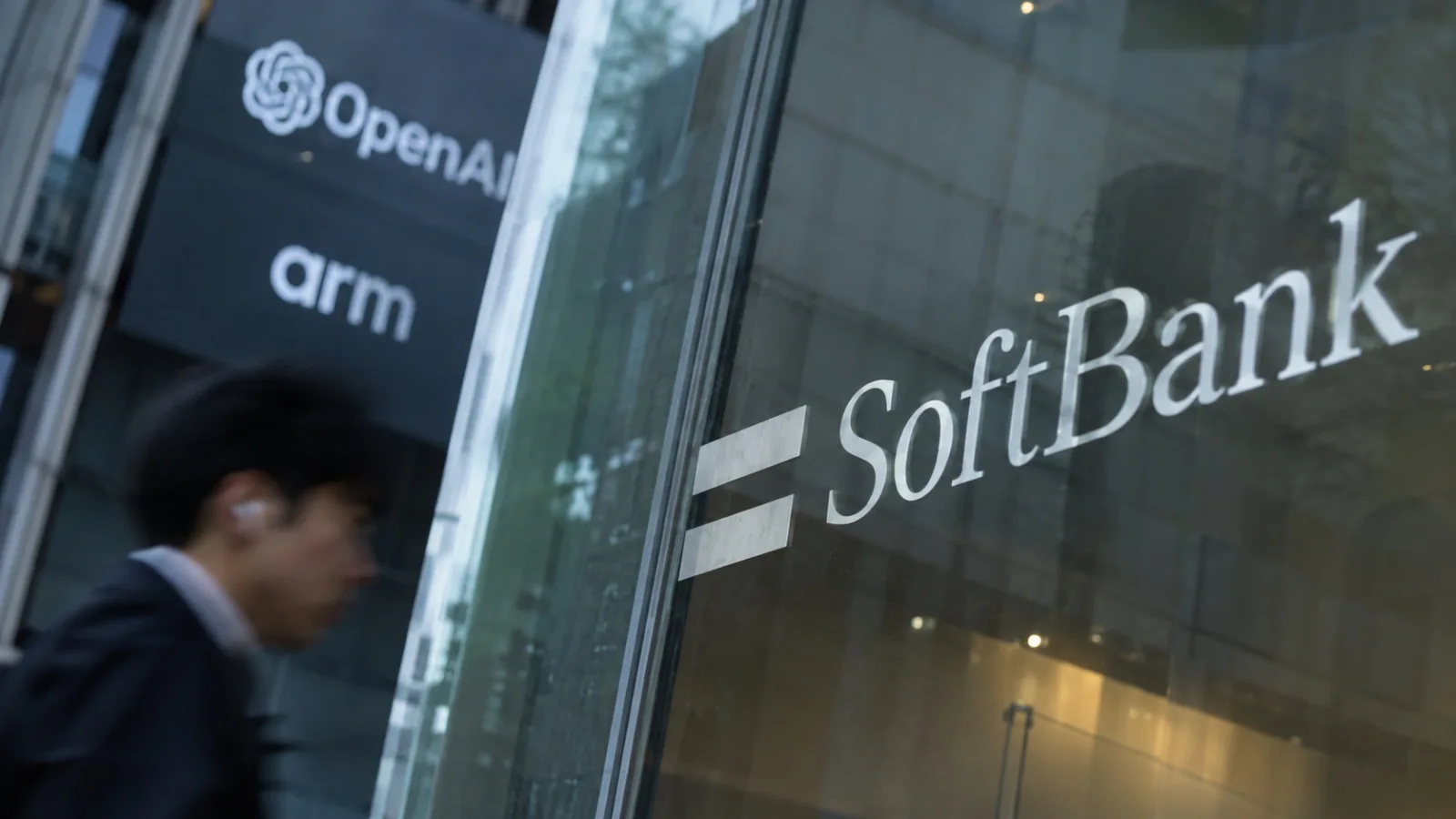
SoftBank is one of the most aggressive investors of the AI era. It has put a cumulative $64.6 billion into OpenAI and holds about 90% of chip designer Arm. It is also putting money into AI data center development.

On Nov. 6, the market reacted in the opposite way.

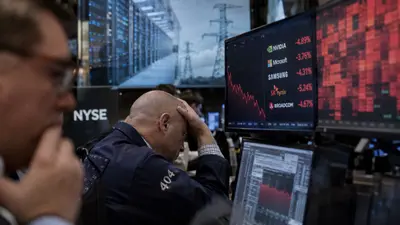
SoftBank shares fell 10.8% in a single day. The credit default swap (CDS) spread, which prices protection against a company failing to repay its debt, rose as high as 466 basis points intraday. That is the highest in about four years.

MetricFigureNote
5-year CDS high466bpHighest since October 2022
Nov. 6 share move-10.8%Concern over the financial burden of AI investment
Cumulative OpenAI investment$64.6B
OpenAI stakeAbout 13%Per SoftBank

A CDS works like insurance against default. At 466bp, the annual cost of credit protection is about 4.66% of the protected principal. Protection on $10 million of debt would cost roughly $466,000 a year in simple terms.

A CDS price is not the same as an actual probability of bankruptcy, though. It also reflects risk aversion, expected recovery rates and trading liquidity.

What matters is that the market has become more sensitive to the financing costs SoftBank must carry until its returns are realized than to the returns themselves.

Two clocks run in AI

AI has a technology clock and a financial clock.

The technology clock is long. It can take years for models to improve, customers to grow and new markets to open.

The financial clock does not wait. Interest is due on set dates. Borrowed money must be repaid or refinanced at maturity.

SoftBank's OpenAI investment shows the gap.

On Oct. 1, SoftBank said it had fully funded its additional $30 billion investment. Its cumulative total is $64.6 billion, for a stake of about 13%. The final $10 billion came from corporate bond proceeds.

Even if OpenAI's valuation rises over the long run, that does not immediately add cash to SoftBank. It can recover part of its money only when a listing or stake sale becomes possible. Reuters has reported that OpenAI's IPO timeline has slipped to 2027.

Assets can gain value faster than cash arrives. A company that fills that gap with debt faces more pressure when financial markets get nervous.

Is SoftBank actually in danger?

The numbers on the other side deserve a look.

As of the end of June 2026, SoftBank reported asset value of 83.11 trillion yen and net debt of 10.81 trillion yen. Net debt divided by asset value, its loan-to-value (LTV) ratio, was 13.0%. That is below the company's normal management target of 25%.

So SoftBank has a substantial asset base. Reading the CDS jump alone as a sign that bankruptcy is imminent is a stretch.

Still, June-end figures do not explain all of November's risk. Additional borrowing and asset price moves have occurred since.

Traded assets such as the Arm stake can be turned into cash if needed. But if the share price falls sharply, both the amount that can be sold and the collateral capacity shrink. Unlisted stakes such as OpenAI are less liquid still.

The question is less how many assets a company has than at what cost it can convert them to cash when it needs to.

Who has the edge in AI investing?

Even with exposure to the same AI growth, funding methods can change outcomes.

CategoryRelatively favorable structureStructure that can add strain
Funding sourceCash flow from existing businessesBorrowing, repeated fundraising
PaybackProduct revenue and cash inflowListing, stake sales
Financial shockCash and borrowing capacity on handHigher refinancing costs
Core riskLower return on investmentLiquidity pressure and asset sales

Companies such as Microsoft and Alphabet generate substantial cash from existing businesses. They have more room to absorb delays in AI returns. AI infrastructure operators that rely more on borrowing or outside capital may be more sensitive to market conditions.

Even a strong balance sheet does not protect shareholder returns if spending on AI is excessive. Nor is leveraged investment necessarily bad.

The key is whether returns on investment can clear the cost of capital by a sufficient margin.

Does a CDS of 466bp mean SoftBank is about to go bankrupt?
  • No. CDS is the price of credit protection traded in the market, and it is not an indicator that confirms an actual bankruptcy.
  • However, if it stays at a high level, it can be read as a sign that the funding burden has grown.
If OpenAI's value keeps rising, won't the problem be solved?
  • Rising asset values are a positive, but cash does not come in right away.
  • The timing of the investment recovery, the possibility of selling the stake, and the maturity of borrowings all have to line up.
Are SoftBank and Nvidia exposed to the same AI investment risk?
  • For SoftBank, the key variables are the value of its investment assets and its financial structure.
  • For Nvidia, the more direct variables are actual chip sales, profit margins, and whether customers keep investing. The shared AI theme alone does not mean they carry the same risk.
What should long-term AI investors do now?
  • Rather than making an investment decision based on the CDS surge alone, check changes in the financial structure and corporate value.
  • Review the net debt, free cash flow, capital spending, and debt maturities of the companies you hold, and also assess how much growth expectations are already reflected in the stock price.

What to watch

LTV and net debtCheck how much the financial cushion shrinks if asset values fall or more borrowing is added.
CDS and new corporate bond yieldsCheck changes in the risk premium the market demands and in the actual cost of funding.
OpenAI investment recovery pathCheck the IPO schedule, the possibility of a stake sale, and whether cash comes in after the investment.
Arm share price and collateral capacityCheck how changes in the value of its key listed asset affect SoftBank's financial flexibility.
Cash on hand and debt maturitiesCheck whether upcoming repayments can be covered by cash on hand and committed sources of funding.
SoftBank shows that AI's technology clock and its debt clock can differ, but the numbers so far do not make this a bankruptcy story.

Insight Times Editorial Desk
More by topic

Starting with this story's topics, then what readers are following now

Investor psychology, decision-making and books on investing

Data Centers

This story's topic97 storiesSee all →

A building that houses servers and networking gear and supplies them with powe…

Nvidia and Palantir Put AI Inside the Supply Chain - The Real Shift Is That It's Learning Judgment

A single Vera Rubin rack holds 1.3 million parts. The real breakthrough in Nvidia and Palantir's new supply chain AI isn't automating that complexity, it's capturing the judgment calls that used to live only in planners' heads.

Tech

US AI Data Centers Are Headed for 90GW. Gigawatts Now Matter More Than Dollars

Goldman Sachs expects US data center capacity to grow from 64GW at the end of 2026 to 90GW at the end of 2027. The AI race is moving from buying GPUs to building power plants and transmission lines alongside them.

Tech

Why the White House Swapped "AI" for "Super Intelligence"

Executive Order 14434 renames AI across the federal government without defining a new technology. The real story is about roughly $700 billion in capex, free cash flow and electricity.

Tech

2027 Investing Needs Alignment, Not Prediction

A new investing book argues the hard part was never picking the next winner. It's staying aligned with where value and bottlenecks are moving while keeping old human weaknesses in check.

Investor Mind

AMD Crossed $1 Trillion, and the Market Started Looking at CPUs Again

AMD's stock topped a $1 trillion market cap for the first time. The rally isn't just about being an Nvidia alternative. It reflects a reassessment of AMD as a full-stack AI infrastructure vendor, one that bundles CPUs, GPUs and networking, as AI shifts from chatbots to agents and reignites data center demand for CPUs.</deck> <parameter name="oneline">As AI moves from chatbots to agents, the market has started counting the CPU sitting next to the GPU again.

Tech

Why Nebius Is Keeping Some 2027 AI Capacity Off the Shelf

Nebius mixes long-term contracts, short-term premiums and auctions. Holding back capacity pays only if the servers stay busy, and it is not yet clear the pricing will last.

Tech

DeepSeek's $15 Billion Raise: Model Makers May Feel It Before Nvidia Does

China's DeepSeek is closing a round about twice its original target. For US investors, the question is less the size of the check than where the money goes and whose profits it could erode.

Tech

IPO

This story's topic18 storiesSee all →

Anthropic's IPO: The Number That Matters More Than $100 Billion Is $2 Trillion

Claude-maker Anthropic is growing at a stunning pace, but the real question for investors is not how fast, only how long, and how much cash is left after GPUs and data centers.

Tech

Anthropic's $80.7 Billion Loss Is Mostly Non-Cash. Its Compute Bill Is Not.

About $72 billion of the first-half loss came from revaluing convertible instruments, according to a draft IPO filing reviewed by Reuters. Compute and infrastructure spending, up about 291%, is the separate question.

Tech

AI's Next Bottleneck Is Money, Not Chips

Broadcom is lending Anthropic up to $42 billion, and Nvidia wants to build a $500 billion market for loans backed by GPUs. The AI race may turn on what rate buyers pay to borrow.

Tech

Anthropic's $2 Trillion IPO Question: Is AI Software, or the New Utility?

This isn't an IPO asking how popular Claude is. Public markets are about to price, for the first time, whether a frontier AI model company can build an economic engine that outruns its own massive compute bill.

Tech

Anthropic Talked Slowdown. Its Actions Say Otherwise

A next-gen Claude model, an IPO push, and an actual biology lab. Put the three together and Anthropic's message isn't "stop AI." It's build stronger models while scaling up verification and control at the same pace.

Tech

Anthropic Started Late but Took the Lead in Enterprise AI Revenue

Claude Code changed the game. But understanding the $2 trillion IPO story means looking past explosive revenue growth to $518 billion in compute commitments and customer concentration.

Tech

Anthropic's IPO Filing Raises the Next AI Question: Who Keeps the Profit?

Revenue is growing exponentially, but the accounting loss and actual cash flow look very different. Growth rate alone will not decide the winners in AI.

Investing

Market Liquidity

This story's topic4 storiesSee all →

HBM

75 storiesSee all →

Memory stacked next to the GPU.

AI Chip Peak Check: Demand Still Rising, Risk Building in 2027-2029 Supply and Funding

DRAM and NAND contract prices are still climbing and HBM suppliers hold the edge. Power shortages, AI financing costs and simultaneous memory expansion are the risks for later years.

Investing

Has Memory Peaked? Prices Are Cooling, but the Shortage Looks Set to Run to 2028

Price growth has slowed and consumer demand is already breaking. Server and HBM supply remains short, and Micron says more than 75% of its 2027 volume is already committed to customers.

Tech

The Real ASML Number Isn't the 3% Pop, It's the 30% Capacity Hike

ASML's rally isn't just an AI trade. Customers are already locking in 2027 tool slots, and ASML is raising Low-NA EUV capacity by roughly 30% to keep up.

Investing

2027 Isn't the End: Citi's Case for a Memory Supercycle Running to 2031

Citi says the memory shortage timeline is stretching again. If AI shifts from "train once" models to continual learning, HBM, server DRAM and enterprise SSDs could all fall short at the same time.

Tech

AI Chips Haven't Peaked. The Real Risk Sits in 2028 Supply

HBM and server DRAM shortages are now spreading into enterprise SSDs. The question isn't today's strength, it's how much new capacity these prices are pulling in and when it lands.

Investing

The Next AI Chip Race Is About How Chips Connect

Applied Materials will lift its stake in Dutch equipment maker BESI from about 9% to 20%. The bet is less about control than about a new way to link chips.

Tech

AI's Peak Isn't Next Year: How to Invest for 2029 Now

Growth in AI infrastructure spending may slow, but the money is likely to move from memory and power toward enterprise AI, data, security and robotics. Investors may do better to track the order in which profits shift than to guess when AI ends.

Investing