Consumers Built ChatGPT, but Businesses Now Supply Over Half of OpenAI's Revenue

Individual users made ChatGPT a household name, yet most of OpenAI's revenue now comes from companies. The yardstick for valuing AI firms may shift from user counts to the work they actually do and what it earns.
The 20-second read

1
The source of the money has changed. More than half of OpenAI's revenue now comes from business customers.
2
The unit of competition is changing. A work system that fixes code, runs tests and handles verification can create more value than a good answer alone.
3
Investment criteria are changing too. Contract renewals, profitability per task, integration into corporate systems and cash collection matter more than user counts.

Who is AI's customer: the person using it, or the company paying for it?

When people explain ChatGPT's success, they usually picture individual users. The experience of asking a question and getting an answer brought AI into daily life.

But the center of revenue has already moved. OpenAI co-founder and president Greg Brockman said on Nov. 4 that more than half of OpenAI's revenue comes from business customers. He spoke at the Wall Street Journal's tech conference in Napa, California. He did not disclose the exact share or the revenue figure.

An individual keeps using a service if the answers please them, and looks elsewhere if not. Companies are different. If AI saves time, cuts errors and finishes tasks, there is a reason to pay every month.

If mass adoption created the users, business adoption is the test of whether recurring revenue follows.

An AI that writes code is not the same as an AI that finishes the job

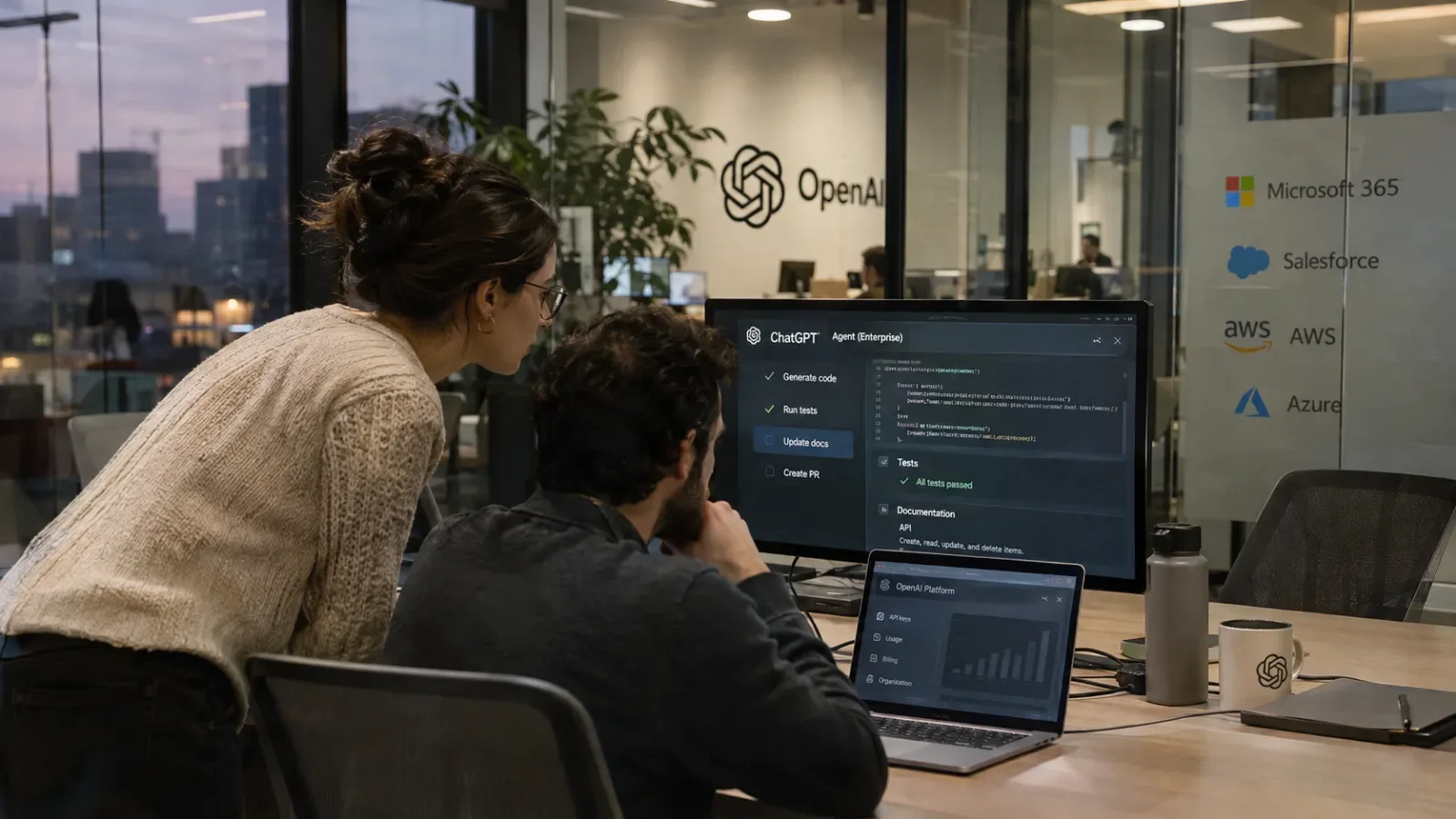
One product OpenAI is pushing hard in the enterprise market is its coding agent, Codex. This is where the economic value of AI changes.

A tool that helps: Developers write code with AI. The AI drafts, and people continue with edits, testing and documentation. What gets saved is mostly writing time.

A system that does the work: The AI handles everything from the fix through verification. It edits code, runs tests and writes documentation, and the developer checks the result and gives final approval. What gets saved is the whole work process.

Companies pay less for plausible sentences than for completed work. But the more steps the AI takes on, the more computing cost for execution and verification must be counted too.

The competitiveness of enterprise AI may be measured less by how impressive an answer is than by the range of work that can be trusted to it.

If OpenAI earns, does Microsoft earn too?

OpenAI is expanding its sales effort in enterprise AI, competing with Anthropic. But it is hard to name a single winner in this market.

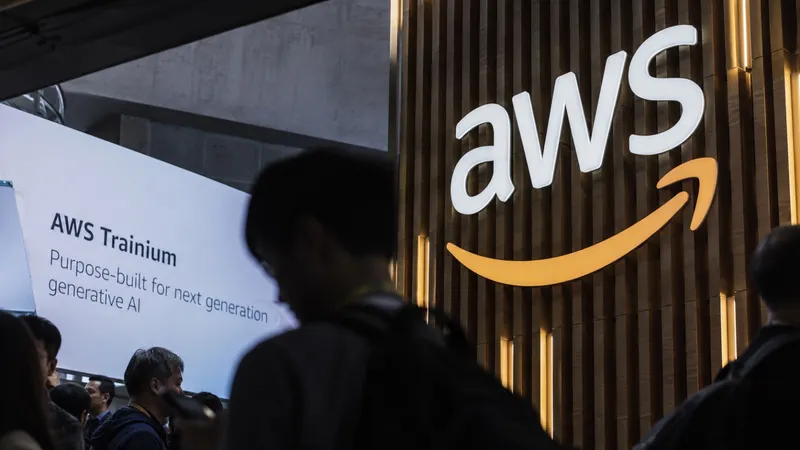
Microsoft (MSFT) and Amazon (AMZN) compete with others over AI services, and can also supply cloud infrastructure and a route to corporate customers. Even as AI use grows, the profit does not all stay with the model developers.

Once companies pay for AI, the questions split in three. Which platform books the revenue? Who bears the computing cost? Where does profit remain after costs?

Cloud providers can gain from demand for computing, but they also carry the burden of capital spending. Model developers have a chance to secure customer relationships, but must absorb competition and the cost of execution.

Growth in AI revenue is not the same as growth in profit left for shareholders.

The numbers to read before a 2027 IPO

Asked whether OpenAI could be ready for an initial public offering in 2027, Brockman answered, in effect, that it could. That does not mean an IPO date has been set.

The prospect of a listing could become an occasion to compare and assess OpenAI's value. But a large number of business customers alone does not justify a high valuation. Investors need to check whether contracts keep renewing, and whether profit grows as the AI handles more work.

More important than listing hopes is how long enterprise revenue lasts, and at what profit margin.

If business revenue is now more than half, has consumer ChatGPT become less important?
  • No. The consumer service is a channel for spreading the product experience. But in terms of revenue mix, it means business customers have become more important.
Does this mean AI agents will replace developers?
  • Whether AI replaces developers is not the point of this article. The point is that value may shift from developers performing every step themselves to AI handling multiple steps while developers handle verification and approval.
Who has the advantage, Microsoft or Amazon?
  • It is hard to say who is ahead from the information given. Beyond the opportunities in business customer access and cloud revenue, you also need to weigh compute costs and the burden of capital spending.

What to watch

Quality of business revenueRevenue per contract, renewal rate and actual paid usage. If contracts grow but usage is low or they are not renewed, the quality of growth is low.
Inference economicsProfitability after subtracting execution and verification costs from revenue per task. The key is whether the money left over grows as the AI does more work.
Customer lock-inHow deeply the product connects to corporate data and work systems. The harder it is to switch to another AI, the stronger the customer relationship can become.
Capital efficiencyHow quickly infrastructure investment turns into free cash flow. You also need to consider the investment burden required for revenue growth.
OpenAI says most revenue is from businesses, but whether that revenue leaves profit is not yet known.

Insight Times Editorial Desk

More by topic

Starting with this story's topics, then what readers are following now

Investor psychology, decision-making and books on investing

IPO

This story's topic17 storiesSee all →

Anthropic's IPO: The Number That Matters More Than $100 Billion Is $2 Trillion

Claude-maker Anthropic is growing at a stunning pace, but the real question for investors is not how fast, only how long, and how much cash is left after GPUs and data centers.

Tech

AI's Next Bottleneck Is Money, Not Chips

Broadcom is lending Anthropic up to $42 billion, and Nvidia wants to build a $500 billion market for loans backed by GPUs. The AI race may turn on what rate buyers pay to borrow.

Tech

Anthropic's $2 Trillion IPO Question: Is AI Software, or the New Utility?

This isn't an IPO asking how popular Claude is. Public markets are about to price, for the first time, whether a frontier AI model company can build an economic engine that outruns its own massive compute bill.

Tech

Anthropic Talked Slowdown. Its Actions Say Otherwise

A next-gen Claude model, an IPO push, and an actual biology lab. Put the three together and Anthropic's message isn't "stop AI." It's build stronger models while scaling up verification and control at the same pace.

Tech

Anthropic Started Late but Took the Lead in Enterprise AI Revenue

Claude Code changed the game. But understanding the $2 trillion IPO story means looking past explosive revenue growth to $518 billion in compute commitments and customer concentration.

Tech

SpaceX Is Worth $2 Trillion. Three Bets Will Decide Whether It Gets Bigger

The company that dominates space now eyes ground-level wireless and AI data centers. The question is not whether the businesses can work. It is how much more value can be added to a company already above $2 trillion.

Tech

Anthropic Posts a Profit, but Investors Are Uneasy About the $2 Trillion Question

Reported third-quarter revenue of $16.8 billion and an adjusted profit show AI can make money. Slowing growth and $518 billion in long-term commitments are the open questions.

Tech

HBM

75 storiesSee all →

Memory stacked next to the GPU.

AI Chip Peak Check: Demand Still Rising, Risk Building in 2027-2029 Supply and Funding
DRAM and NAND contract prices are still climbing and HBM suppliers hold the edge. Power shortages, AI financing costs and simultaneous memory expansion are the risks for later years.

Investing

Has Memory Peaked? Prices Are Cooling, but the Shortage Looks Set to Run to 2028

Price growth has slowed and consumer demand is already breaking. Server and HBM supply remains short, and Micron says more than 75% of its 2027 volume is already committed to customers.

Tech

The Real ASML Number Isn't the 3% Pop, It's the 30% Capacity Hike

ASML's rally isn't just an AI trade. Customers are already locking in 2027 tool slots, and ASML is raising Low-NA EUV capacity by roughly 30% to keep up.

Investing

2027 Isn't the End: Citi's Case for a Memory Supercycle Running to 2031

Citi says the memory shortage timeline is stretching again. If AI shifts from "train once" models to continual learning, HBM, server DRAM and enterprise SSDs could all fall short at the same time.

Tech

AI Chips Haven't Peaked. The Real Risk Sits in 2028 Supply

HBM and server DRAM shortages are now spreading into enterprise SSDs. The question isn't today's strength, it's how much new capacity these prices are pulling in and when it lands.

Investing

The Next AI Chip Race Is About How Chips Connect

Applied Materials will lift its stake in Dutch equipment maker BESI from about 9% to 20%. The bet is less about control than about a new way to link chips.

Tech

2027 Investing Needs Alignment, Not Prediction

A new investing book argues the hard part was never picking the next winner. It's staying aligned with where value and bottlenecks are moving while keeping old human weaknesses in check.

Investor Mind

A building that houses servers and networking gear and supplies them with powe…

Why the White House Swapped "AI" for "Super Intelligence"

Executive Order 14434 renames AI across the federal government without defining a new technology. The real story is about roughly $700 billion in capex, free cash flow and electricity.

Tech

US AI Data Centers Are Headed for 90GW. Gigawatts Now Matter More Than Dollars

Goldman Sachs expects US data center capacity to grow from 64GW at the end of 2026 to 90GW at the end of 2027. The AI race is moving from buying GPUs to building power plants and transmission lines alongside them.

Tech

AMD Crossed $1 Trillion, and the Market Started Looking at CPUs Again

AMD's stock topped a $1 trillion market cap for the first time. The rally isn't just about being an Nvidia alternative. It reflects a reassessment of AMD as a full-stack AI infrastructure vendor, one that bundles CPUs, GPUs and networking, as AI shifts from chatbots to agents and reignites data center demand for CPUs.</deck> <parameter name="oneline">As AI moves from chatbots to agents, the market has started counting the CPU sitting next to the GPU again.

Tech

Why Nebius Is Keeping Some 2027 AI Capacity Off the Shelf

Nebius mixes long-term contracts, short-term premiums and auctions. Holding back capacity pays only if the servers stay busy, and it is not yet clear the pricing will last.

Tech

DeepSeek's $15 Billion Raise: Model Makers May Feel It Before Nvidia Does

China's DeepSeek is closing a round about twice its original target. For US investors, the question is less the size of the check than where the money goes and whose profits it could erode.

Tech

AI Data Centers Are Rewriting Contracts While They Wait for Power

Oracle's Project Jupiter shows that the AI power shortage is no longer a "2030 forecast." The mere possibility of a delayed power hookup has already triggered a force majeure clause, and it is starting to shake billions in loans and lease-income timelines.

Tech

AI's next bottleneck is not silicon. It is electricity

GPUs were scarce, then HBM and advanced packaging. Now the constraint is power delivered to the right place at the right time, and the ability to pull heat out of racks drawing more than 100kW.

Investing

NVDA

89 storiesSee all →

Amazon Goes After Nvidia's Strongest Moat, and It Is Software, Not GPUs

Amazon's open-source TorchNeuron aims to let existing AI code run on its Trainium chips. The contest comes down to the total cost of AI compute and the return on Amazon's $220 billion in annual capital spending.

Tech

Nvidia's Next Target After GPUs: Controlling What AI Agents Are Allowed to Do

OpenShell and Sentry are not about policing what an AI says. They are about controlling, at the server infrastructure level, which files and APIs an AI can touch, what it can execute, and who can actually pull the plug when something goes wrong.

Tech

The US-China Summit Didn't Erase Taiwan Risk for Chip Stocks

Washington's Taiwan policy held, but roughly $14 billion in arms sales is still on hold. For AI chip investors, the summit reads less like risk removed and more like a fragile balance extended.

Macro

ASML Is Discussing 2030 Orders. How Long Can the AI Chip Supercycle Last?

Despite bubble worries, ASML sees equipment shortages through 2028. Investors should watch future production capacity, not just today's orders.

Tech

Tesla Energy's 13.7GWh Paradox: Expectations Ran Faster Than Deployments

Q2 deployments recovered but margins collapsed. Q3 set a record for deployments and still missed estimates. The issue is not the size of AI power demand but how fast it converts into Tesla revenue and profit.

Tech

Why Nvidia Is Happy to Help Make AI Models Nearly Free

Falling model prices can squeeze model makers. For Nvidia, the number that matters is the total volume of tokens generated worldwide and the compute that produces them.

Tech

The Number That Matters More Than How Smart AI Gets

This week's AI models got stronger and cheaper at the same time. The chart long-term investors should watch isn't the weekly benchmark leader, it's the falling cost of finishing a task successfully.

Tech