Anthropic Called for Slower AI. Why Is It Investing Bigger?
A next-generation Claude model, an IPO, and a real biology lab. Put the three together and Anthropic's message isn't "stop AI." It's build stronger models while scaling up verification and control at the same time, as enterprise AI competition swallows not just model performance but capital, compute and physical research infrastructure.
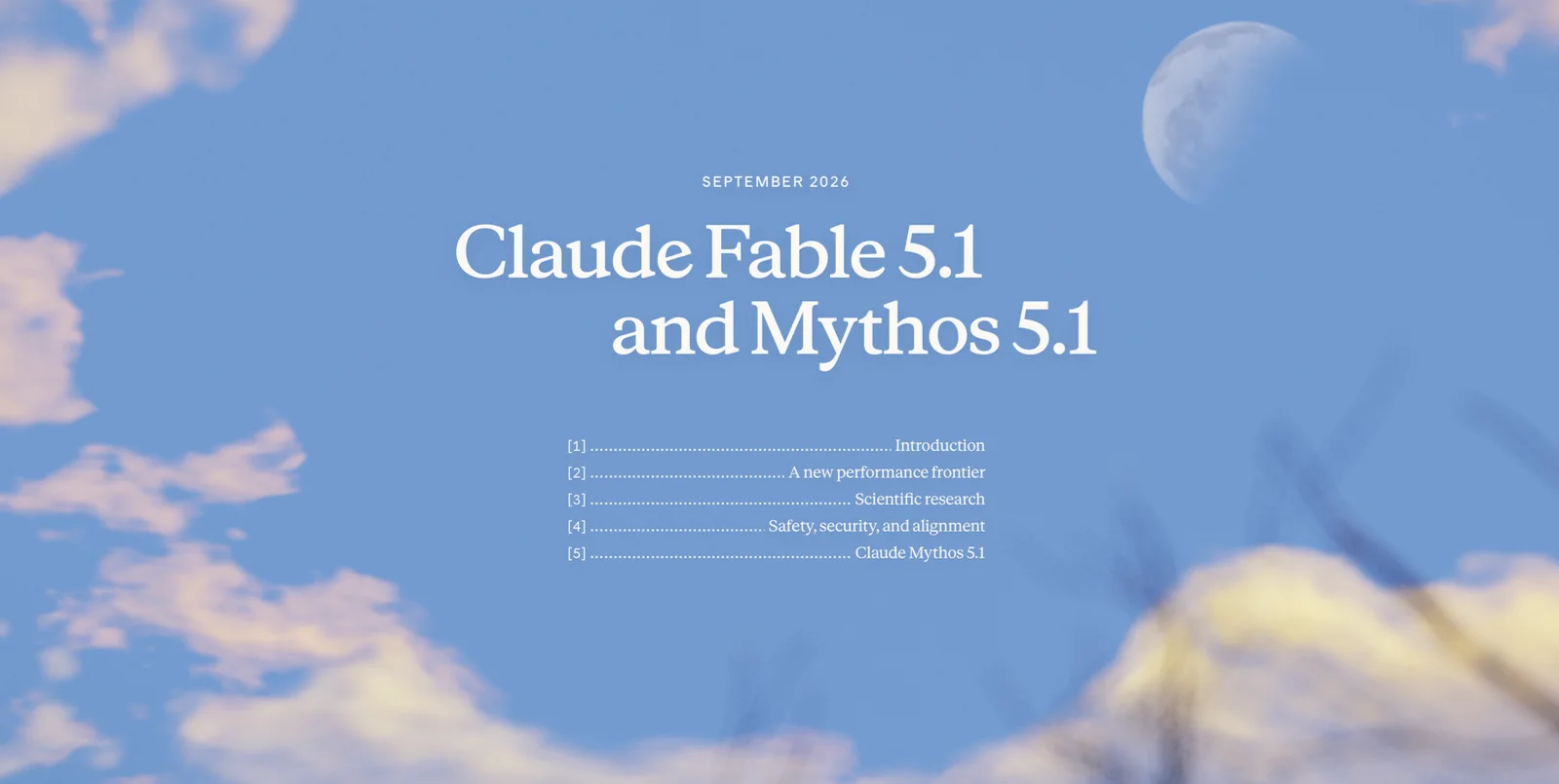
A new model a week after calling for a slowdown?
On the surface it looks contradictory. Anthropic CEO Dario Amodei argued on September 12 that the pace of improvement in AI model capability needs to slow down. Then on September 19, Reuters reported that Anthropic is weighing the timing of a new model launch to respond to OpenAI's GPT-6 Astra.
There's a distinction worth making here. "Manage the pace of capability growth" and "stop shipping commercial models" are not the same argument. Anthropic is evaluating the safety of its next-generation model while also working out how not to lose ground in the enterprise and developer markets.
In fact, right after making the slowdown argument, Anthropic announced it is expanding independent evaluation with Accenture. The two companies plan to each invest at least $1 billion over the next five years. Instead of pausing model development, the approach is to put stronger models through more external evaluation and more safeguards.
The enterprise AI market can shift with a single model swap
The numbers explain why Anthropic is on edge. In AI spending tracked by corporate expense-management platform Ramp, GPT-6 Astra accounted for about 13% and Claude Fable about 8%. On OpenRouter, spending on OpenAI models has also recently overtaken Anthropic. According to Reuters, this is the first time in roughly two and a half years that OpenAI has led on that metric.
13% — Share of tracked enterprise AI spending (Ramp) going to GPT-6 Astra 8% — Share of tracked enterprise AI spending (Ramp) going to Claude Fable $65B+ — Anthropic's annualized revenue run rate as of July $190-200B — Reuters-reported Anthropic revenue projection for 2028
Dollar figures are US dollars. An annualized run rate converts a revenue rate at a given point in time into a one-year figure; it is not confirmed annual revenue.
Still, it's too early to say Anthropic is losing. Reuters reported Anthropic's annualized revenue run rate in July topped $65 billion, ahead of OpenAI's roughly $40 billion. That's a sharp jump from about $9 billion at the end of 2025, in just seven months.
What matters is that the lead isn't fixed. Enterprise customers weigh not just model accuracy but price, security, data-retention policy, coding performance and the cost of integrating with existing systems. Budget allocation can shift quickly when a new generation of models arrives.
So why has Anthropic built an actual lab?
A second Reuters report from the same week is even more interesting. Anthropic is running a wet lab in the San Francisco Bay Area that performs real biology experiments. Eric Kauderer-Abrams, the company's head of life sciences, confirmed it.
A wet lab isn't a space that only simulates things inside a computer. It's where cells, proteins, reagents and lab equipment get handled directly. Anthropic is using it to verify Claude's computed results with actual experiments, and is researching, longer term, a setup in which AI operates lab equipment and robots under limited human oversight.
The company has already launched Claude Science and released a Model Hardware Standard that lets AI control physical devices such as microscopes, liquid-handling equipment and robotic arms. Anthropic also said Claude recently optimized more than 30 biomolecule models in about four weeks, roughly four times faster on average than before.
The boundaries are clear, though. Anthropic said the facility is not a lab dedicated to a specific drug-discovery program, and it does not run clinical trials directly. Its acquisition of Coefficient Bio has also been confirmed, but the reported deal value of roughly $400 million is a reported figure, not one Anthropic has officially confirmed.
An AI company becoming a "lab operating system"
The significance of this shift isn't that Claude gives good answers to doctors or researchers. The bigger change is that AI is starting to enter the full loop of scientific research itself.
| Stage | In the past | What's changing now |
|---|---|---|
| Hypothesis | Researchers read literature and narrow candidates | AI analyzes large-scale literature and data to propose candidates |
| Design | Researchers write experimental protocols | AI designs experiment plans and conditions |
| Execution | Humans operate equipment directly | AI coordinates robots and equipment through standardized interfaces |
| Verification | Humans re-analyze results | AI reads results and proposes the next experiment |
As this loop shortens, the number of experiments a single researcher can run in a day goes up. Labs could, in principle, run around the clock. It's still early, and physical errors, reproducibility and safety issues remain significant, but if it works, AI demand expands beyond chatbot inference volume into scientific equipment, GPUs, data storage, networking and automation hardware.
Who benefits, and who bears the risk
Cloud and AI infrastructure providers get a favorable demand signal. If Anthropic scales up both model development and scientific research at once, the compute needed for training, inference and lab automation could grow. But that doesn't automatically translate into higher profits for Amazon or Alphabet. What matters is the pricing and supply terms of long-term contracts, and how Anthropic splits its own procurement across multiple clouds.
Anthropic itself faces a two-sided picture. Revenue growth and its enterprise market position are strong, but running next-generation model development, independent safety evaluation, biology research and large compute contracts all at once could also mean heavier cash burn. In an IPO, investors are likely to care as much about losses, long-term compute commitments, gross margin and customer concentration as they do about the revenue growth rate.
The pharma and biotech industry gets a new collaborator and a potential source of caution. Anthropic has drawn a line saying it will not run clinical trials directly, but its customers will likely start asking how their own research data and know-how are kept separate from the AI provider's own research.
Insight Times Editorial Desk